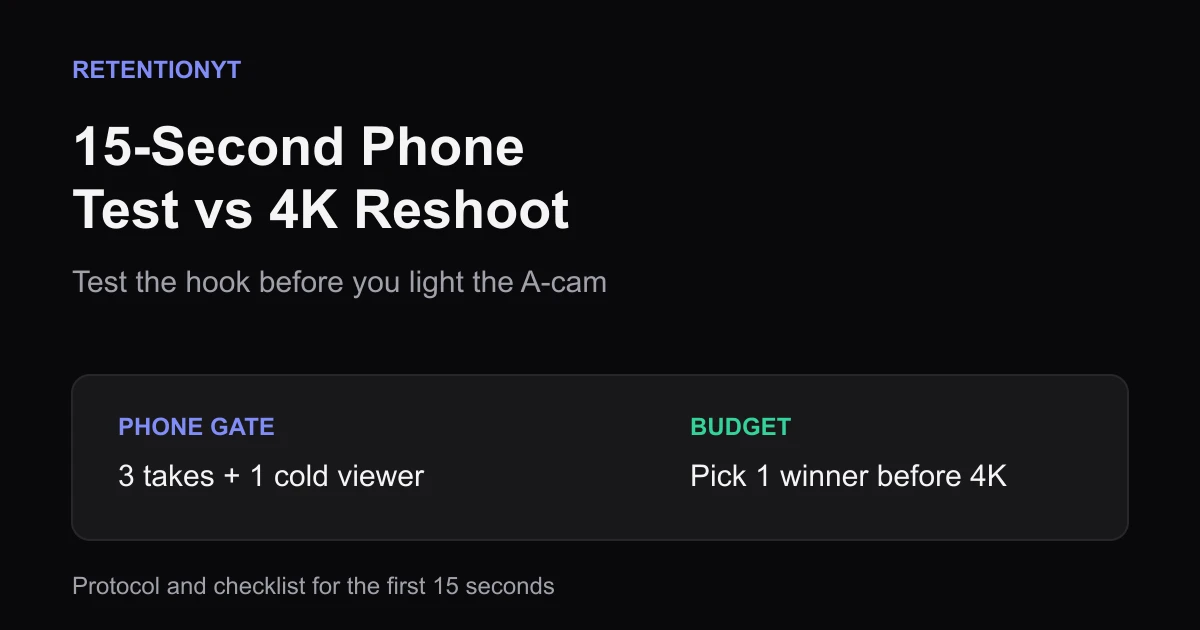
A 15-Second Phone Test Beats a 4K Reshoot
Before you light the A-cam, test three 15-second hooks on a phone in bad light with one cold viewer, then spend the 4K budget only on the winner.

10 min readUpdated
In this guide
Do not light a studio to discover the hook is wrong. Film three 15-second hooks on a phone, show them to one cold person, pick a winner, then spend the 4K budget. The phone test is ugly and useful; a 4K reshoot of a dead intro is polished and expensive.

What A 15-Second Phone Test Beats a 4K Reshoot actually is (and what it is not)
This is a production-order gate. You test the first 15 seconds before you commit to the expensive version of the shoot. The phone is not the final camera; it compares the hook’s promise, order, and first question.
The protocol has three takes, one cold viewer, and one decision. Record three openings that aim at the same video but use different first sentences, examples, or orders. Keep the rough conditions similar. Then show the takes without explaining what you hoped the viewer would hear.
A cold viewer has not seen your outline and is not protecting the idea. Ask what each take promises, what they expect next, and which version they would keep watching. You are checking whether the hook survives outside your own head.
The test is not a focus group, benchmark, or retention guarantee. It is an illustrative protocol, not YouTube data, and it does not require a loud or frantic hook. Clarity can win.
| Gate | What you do | Pass signal |
|---|---|---|
| Take 1 | Record the natural opening. | The promise is audible before context takes over. |
| Take 2 | Change the first sentence or order. | The subject is clear without your explanation. |
| Take 3 | Make the shortest honest version. | The viewer can state what comes next. |
| Cold viewer | Show all three without coaching. | One take creates the clearest expectation. |
| Budget gate | Book the A-cam only after the choice. | The expensive setup serves a tested opening. |
The cheap test protects the edit, location booking, crew time, and camera-day budget. Ask, “Which opening deserves cinematic treatment?”
Where RetentionYT fits
Manual method works alone. Product shortens the loop. Draft and compare the three openings first, then use RetentionYT to inspect the winning script before the camera day.
Why this shows up in YouTube Studio
The phone test happens before the upload; Studio reviews the finished opening. Do not use it to choose between takes. Use it to inspect what you recorded and ground the next test in the delivered upload.
The locked SOURCE 1 page describes the Reach tab as a way to understand how viewers find content, with metrics including thumbnail impressions, click-through rate, views, and watch time. It notes that some reports may not be available on mobile devices. That is arrival context, not proof that one rough take caused a result. SOURCE 1
SOURCE 2 says the Content tab covers how viewers find content, watch, and interact with it. For videos, it lists Key moments for audience retention, typical-retention comparisons for 10 latest videos of similar length, and how thumbnail impressions lead to watch time.
SOURCE 2 gives a current path for the channel-level Content report: in YouTube Analytics, select Analytics, then Content. SEE MORE or Advanced Mode can show specific data, compare performance, and export data. Use the current source wording for product behaviour; use the phone protocol for the pre-shoot decision. SOURCE 2
On August 24, 2026, SOURCE 2 stated that views are counted when a video starts across formats. That is a metric-definition note, not a verdict on your intro. Your narrower question is whether the filmed opening delivered the same promise that won the cheap test.
Worked example 1: the failure
A creator’s video covers three ways to repair a weak YouTube hook. Take one begins, “I spent a lot of money on this studio setup, so today I want to show you the room.” The light is bad, but the hook spends its opening on production context.
The creator shows only that take to a friend and explains the real lesson. The friend agrees because the explanation supplies context. That is coached approval, not a cold test.
The numbers below are illustrative, not a benchmark. They show how to keep the decision tied to the protocol instead of to expensive footage.
| Item | Illustrative result | Failure finding |
|---|---|---|
| Phone takes shown | 1 | No comparison, so no winner. |
| Cold viewers | 0 | The response was coached by explanation. |
| First 15 seconds | Studio story | The repair promise arrived later. |
| 4K footage booked | 1 shoot | Budget was committed before the gate. |
The creator then records the same intro in beautiful 4K. The picture improves, but the decision does not: the shoot paid to learn what a phone could expose in 15 seconds. Bad light was useful; skipping the three-take comparison and cold viewer was the failure.
Worked example 2: the fix
The creator returns to the phone and records three versions of the same repair lesson. Take one opens with the studio story. Take two opens with, “If your hook loses viewers before the point, repair these three beats before you reshoot.” Take three opens with a question: “Can you fix a weak hook without filming the whole video again?”
The creator shows all three to one cold viewer without naming the intended winner. The viewer says take one is about a room, take two is about fixing a hook, and take three is about whether a reshoot is necessary. Take two matches the lesson most directly, so it wins this illustrative protocol test.
The creator books the A-cam around take two, not the room tour. The team can improve diction, framing, and pacing, but it runs another phone comparison before changing the promise.
For another pre-shoot check, use the related tool once. Then review related post 1 and related post 2 for alternate opening patterns, not as substitutes for the cold-viewer decision.
How to check this in YouTube Studio (step by step)
The decision happens on the phone; Studio reviews the delivered upload. Keep both in one note.
-
Save the three takes. Name them Take 1, Take 2, and Take 3. Keep the first 15 seconds intact so the comparison is honest.
-
Use the same rough conditions. Vertical phone framing, bad light, understandable audio, and the same basic promise. Do not let one take become a different video.
-
Find one cold viewer. Show all three in a random order without explaining the topic. Ask what each promises and which one they would keep watching.
-
Record the response. Write the viewer’s words before you defend the idea. Clarity beats your preferred performance if the viewer cannot name the next beat.
-
Pick one winner. Note the exact sentence, noun, and question that made the winning take clearer. This is the budget gate.
-
Film the A-cam intro. Carry the winning structure into the studio. Improve production quality without quietly changing the tested promise.
-
Open YouTube Studio after publishing. Use the Analytics reports available for the video to inspect the delivered opening and the audience-retention moments that the account exposes.
-
Log one next-test revision. Compare the saved phone decision with the delivered first 8 seconds and the available reports. Do not claim that the graph proves what an unpublished take would have done.
Current guidance says expanded reports or Advanced Mode can show specific data, compare performance, and export data. Preserve a reviewable note; a report cannot choose among takes that never became uploads.

The trap
The trap is asking whether a hook looks expensive before asking whether it is understood. A 4K intro can hide weak wording behind movement, lighting, and location; the phone removes those distractions.
The second trap is testing one take with a friendly person. One take produces no choice, and coaching replaces first interpretation. Three takes and one cold viewer create an inspectable decision.
The trap
The move
The third trap is changing too many variables. If Take 1 is a room tour, Take 2 a tutorial, and Take 3 a confession, you are testing different videos. Keep the promise stable. The phone is a gate, not a finished performance; production can improve the winner later.

What to do in the next upload
Put the protocol in the calendar before the studio booking. Make it repeatable and specific enough to stop a costly wrong turn.

- Write the one promise the video must deliver.
- Draft three different first 15-second openings for that same promise.
- Record vertically on a phone with bad light but understandable audio.
- Keep the takes comparable instead of turning each into a different video.
- Show all three to one cold viewer without explaining the topic.
- Record what the viewer thinks each take promises and pick one winner.
- Spend the 4K budget only after the winner and its reason are written down.
- Compare the delivered first 8 seconds with the phone decision after publishing.
Use this formula: three rough takes + one cold viewer + one clear winner = permission to spend on production. If no take wins, you bought cheap information instead of an expensive wrong intro.

Keep the three takes, cold viewer’s words, and winning sentence with the upload notes. The shoot should not be the first place you discover whether the hook makes sense.
Use the phone to test the promise; use 4K to deliver the winner.
Frequently asked questions
- Should I test hooks on my phone?
- Yes. A phone test lets you compare the first 15 seconds before you spend time on lights, lenses, locations, and a full reshoot. Keep the test deliberately simple: record three versions, use the same framing, show them to one cold viewer, and choose the version that makes the promise clearest before you book the studio.
- Do I need studio quality to test?
- No. You are testing the hook's clarity, order, and first question, not the finished image. Use the phone, bad light, and ordinary room as a cheap gate. Studio quality matters after the opening survives the test; polishing a confusing intro only makes the wrong 8 seconds more expensive to replace.
- How ugly can the test be?
- Ugly enough that production polish cannot distract from the words. Keep the audio understandable, the speaker visible, and the three takes comparable. Bad light is acceptable; missing audio or a different premise is not. The test should expose whether a cold viewer understands the hook, not whether your camera operator can grade footage.
- Who should I show it to?
- Show the three takes to one cold viewer who has not seen your outline and has no reason to protect your feelings. Ask what they think the video will deliver and which version they would keep watching. Do not explain the answer before they respond; their unprompted interpretation is the useful signal.
- When do I film the real intro?
- Film the real intro after one phone take wins the cold-viewer test and you have written down why it won. Carry the winning order, noun, and first question into the studio. You can still improve the wording, but do not change the promise during the expensive shoot without running another cheap test.
- How do I apply “A 15-Second Phone Test Beats a 4K Reshoot” on my next upload?
- Write one promise, draft three 15-second openings, and record them vertically on your phone in the same rough setup. Show all three to one cold viewer without explanation, note the clearest interpretation, and book the A-cam only after choosing a winner. Save the rejected takes so the decision remains reviewable.
- Where in YouTube Studio do I check “A 15-Second Phone Test Beats a 4K Reshoot”?
- The phone test is a pre-shoot protocol, so Studio does not contain a dedicated pass or fail card. After publishing, use the Analytics reports available for the video to inspect how the delivered opening held attention. Compare that result with your saved take decision; Studio can show the upload, not the alternate hooks you never published.
- What is the most common mistake with “A 15-Second Phone Test Beats a 4K Reshoot”?
- The common mistake is asking friends to approve one take after you explain what it means. That measures agreement with your explanation, not cold clarity. Show three comparable takes, ask what each promises, and record the answer before you reveal the intended topic or spend the 4K budget.
Give your next script a second look
Paste a script into RetentionYT for suggestions on your hook, pacing, and structure. Choose the edits that serve your video, then check audience behavior in YouTube Analytics after publishing.
Get retention tips in your inbox
Occasional, practical emails on hooks, pacing, and retention. No spam.
Related posts
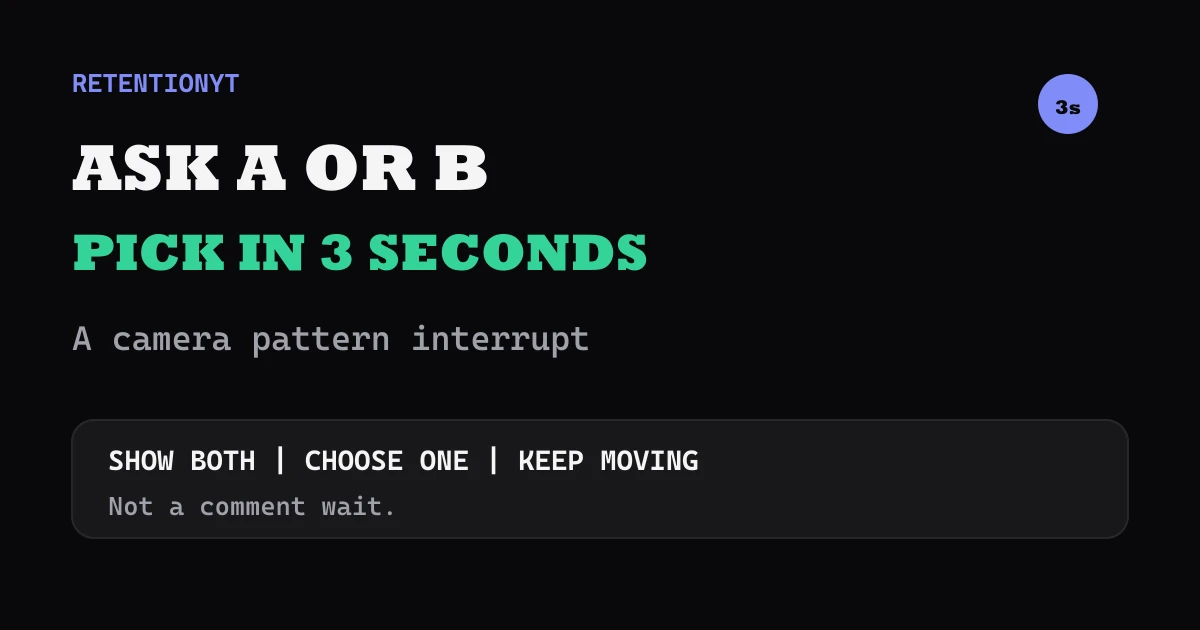
Binary Choice to Camera as a Pattern Interrupt
Use a three-second A or B question to reset a YouTube video: put both choices on screen, pick one on camera, and keep the comment prompt out of the critical beat.
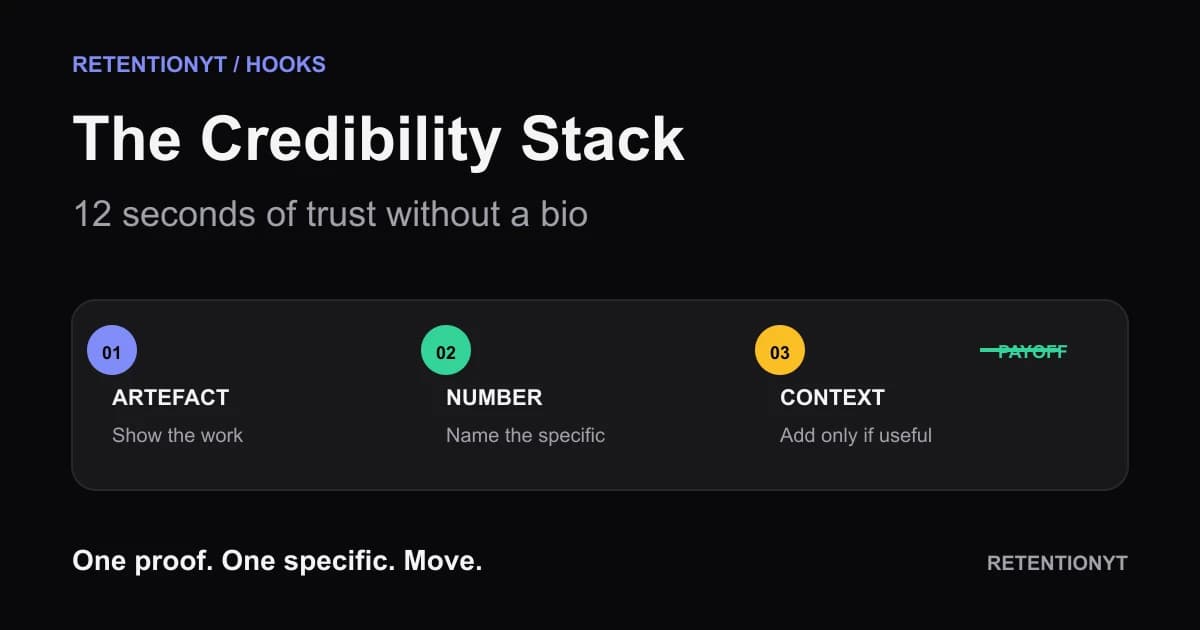
The Credibility Stack: 12 Seconds of Trust Without a Bio
Build credibility in a YouTube intro without a bio: stack one proof artefact, one defensible number, and one short credential inside the first 12 seconds.
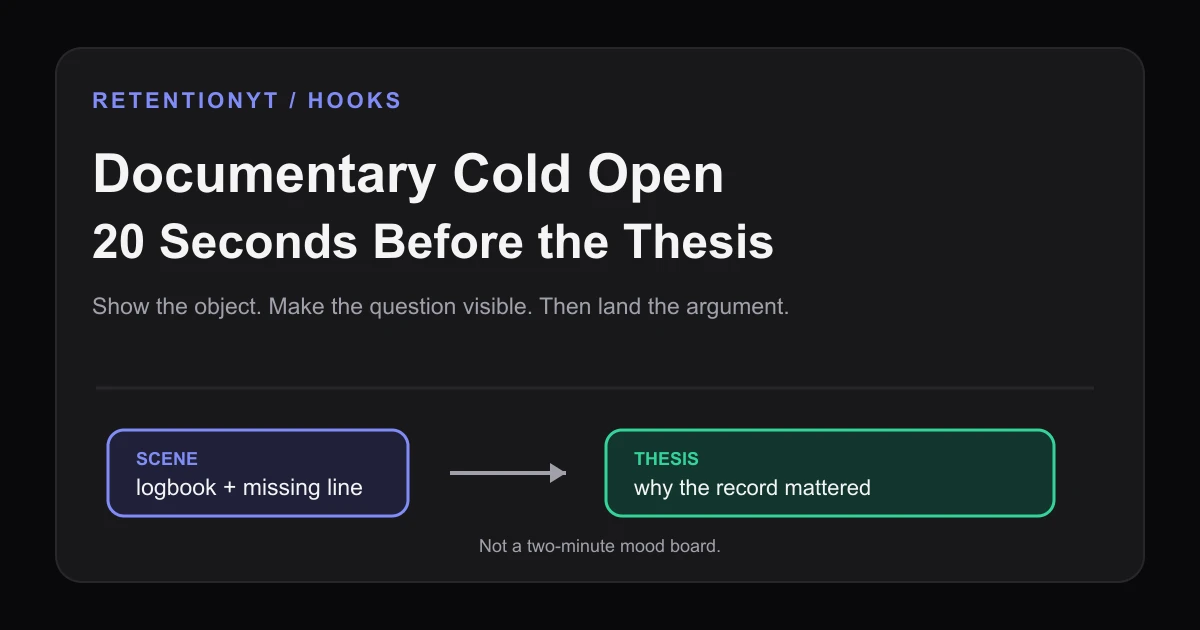
Documentary Cold Open: 20 Seconds of Scene Before the Thesis
Script a YouTube documentary cold open as a 20-second scene with a concrete object, then land the thesis before the viewer mistakes atmosphere for the story.