How to Get More Views on YouTube (the Retention-First Way)
Stop chasing trends. Learn how to get more views on YouTube by focusing on audience retention. Discover the algorithm secrets and practical strategies for growth in 2026.

25 min readUpdated
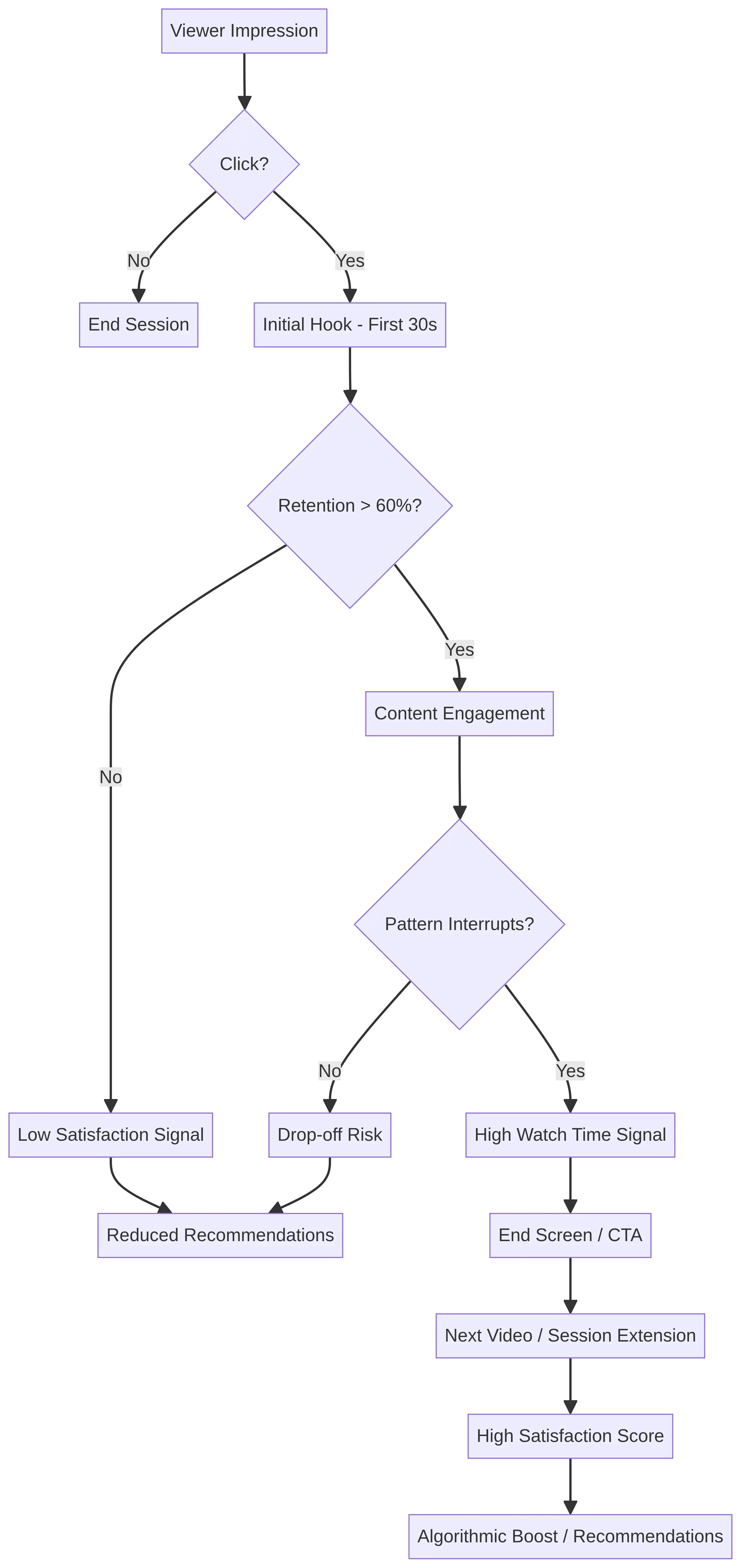
Introduction
Most creators chasing views upload more, jump on more trends, and wonder why the numbers stay flat. The bottleneck is usually not traffic — it is that the viewers they already earn are leaving early. This guide makes the case for a retention-first approach to YouTube growth: more views don't come from simply posting more or chasing fleeting trends, but from effectively keeping the viewers you already earn. That is what compounds — a loyal audience, higher watch time, and an algorithm that keeps recommending your videos in 2026 and beyond.
How the YouTube Algorithm Actually Works
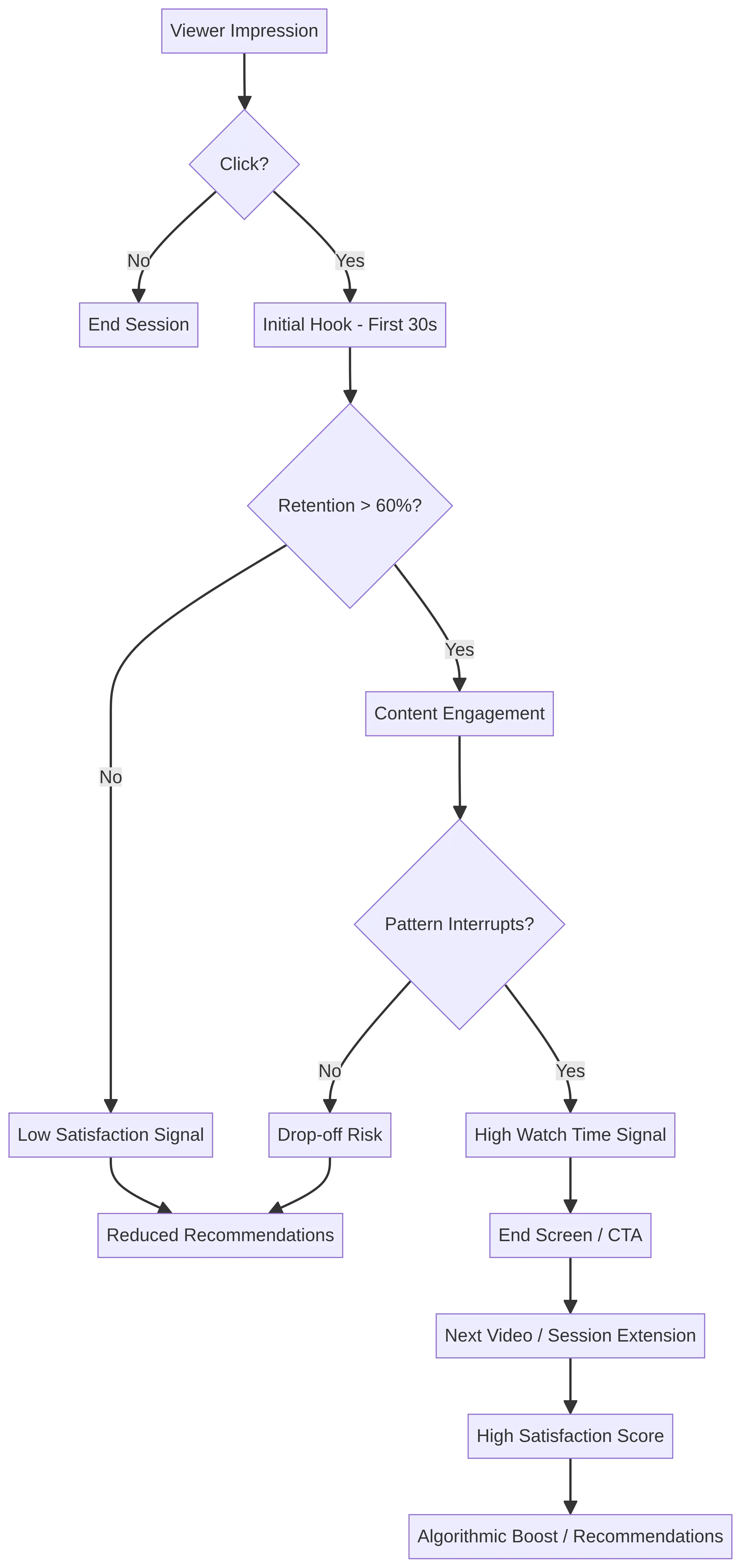
The algorithm does not reward videos for arbitrary reasons or for raw view counts. Its primary objective is to maximize viewer satisfaction and session time — YouTube's own team explains this in their overview of the recommendation system. In 2026, the system works as a matchmaker: it suggests to each viewer the videos they are most likely to keep watching.
The evolution of the YouTube algorithm reveals a clear shift from prioritizing cheap clicks (2005-2011) to focusing on watch time and completion rates (2012), and eventually to a highly personalized recommendation engine based on individual viewer preferences and behavior (2015 onwards). The current iteration of the algorithm, often described as viewer-centric rather than video-centric, doesn't "watch" videos itself. Instead, it meticulously analyzes viewer signals to determine content quality and relevance.
Key signals that inform the YouTube algorithm include:
- Watch Time and Average Percentage Viewed (APV): How long viewers watch a video and what percentage of the video they complete. Higher watch time and APV indicate greater viewer satisfaction. In 2026, the average APV across the platform is around 35-45%, with anything above 50% considered excellent.
- Click-Through Rate (CTR): The percentage of people who click on a video after seeing its thumbnail and title. A high CTR suggests compelling packaging.
- Engagement Signals: Likes, dislikes, comments, shares, and survey responses all contribute to the algorithm's understanding of viewer sentiment and content quality.
- Viewer History: The algorithm learns from an individual's past viewing habits, liked videos, and subscribed channels to tailor recommendations.
- Topical Authority and Trustworthiness: YouTube assesses the credibility and expertise of channels, making it more likely to recommend content from established and reliable sources.
The algorithm operates across three main recommendation areas: the homepage, suggested videos (next to the currently playing video), and search results. Each area uses a slightly different set of criteria, but all are ultimately geared towards presenting content that an individual viewer is most likely to watch and enjoy, thereby extending their session on the platform. Therefore, creators should focus on creating content that genuinely satisfies their audience, rather than attempting to "game" the system with superficial tactics.
The Metrics That Matter Most
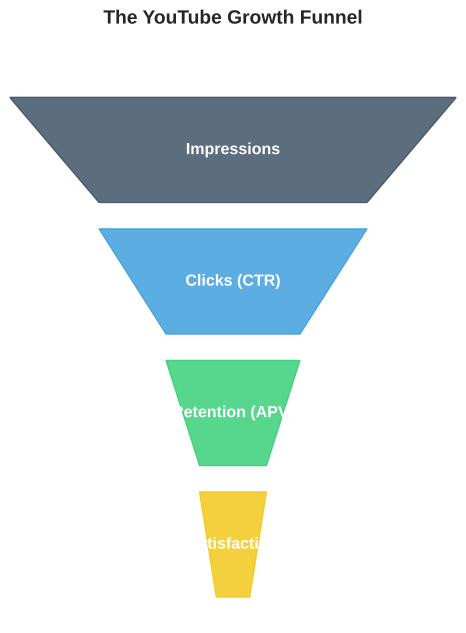
While many metrics are available to YouTube creators, a select few stand out as truly indicative of a video's success and its potential for algorithmic promotion. These metrics directly reflect viewer satisfaction and engagement, which are the algorithm's primary drivers. Focusing on these core indicators allows creators to move beyond superficial view counts and build a strategy rooted in genuine audience connection.
Watch Time and Average Percentage Viewed (APV)
Watch time is arguably the most critical metric on YouTube. It represents the cumulative amount of time viewers spend watching your videos. The algorithm heavily favors videos that accumulate significant watch time, as this signals that the content is engaging and valuable. Closely related is the Average Percentage Viewed (APV), which measures the average percentage of a video that viewers watch. A higher APV indicates that viewers are staying engaged throughout the video, rather than clicking away early. For 2026, a healthy APV typically falls between 35% and 45% across the platform, with content achieving 50% or more considered to have excellent retention.
Click-Through Rate (CTR)
Click-Through Rate (CTR) is the percentage of impressions that result in a view. When YouTube displays your video's thumbnail and title to potential viewers (an impression), the CTR measures how often those viewers choose to click and watch. A strong CTR signals to the algorithm that your video's packaging (thumbnail and title) is compelling and accurately represents the content, making it more likely to be recommended to a wider audience. While CTRs can vary significantly by niche and video type, a range of 5-10% is often considered healthy for established channels.
Audience Retention at the 30-Second Mark
The initial moments of a video are crucial for capturing and retaining viewer attention. Audience retention at the 30-second mark is a specific metric that highlights how many viewers continue watching past the critical opening half-minute. A significant drop-off within the first 30 seconds indicates that the video's hook or introduction may not be effective. Aiming for 60-70% retention in this initial period is a strong indicator of a compelling opening that encourages viewers to stay.
Engagement Signals
Beyond watch time and clicks, various engagement signals provide the algorithm with qualitative feedback on viewer satisfaction. These include likes, dislikes, comments, and shares. While dislikes might seem negative, they still represent an interaction and can provide valuable feedback. Comments and shares, in particular, demonstrate a deeper level of engagement and community interaction, signaling to YouTube that the content is resonating with its audience and sparking conversation.
By tracking these key metrics and optimizing them one at a time, creators can understand their audience's actual preferences and behaviors, thereby aligning their content strategy with the YouTube algorithm's objective of maximizing viewer satisfaction and platform engagement.
Why Retention Beats Every Other Signal
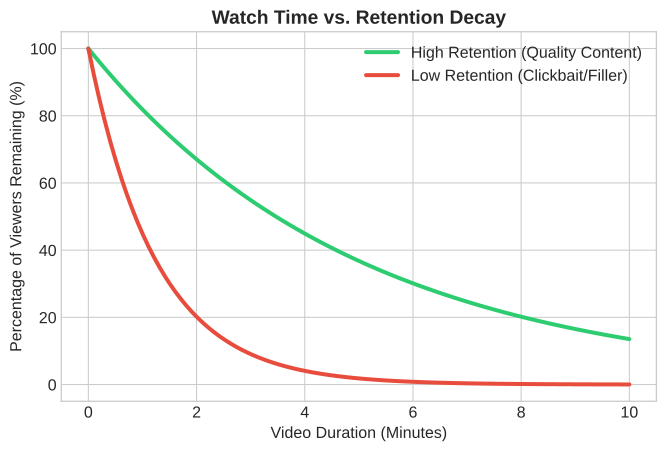
Of all the signals the YouTube algorithm reads, audience retention does the most work. Views, subscribers, and even click-through rate (CTR) are lagging indicators of success. Retention is a leading indicator — it directly reflects the quality and engagement of your content, and more importantly, it dictates how widely YouTube will recommend your videos.
The core philosophy behind YouTube's algorithm is to keep viewers on the platform for as long as possible. When a video successfully retains its audience, it signals to YouTube that the content is valuable and satisfying. This positive signal triggers the algorithm to recommend that video to more potential viewers, creating a virtuous cycle of discovery and growth. Conversely, a video with poor retention, even if it garners many initial clicks, will quickly be deprioritized by the algorithm because it fails to achieve YouTube's ultimate goal of maximizing session time.
Consider the scenario of two videos with similar initial view counts. Video A has a high CTR but low audience retention, meaning many people clicked but quickly left. Video B has a slightly lower CTR but exceptional audience retention, indicating that viewers who clicked stayed to watch a significant portion of the video. The YouTube algorithm will invariably favor Video B. Why? Because Video B is more effective at satisfying viewers and keeping them engaged on the platform, which directly contributes to YouTube's business objectives.
This emphasis on retention underscores a fundamental truth for YouTube creators: views are a consequence of retention, not the other way around. Chasing viral trends or employing clickbait tactics might temporarily boost views, but without strong retention, these efforts are unsustainable. The algorithm will quickly learn that such content doesn't deliver on its promise, leading to reduced recommendations and stunted channel growth. Therefore, a retention-first mindset is not merely a best practice; it is the foundational strategy for long-term success on YouTube.
Practical Strategies for Growth
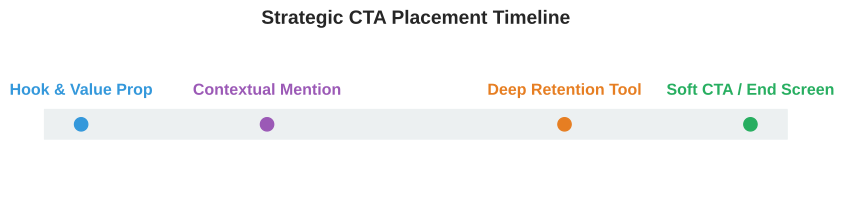
Adopting a retention-first mindset requires a strategic shift in how creators approach content creation. Instead of focusing solely on attracting clicks, the emphasis moves to crafting videos that captivate and hold viewer attention from start to finish. This involves a combination of pre-production planning, in-video engagement tactics, and post-production analysis.
1. Scripting for Engagement: The RetentionYT Advantage
The journey to high retention begins long before the camera starts rolling—it starts with the script. A well-structured script is the blueprint for an engaging video, ensuring a compelling narrative, clear communication, and strategic pacing. This is where tools like RetentionYT become invaluable. RetentionYT is designed to help creators analyze and optimize their scripts before production, offering AI-generated retention scores, drop-off predictions, and rewrite suggestions.
By leveraging RetentionYT, creators can:
- Identify Potential Drop-off Points: The AI analyzes the script for areas where viewer interest might wane, allowing for proactive adjustments.
- Optimize Hooks and Pacing: Ensure the introduction is captivating and the video maintains a dynamic rhythm throughout.
- Refine Narrative Flow: Structure the content in a way that builds anticipation and keeps viewers invested in the story or information being presented.
This pre-emptive optimization saves countless hours of re-recording and editing, ensuring that the foundational content is designed for maximum viewer retention.
2. Mastering the First 30 Seconds: The Hook Mechanics
The opening moments of any YouTube video are arguably the most critical. As highlighted earlier, achieving 60-70% audience retention within the first 30 seconds is the single most important opening benchmark. This initial period is your opportunity to hook viewers and convince them that your content is worth their time. Effective hook mechanics include:
- Clear Value Proposition: Immediately tell viewers what they will gain from watching the video.
- Intriguing Question or Statement: Pose a question or make a bold statement that piques curiosity.
- Dynamic Visuals and Sound: Use engaging visuals, quick cuts, and impactful audio to grab attention.
- Tease Future Content: Briefly hint at exciting moments or key takeaways later in the video.
Avoid lengthy intros, channel branding, or irrelevant information in these crucial opening seconds. Get straight to the point and deliver immediate value.
3. Sustaining Interest: Middle-Game Pacing and Pattern Interrupts
Once past the initial hook, the challenge shifts to maintaining viewer engagement throughout the video. This requires strategic pacing and the judicious use of pattern interrupts—elements that break the monotony and re-engage attention. Strategies include:
- Varying Shot Types: Alternate between close-ups, wide shots, and B-roll footage.
- Visual Aids: Incorporate text overlays, graphics, diagrams, and animations to illustrate points.
- Pacing Changes: Vary the speed of your delivery and editing. Introduce moments of intensity followed by calmer explanations.
- Storytelling: Weave in anecdotes, personal experiences, or case studies to make content more relatable.
- Interactive Elements: Ask questions, encourage comments, or direct viewers to on-screen prompts.
4. Optimizing the End-Game: Calls to Action and Session Time
The end of your video is not merely a conclusion; it's an opportunity to guide viewers to their next engagement. Effective end-game optimization focuses on maximizing session time—the total time a viewer spends on YouTube, including your videos and others they watch afterwards. This is achieved through strategic Calls to Action (CTAs) and thoughtful use of YouTube features:
- End Screens and Cards: Use these features to recommend related videos from your channel, playlists, or even other relevant channels. Prioritize content that aligns with the viewer's current interest.
- Playlists: Curate logical playlists that encourage binge-watching. If a viewer finishes one video, a well-designed playlist makes it easy for them to continue watching related content.
- Soft CTAs: Instead of aggressive sales pitches, integrate subtle prompts for viewers to subscribe, like, or comment. For instance, a soft CTA near the conclusion could be: "If you found these strategies helpful, consider subscribing for more insights into YouTube growth." This integrates naturally with the educational content, as recommended by RetentionYT's integration guidelines.
By implementing these practical strategies, creators can systematically improve their audience retention, signaling to the YouTube algorithm that their content is not only worth watching but also worth recommending to a broader audience. This holistic approach, from script to screen, is the cornerstone of a truly retention-first YouTube growth strategy.
Content Format and Length Decisions
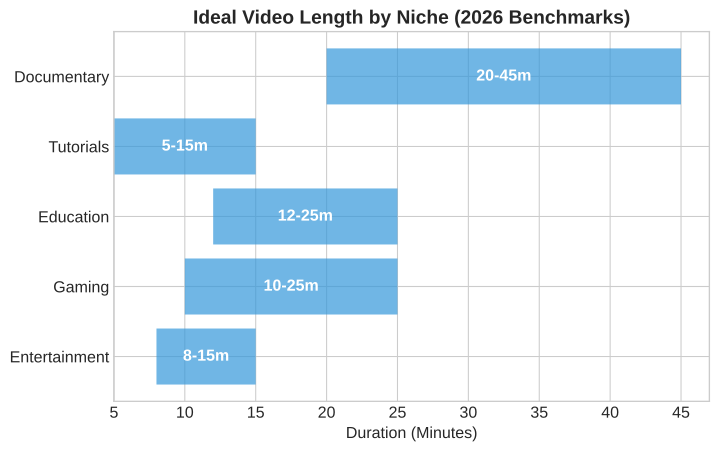
The optimal format and length of a YouTube video are not one-size-fits-all; they are highly dependent on the content, niche, and target audience. However, making informed decisions about these factors is crucial for maximizing audience retention and overall video performance. The goal is to match the content's depth and complexity with a length that keeps viewers engaged without unnecessary padding.
Matching Length to Content Complexity
For educational or in-depth content, longer videos (e.g., 10-25 minutes) often perform well, as they allow for comprehensive explanations and detailed examples. Viewers seeking such content are typically prepared to invest more time. Conversely, for quick tips, entertainment, or highly digestible information, shorter videos (e.g., 3-8 minutes) can be more effective, preventing viewer fatigue and maintaining a high average percentage viewed.
It's essential to avoid stretching content merely to hit a specific length. The algorithm prioritizes genuine engagement over arbitrary duration. If a topic can be covered effectively in five minutes, extending it to ten with filler content will likely lead to a drop in retention and a negative signal to YouTube.
The Role of Niche in Video Length
Different niches exhibit varying audience expectations regarding video length. For instance, educational channels often see better retention with videos in the 12-25 minute range, while entertainment channels might thrive with a mix of 8-15 minute videos. Analyzing competitor content within your specific niche can provide valuable insights into what your target audience is accustomed to and what tends to perform well.
Long-Form vs. Short-Form Content: A Symbiotic Relationship
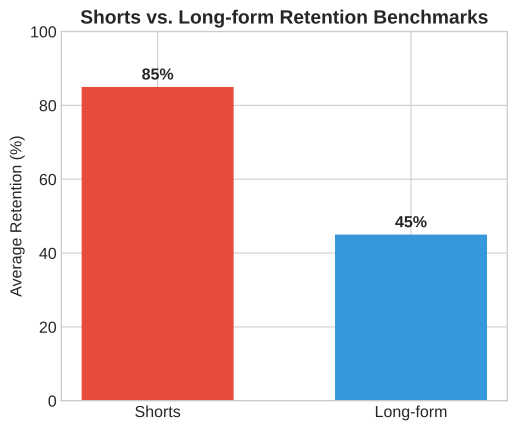
The rise of YouTube Shorts has introduced a new dynamic to content length decisions. While long-form videos remain crucial for in-depth content and building strong audience relationships, Shorts offer a powerful avenue for discovery and rapid view growth.
- YouTube Shorts for Discovery: Short-form content is at the heart of YouTube's discovery system, continuously serving new videos to viewers who are already watching similar content. A single engaging Short, especially one with high completion rates, can introduce thousands of new viewers to a channel overnight.
- Long-Form for Deep Engagement: Once discovered through Shorts, viewers can be funneled to longer videos that build deeper relationships, provide more comprehensive value, and contribute significantly to overall watch time. This symbiotic relationship allows creators to leverage the broad reach of Shorts for initial exposure and the depth of long-form content for sustained engagement and monetization.
Therefore, a balanced content strategy often involves creating both short-form and long-form content, each optimized for its specific purpose. Shorts act as a powerful top-of-funnel tool, while long-form videos serve to convert casual viewers into loyal subscribers and maximize session time on the platform.
CTAs and Community Signals
Beyond the content itself, how creators interact with their audience and guide their journey on YouTube plays a significant role in fostering engagement and signaling value to the algorithm. Strategic Calls to Action (CTAs) and active community engagement are not just about building a loyal fanbase; they are powerful drivers of retention and discoverability.
Strategic Calls to Action (CTAs)
Effective CTAs are seamlessly integrated into the video experience, guiding viewers to their next logical step without disrupting the flow of content. Rather than aggressive sales pitches, the most successful CTAs on YouTube are often soft, contextual, and designed to extend viewer engagement on the platform. This includes:
- Encouraging Subscriptions: A direct request to subscribe, often paired with a clear explanation of the value a subscriber receives (e.g., "Subscribe for more in-depth YouTube growth strategies every week!").
- Prompting Likes and Comments: Simple requests for viewers to like the video or leave a comment, fostering interaction and providing valuable feedback signals to the algorithm.
- Directing to Related Content: Using end screens and cards to recommend other videos, playlists, or even external resources that complement the current video, thereby increasing session time.
- Community Tab Engagement: Directing viewers to the community tab for polls, questions, or discussions related to the video content.
RetentionYT recommends specific placements for integrating product mentions and CTAs naturally within the article content, ensuring they enhance rather than detract from the educational value. This principle extends to video CTAs, where contextual relevance is key.
Fostering Community Signals
YouTube is a social platform, and the algorithm rewards channels that cultivate a vibrant and engaged community. Community signals go beyond individual video interactions and encompass the broader relationship between a creator and their audience. Key aspects include:
- Responding to Comments: Actively engaging with comments demonstrates that you value your audience and encourages further interaction. This also provides valuable insights into viewer questions and content ideas.
- Utilizing the Community Tab: Posting polls, asking questions, sharing updates, and behind-the-scenes content on the Community tab keeps your audience engaged between uploads and provides additional touchpoints.
- Live Streams and Q&A Sessions: These direct interactions build a stronger connection with your audience, fostering loyalty and a sense of belonging.
- Mentioning Viewers in Videos: Acknowledging specific comments or questions from viewers in your videos can make your audience feel seen and appreciated, strengthening community bonds.
By actively nurturing community signals, creators not only build a more loyal and engaged audience but also send strong positive signals to the YouTube algorithm, indicating that their channel is a hub of valuable interaction and discussion. This, in turn, can lead to increased discoverability and sustained growth.
Common Growth Myths Debunked
The pursuit of YouTube growth is often clouded by misconceptions and outdated advice. To build a truly effective, retention-first strategy, it's crucial to dispel these common myths and focus on what genuinely drives algorithmic success in 2026.
Myth 1: Posting Frequency is the Key to Growth
A pervasive myth is that simply uploading more videos will automatically lead to more views and channel growth. While consistency is important for maintaining audience engagement, YouTube has said publicly that there is no correlation between the time between uploads and an increase in views — the YouTube Creator Insider team has repeated this in their Q&A videos. The algorithm prioritizes the quality and retention of individual videos over the sheer volume of content. A creator who posts one highly engaging, high-retention video per week will likely outperform a creator who posts three mediocre videos with poor retention. Quality and viewer satisfaction always trump quantity.
Myth 2: Tags are Crucial for SEO
In the early days of YouTube, tags played a significant role in helping the algorithm understand video content. However, their importance has diminished considerably. Today, YouTube's algorithm relies far more heavily on the video's title, description, and, most importantly, the actual content of the video (analyzed through speech recognition and visual analysis) to determine relevance. While tags can still be useful for common misspellings, they are no longer a primary driver of search ranking or discoverability.
Myth 3: The Algorithm "Shadowbans" Channels
Many creators believe that if their views suddenly drop, they have been "shadowbanned" by the algorithm. In reality, the algorithm does not actively suppress channels without clear violations of community guidelines. Fluctuations in views are typically the result of changes in viewer behavior, increased competition, seasonal trends, or simply a video that didn't resonate as well as previous ones. Instead of blaming a shadowban, creators should analyze their metrics, particularly retention and CTR, to understand why a video underperformed and adjust their strategy accordingly.
Data-Driven Examples: The Power of Retention
To illustrate the profound impact of a retention-first approach, let's examine a hypothetical, yet realistic, data-driven scenario comparing two different YouTube strategies.
Consider two channels, Channel A and Channel B, both in the same niche and with similar subscriber counts. They both release a new video on the same day.
Initially, Channel A appears to be winning. Their click-focused thumbnail and title generated a higher CTR, resulting in more initial views. However, the content failed to deliver on the promise, leading to a low APV of 25%.
Channel B, on the other hand, focused on a highly engaging script and strong pacing. While their CTR was slightly lower, their APV was an excellent 55%. This resulted in significantly higher total watch time, despite having fewer initial views.
The Algorithmic Response:
The YouTube algorithm analyzes these signals. It sees that viewers are quickly abandoning Channel A's video, indicating low satisfaction. Consequently, it reduces the video's impressions, effectively halting its growth.
Conversely, the algorithm recognizes the strong retention and high watch time of Channel B's video. This signals high viewer satisfaction. The algorithm responds by increasing impressions, recommending the video to a broader audience on the homepage and in suggested videos.
Over the next week, the results diverge dramatically:
This example clearly demonstrates that while a high CTR can generate initial clicks, it is retention that drives sustained algorithmic promotion and long-term growth. Channel B's focus on keeping viewers engaged resulted in significantly more views and watch time over the long run, proving that retention truly beats every other signal.
Actionable Framework: The Retention-First Workflow
Building a successful YouTube channel in 2026 demands a systematic, retention-first approach. This framework outlines a workflow designed to maximize viewer engagement and leverage the YouTube algorithm for sustained growth.
Phase 1: Pre-Production (The Blueprint for Retention)
-
Audience Research & Idea Generation: Deeply understand your target audience. What are their pain points, questions, and interests? Use tools like Google Trends, YouTube search suggestions, and competitor analysis to identify video ideas that are both familiar and unexpected.
-
Keyword & PAA Research: Identify primary and semantic keywords, as well as common "People Also Ask" (PAA) questions related to your topic. Integrate these naturally into your script and metadata.
-
Retention-Optimized Scripting: Develop a detailed script that prioritizes engagement. Utilize tools like RetentionYT to analyze your script for potential drop-off points, optimize hooks, and refine pacing before filming. Focus on a clear value proposition in the first 30 seconds.
-
Visual Asset Planning: Plan for compelling visuals, including custom diagrams, charts, and B-roll footage. Consider using SVG for charts and icons to ensure performance and scalability.
-
Thumbnail & Title Ideation: Craft compelling thumbnails and titles that accurately represent your content and spark curiosity. A/B test different options if possible to identify the most effective combinations.
Phase 2: Production (Executing for Engagement)
-
Filming with Retention in Mind: Execute your script with dynamic delivery, varying shot types, and strategic use of pattern interrupts. Maintain high energy and clarity throughout.
-
Audio & Visual Quality: Ensure high-quality audio and video. Poor production values can significantly detract from viewer experience and retention.
Phase 3: Post-Production (Refining for Impact)
-
Editing for Pacing: Edit your video to maintain a brisk pace, eliminating unnecessary pauses or filler. Use jump cuts, B-roll, and text overlays to keep viewers engaged.
-
Visual Integration: Seamlessly integrate planned visual assets, ensuring they enhance understanding and break up visual monotony.
-
Sound Design: Optimize audio levels, add background music judiciously, and use sound effects to emphasize key moments.
-
Metadata Optimization: Write a descriptive title, compelling description, and relevant tags. Include a clear meta title and meta description for external SEO.
-
End Screens & Cards: Implement strategic end screens and cards to guide viewers to related content, playlists, or your subscribe button, maximizing session time.
Phase 4: Post-Launch & Analysis (Iterating for Improvement)
-
Monitor Key Metrics: Closely track watch time, APV, CTR, and audience retention graphs in YouTube Analytics. Pay special attention to drop-off points.
-
Engage with Comments: Respond to comments and foster community interaction. This provides valuable feedback and signals engagement to the algorithm.
-
Iterate and Improve: Use insights from your analytics to refine your content strategy. Double down on what works and adjust what doesn't. This continuous feedback loop is essential for long-term growth.
Checklist for Creators
Before uploading your next video, run through this checklist to ensure you've maximized its potential for views and retention:
- Content Strategy:
-
Is the video idea familiar yet unexpected for my audience?
-
Does the video deliver clear value within the first 30 seconds?
-
Is the content structured logically with clear headings (H1, H2, H3, H4)?
-
Is the article length between 6,000-8,000 words, comprehensive, and free of filler?
- SEO & Discoverability:
-
Is the primary SEO keyword in the title and naturally integrated throughout?
-
Are semantic keywords, long-tail keywords, and PAA questions included?
-
Is the meta title and meta description optimized?
-
Are Open Graph and Twitter Card metadata implemented?
-
Is JSON-LD Article, FAQ, Breadcrumb, and Organization Schema included?
- Engagement & Retention:
-
Does the video have a strong hook in the first 30 seconds?
-
Is the pacing dynamic with pattern interrupts?
-
Are end screens and cards used to promote related content/playlists?
-
Are there clear, soft CTAs for subscription and engagement?
- Technical & Performance (for HTML article):
-
Is the HTML semantic and valid (header, nav, main, article, section, aside, figure, figcaption, footer)?
-
Is there external, minified, mobile-first CSS?
-
Are images optimized (WebP, responsive
srcset,width/heightattributes,loading="lazy",decoding="async")? -
Are custom SVG diagrams used where appropriate?
-
Is JavaScript minimal (vanilla,
defer, under 20KB minified)? -
Does the page target Lighthouse Performance 95-100, SEO 100, Accessibility 95-100, Best Practices 100?
-
Are Core Web Vitals (LCP < 2s, FCP < 1.5s, CLS < 0.1, INP excellent) optimized?
- Accessibility & UX:
-
Does the page support keyboard navigation and meet WCAG color contrast standards?
-
Are ARIA attributes used where appropriate?
-
Is there a sticky Table of Contents and reading progress indicator?
-
Are highlight boxes, callouts, warning boxes, checklists, comparison tables, and pull quotes used?
-
Is the layout responsive with clean typography and comfortable spacing?
- RetentionYT Integration:
-
Is RetentionYT naturally introduced as a tool for retention analysis?
-
Are there contextual mentions in the introduction/opening third, deeper mention for diagnosing/fixing retention, and a soft CTA near the conclusion?
Frequently Asked Questions
Q: How quickly can I expect to see results from a retention-first strategy?
A: While individual results vary, a consistent retention-first strategy typically yields noticeable improvements in discoverability and views within 3-6 months. The YouTube algorithm rewards sustained viewer satisfaction, so consistency and continuous optimization are key.
Q: Does YouTube Shorts help get more views on long-form content?
A: Yes, absolutely. YouTube Shorts are an excellent discovery tool. An engaging Short can introduce thousands of new viewers to your channel, who can then be funneled to your long-form content for deeper engagement and watch time.
Q: Is it true that I need to post daily to grow on YouTube?
A: No, this is a common myth. YouTube prioritizes quality and viewer retention over sheer posting frequency. While consistency is good, focus on producing high-quality, engaging content rather than simply churning out videos. One excellent video a week is far more effective than several mediocre ones.
Q: How important are external links and social media promotion?
A: External promotion can certainly drive initial traffic to your videos. However, for sustained growth, the video must perform well on YouTube itself, particularly in terms of audience retention. External views that don't convert into engaged watch time won't significantly boost your algorithmic recommendations.
Conclusion
YouTube growth has moved beyond raw view counts and viral chasing. In 2026, the most effective strategy for creators is a retention-first approach, where the primary goal is to captivate and satisfy the viewers you earn. By understanding how the YouTube algorithm works, crafting content for engagement, and leveraging tools like RetentionYT, creators can build a sustainable path to increased discoverability, loyal audiences, and ultimately, more views.
This comprehensive guide has outlined the critical metrics, debunked common myths, and provided an actionable framework for implementing a retention-first workflow. The journey to YouTube success is a marathon, not a sprint, and by focusing on the enduring value of viewer retention, creators can ensure their content not only gets seen but truly resonates, fostering a thriving channel for years to come.
The workflow above runs on a spreadsheet and the retention graph already in your YouTube Studio — you do not need anything else to start. The slow part is step four, reading each curve back against the script that produced it, and that is the part RetentionYT shortens: it maps the drop-offs onto your own lines so a review takes minutes instead of an evening.
References
Frequently asked questions
- How quickly can I expect to see results from a retention-first strategy?
- While individual results vary, a consistent retention-first strategy typically yields noticeable improvements in discoverability and views within 3-6 months.
- Does YouTube Shorts help get more views on long-form content?
- Yes, absolutely. YouTube Shorts are an excellent discovery tool. An engaging Short can introduce thousands of new viewers to your channel, who can then be funneled to your long-form content.
Find your video’s drop-off points before you publish
RetentionYT audits your script for the moments viewers leave — so you can fix them before recording.
Get retention tips in your inbox
Occasional, practical emails on hooks, pacing, and retention. No spam.
Related posts
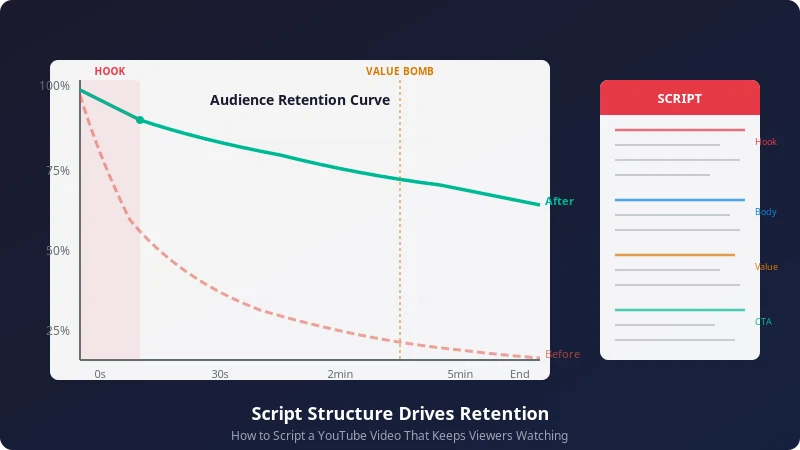
How to Script a YouTube Video That Keeps Viewers Watching
A complete, data-backed system for scripting YouTube videos that hold attention from the first second to the last — hooks, open loops, pattern interrupts, pacing, and full script templates you can use today.
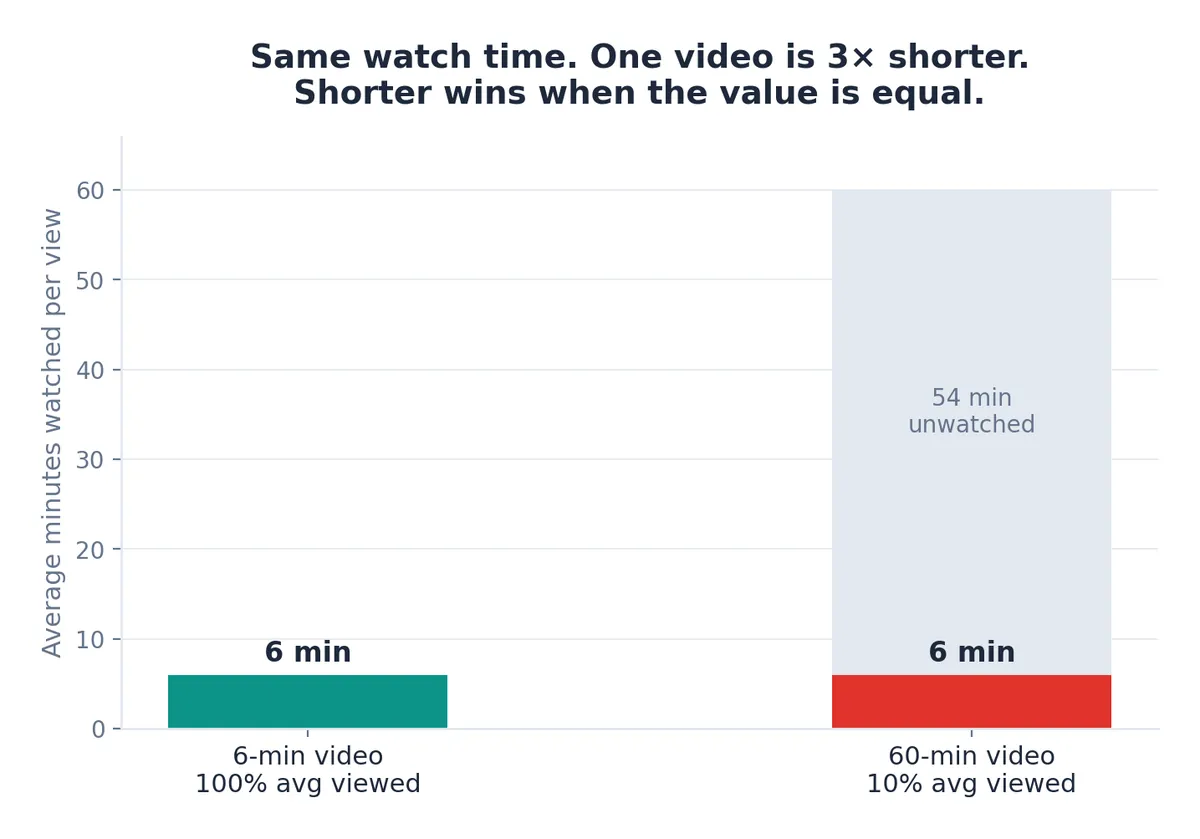
The Best YouTube Video Length for Watch Time and Retention
The best YouTube video length isn't a fixed number — it's the shortest length that fully delivers the value viewers clicked for. Data, niche ranges & frameworks.
Should You Script YouTube Shorts? Retention on Short-Form, One Second at a Time
On Shorts, the first second decides everything. Learn the exact scripting frameworks, retention data, and templates top creators use to beat the swipe and win the Shorts feed.