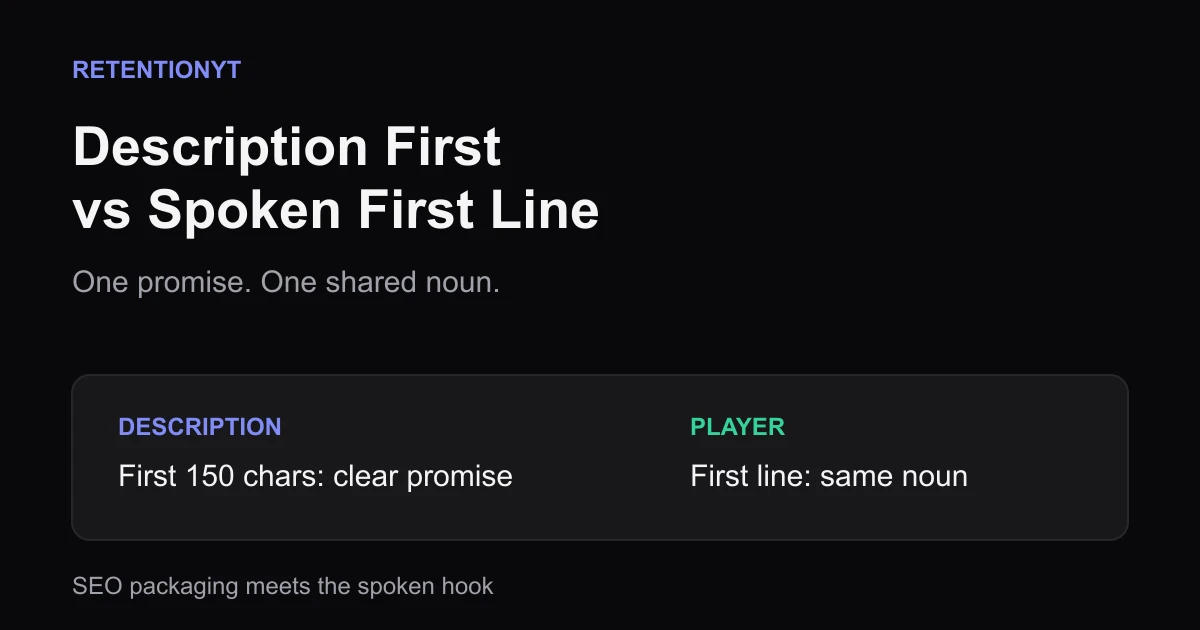
Description First 150 Characters vs Spoken First Line
Use the first 150 characters of your YouTube description as a clear search promise, then make your spoken first line deliver the same noun before the vlog detour.
11 min read
Category
27 articles in YouTube Growth.
Use the first 150 characters of your YouTube description as a clear search promise, then make your spoken first line deliver the same noun before the vlog detour.
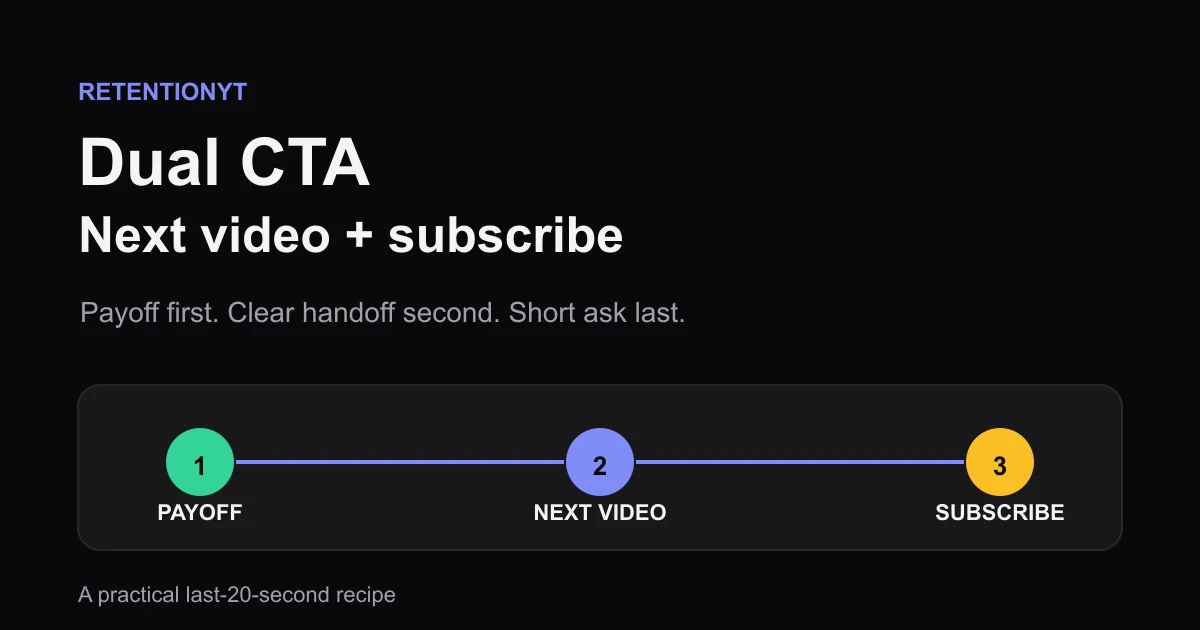
YouTube outro subscribe and next video without a drop: a dual CTA script for the last 20 seconds, with the next-video title first and a short subscribe ask second.
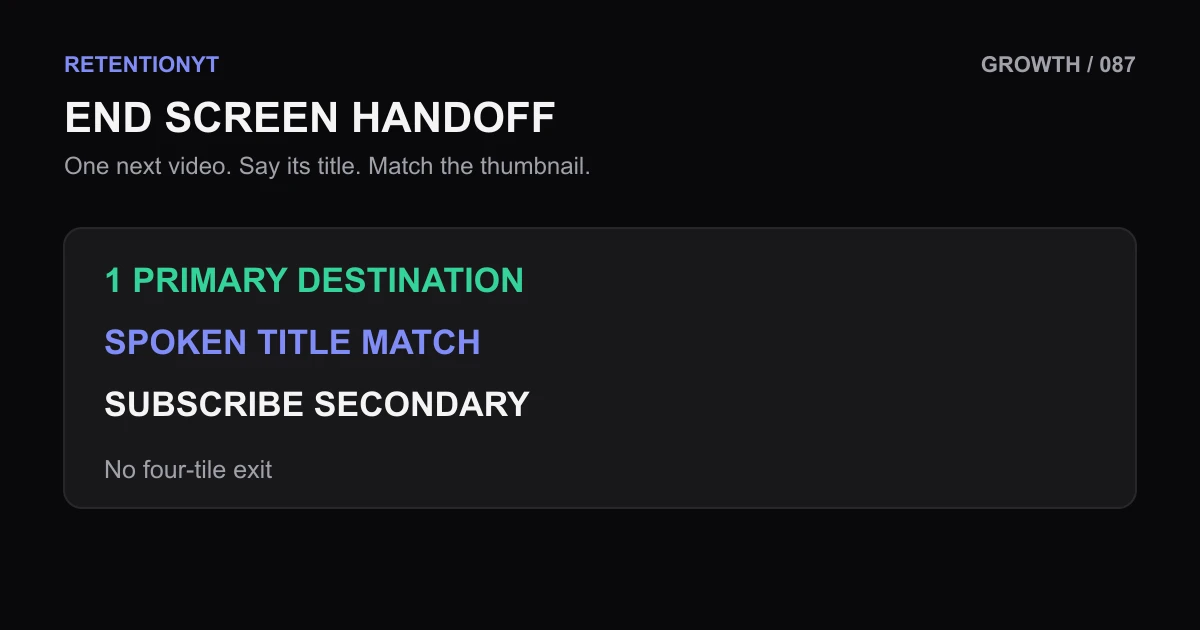
Use one clear next-video end-screen element, speak its title verbatim, match the thumbnail promise, and keep the second element for subscribe instead of building a four-tile exit.
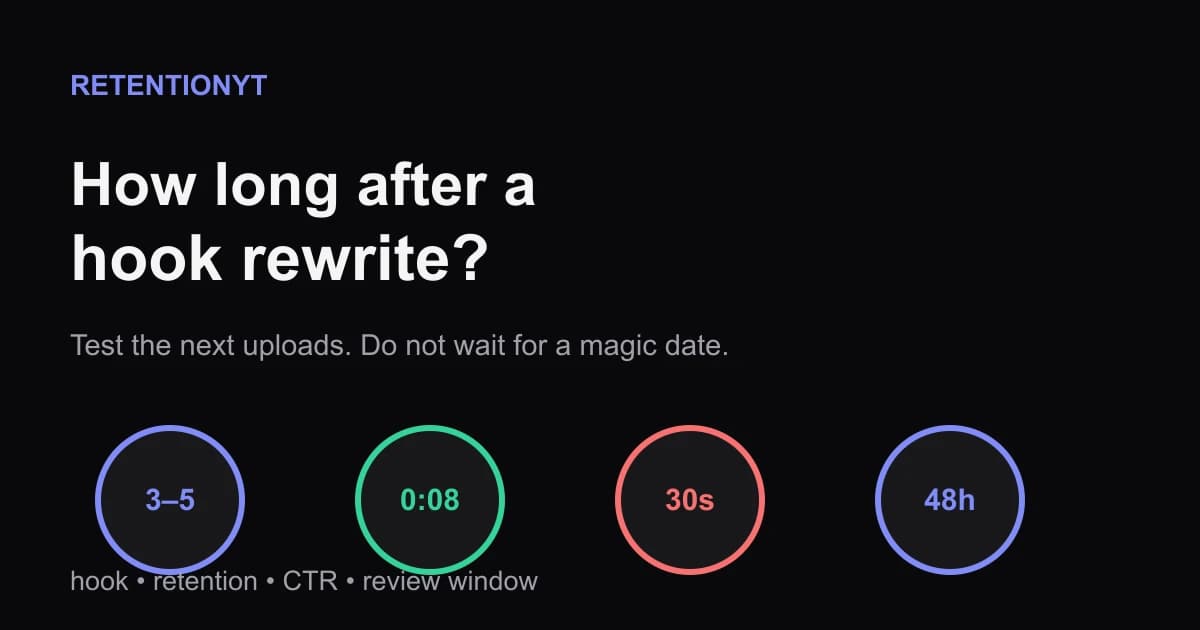
How long until YouTube impressions recover after a better hook? Use the next 3–5 uploads, first-30-second retention, CTR, and 48-hour checks without guessing.
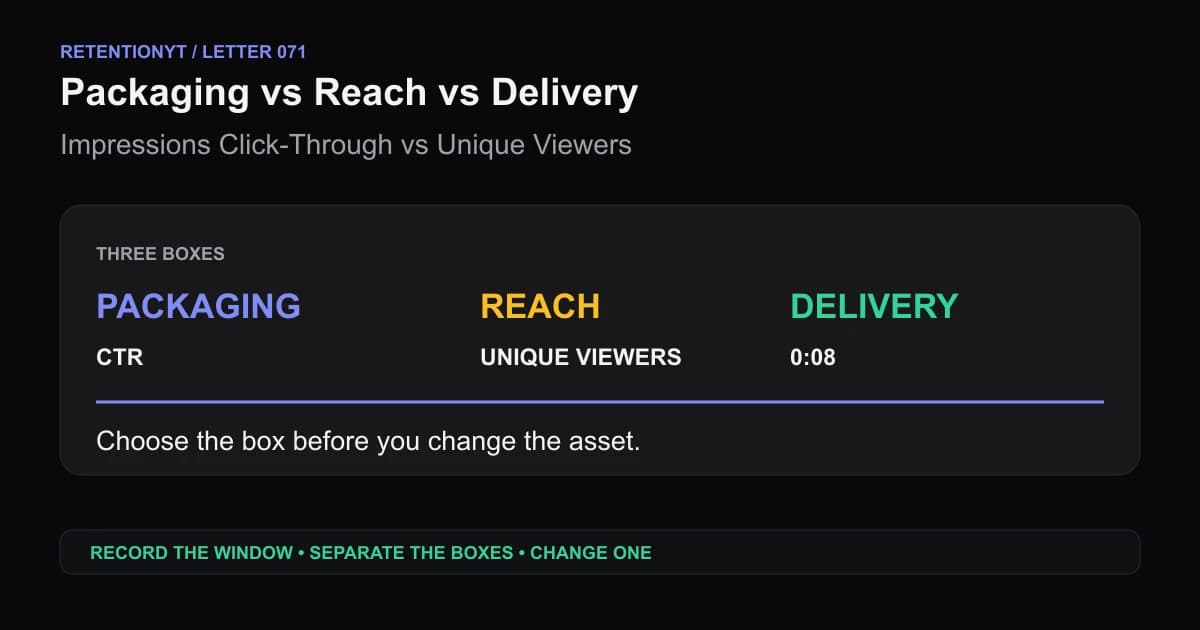
When YouTube CTR is high but unique viewers are low, separate packaging, reach, and delivery before you rewrite the script or replace the thumbnail.
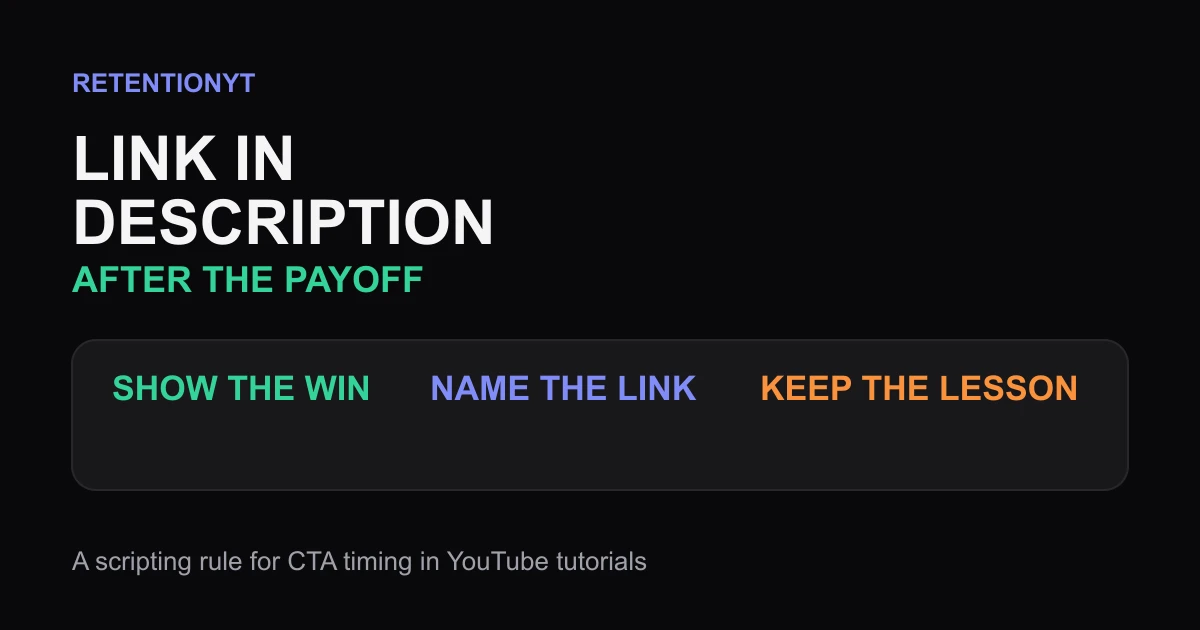
When to say link in description YouTube creators can use without cutting the payoff: deliver the result first, then place the exit ramp where intent is highest.
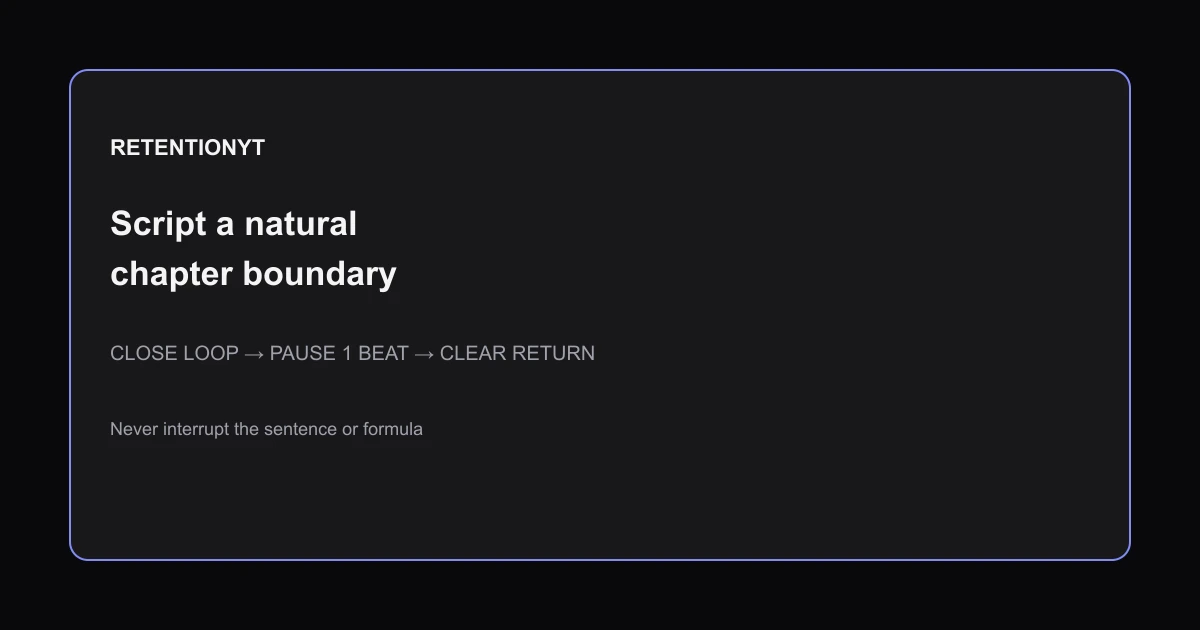
Where to put midroll ads YouTube retention: script breaks at closed chapter loops, use a one-second landing pause, and never interrupt a formula or sentence.
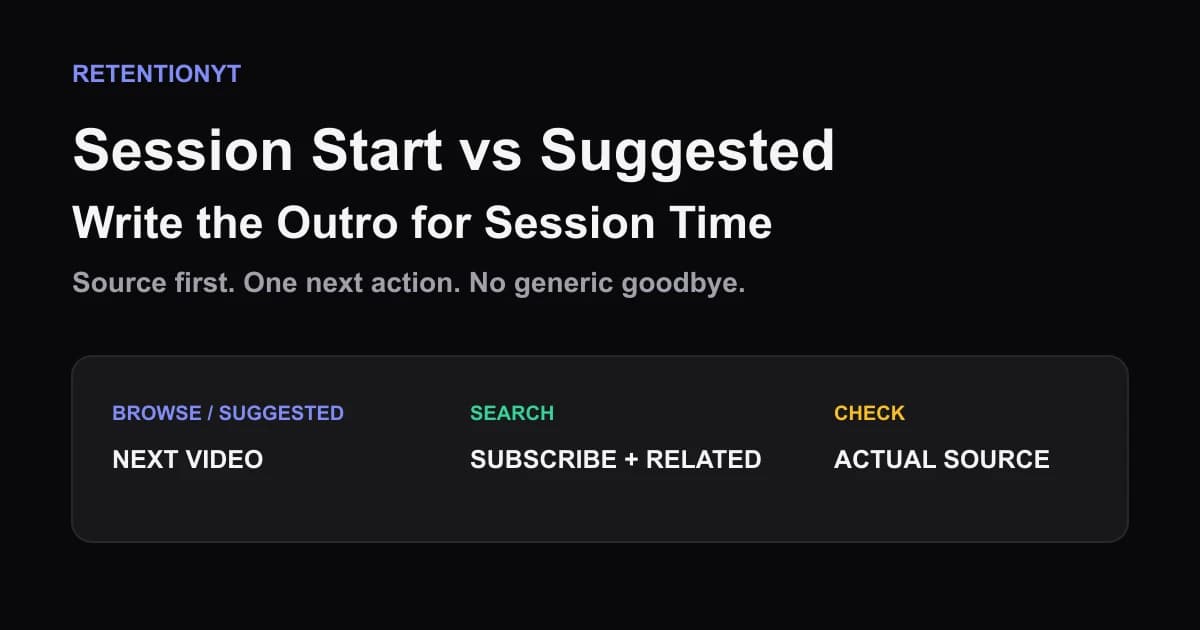
YouTube session watch time outro: choose the next video for Browse/Suggested, then use Search traffic to earn a subscribe without a generic goodbye.
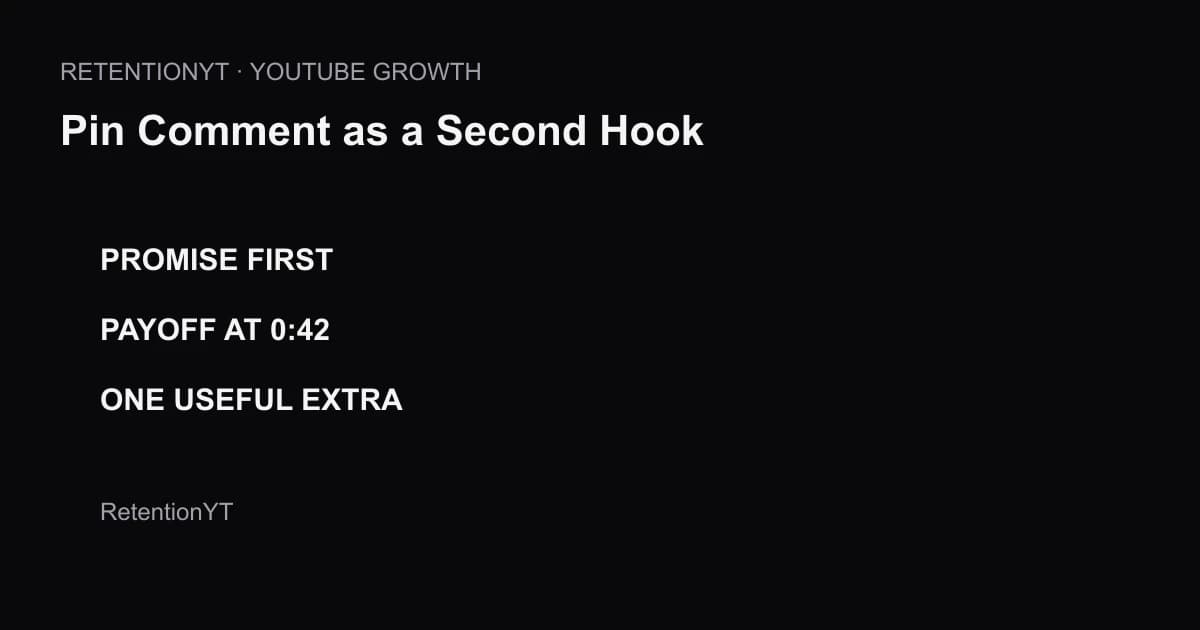
Use a YouTube pinned comment as a second hook: restate the promise, point to the first payoff timestamp, and add one useful extra in every upload.
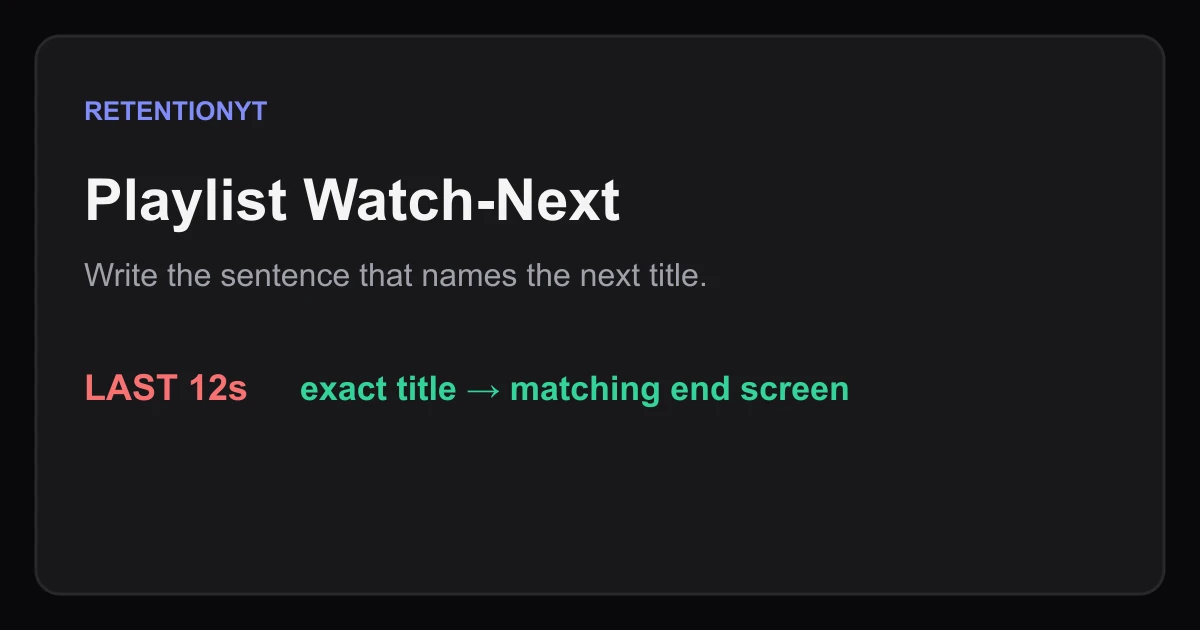
Write a YouTube playlist next-video handoff that names the exact title, matches your end screen, and gives viewers a clear reason to continue watching.
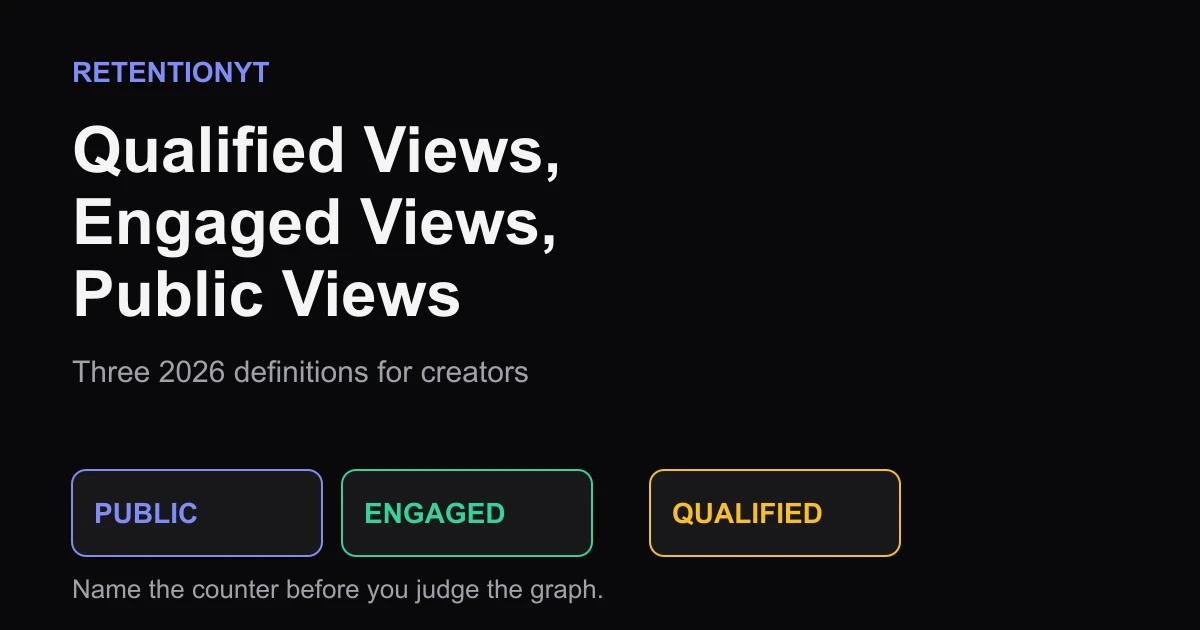
YouTube qualified views vs engaged views 2026: separate the new public counter from the engaged and qualified metrics you use for retention and YPP decisions.
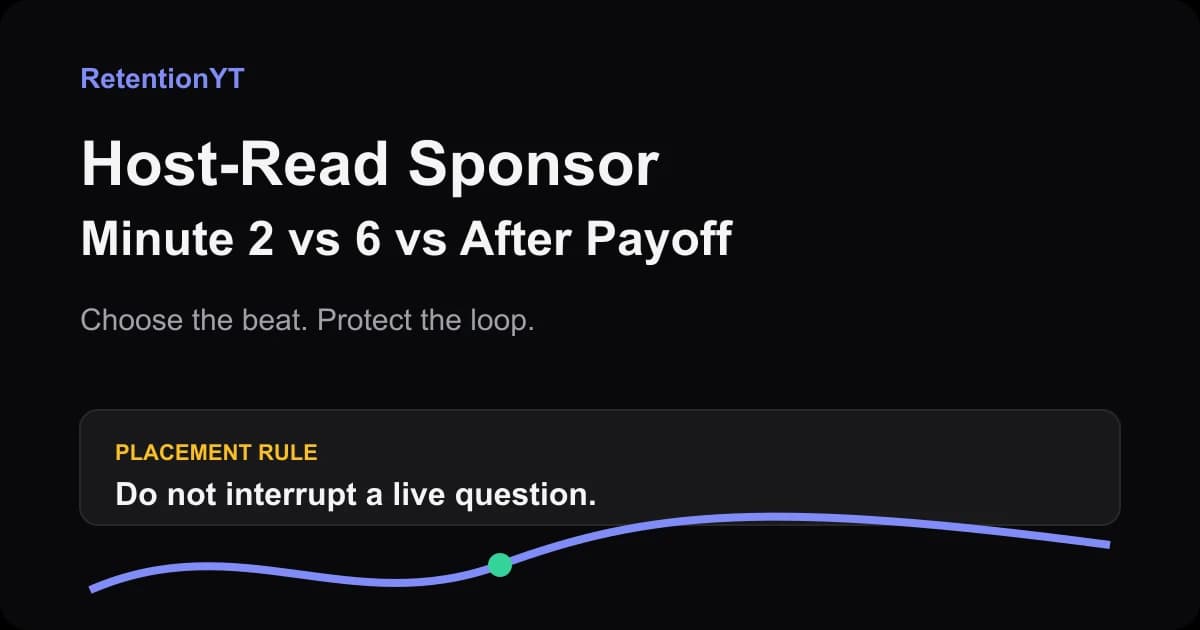
Compare a YouTube sponsor read at minute 2, minute 6, or after a payoff. Use your retention graph to protect the loop instead of trusting a fixed placement rule.
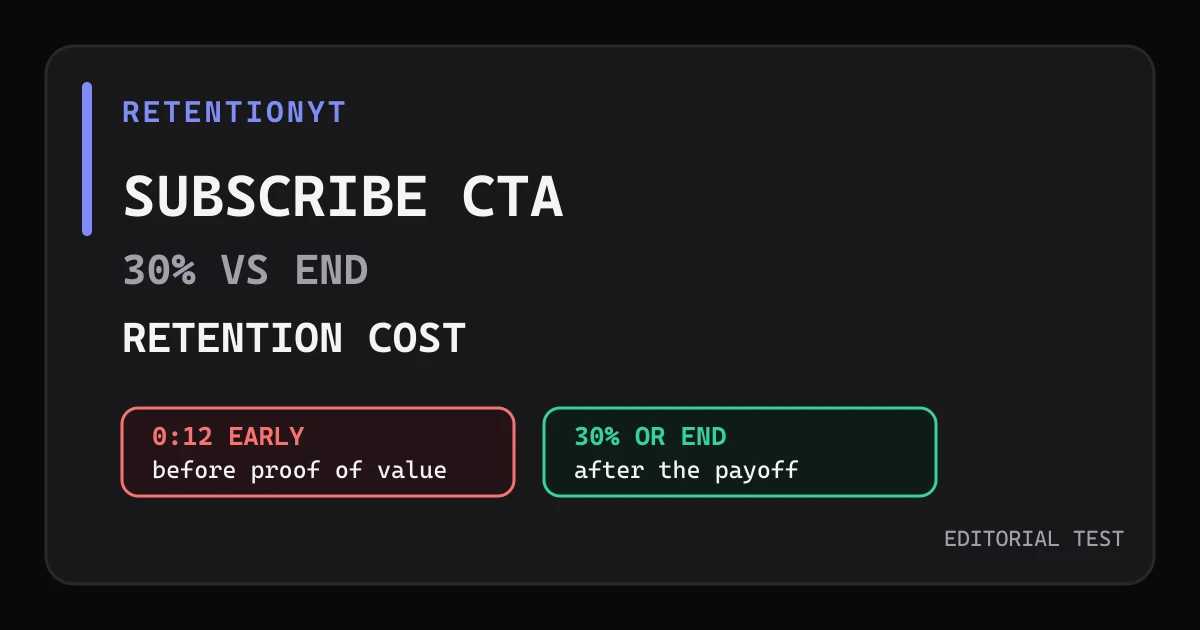
Test your subscribe CTA at 30% versus the end: compare the retention cost of an ask at 0:12, after a mini-payoff, and in the closing seconds.
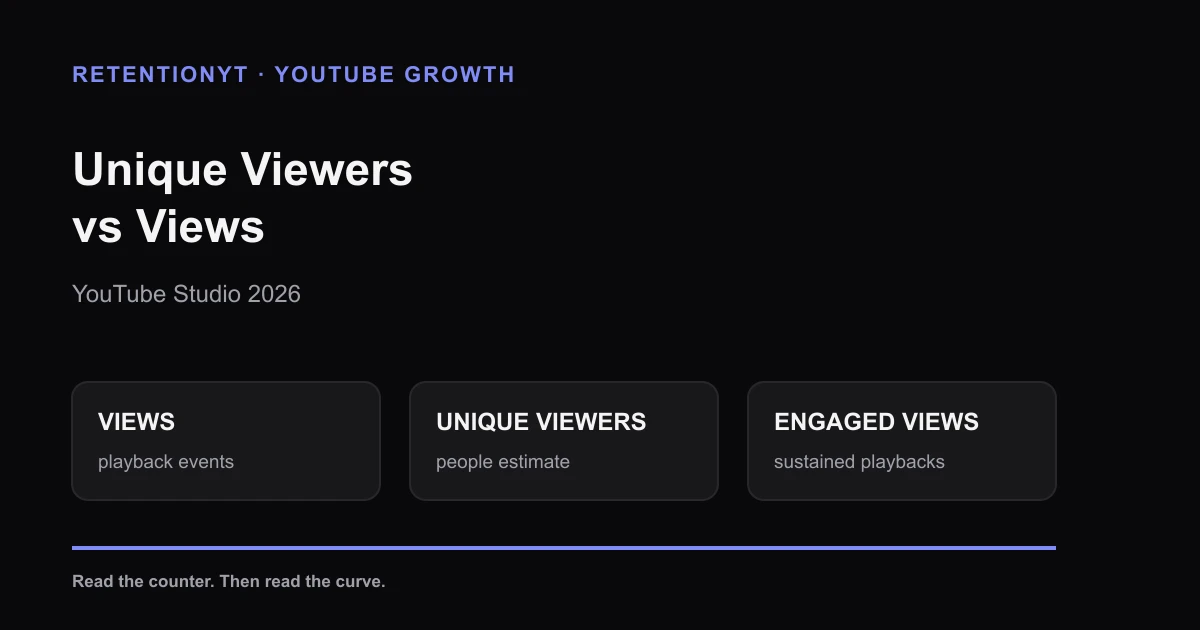
Unique viewers vs views in YouTube Studio 2026: understand the new first-frame count, separate people from playbacks, and use retention to judge your next upload.
Should you update an old YouTube video or make a new one? Compare the promise, metric meaning, and workflow before you rescript, annotate, or publish a fresh lesson.
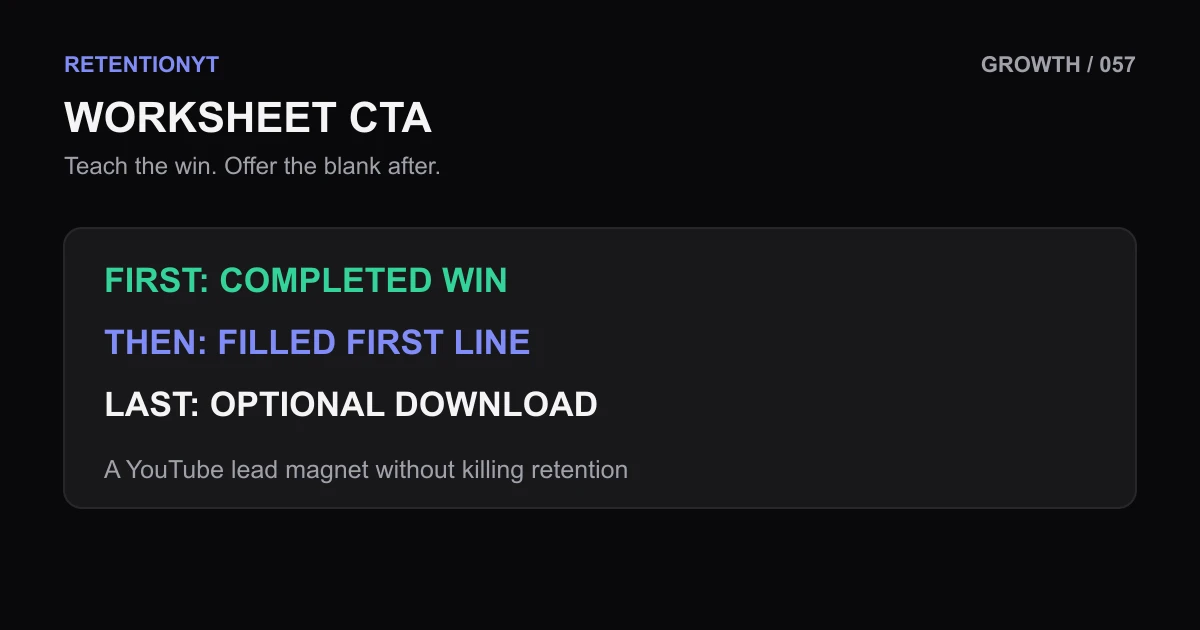
Use a YouTube lead magnet without killing retention: teach one completed win first, then show the filled worksheet line before offering the blank PDF.
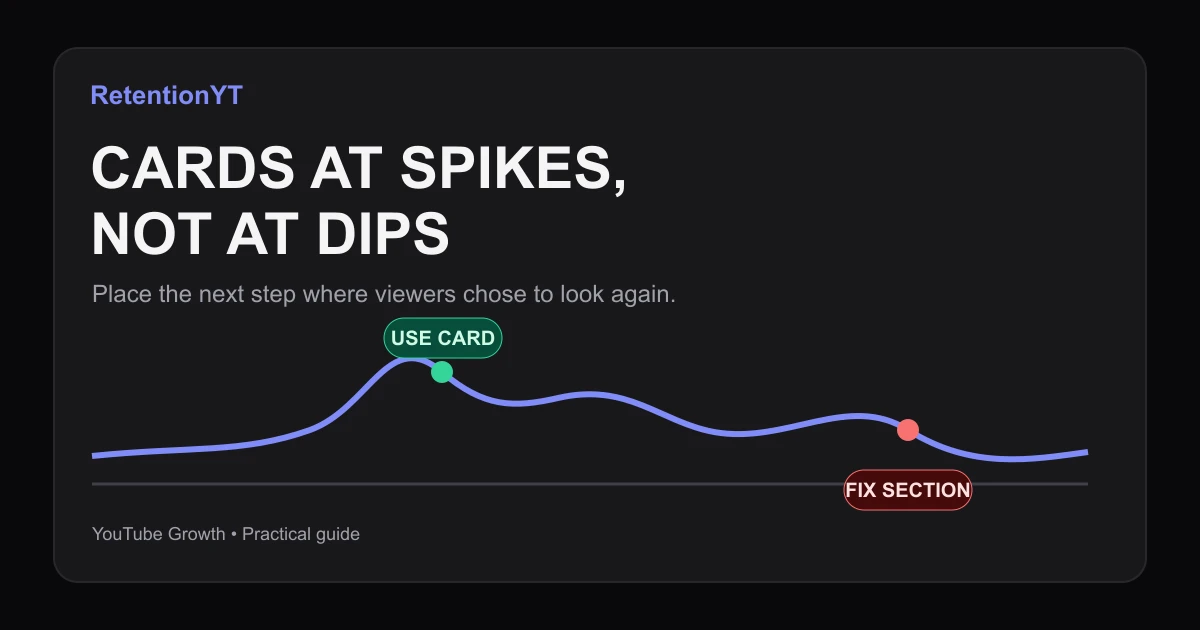
Learn when to place YouTube cards retention: use rewind spikes as demand signals, avoid dips, and follow a practical Studio workflow on your next upload.
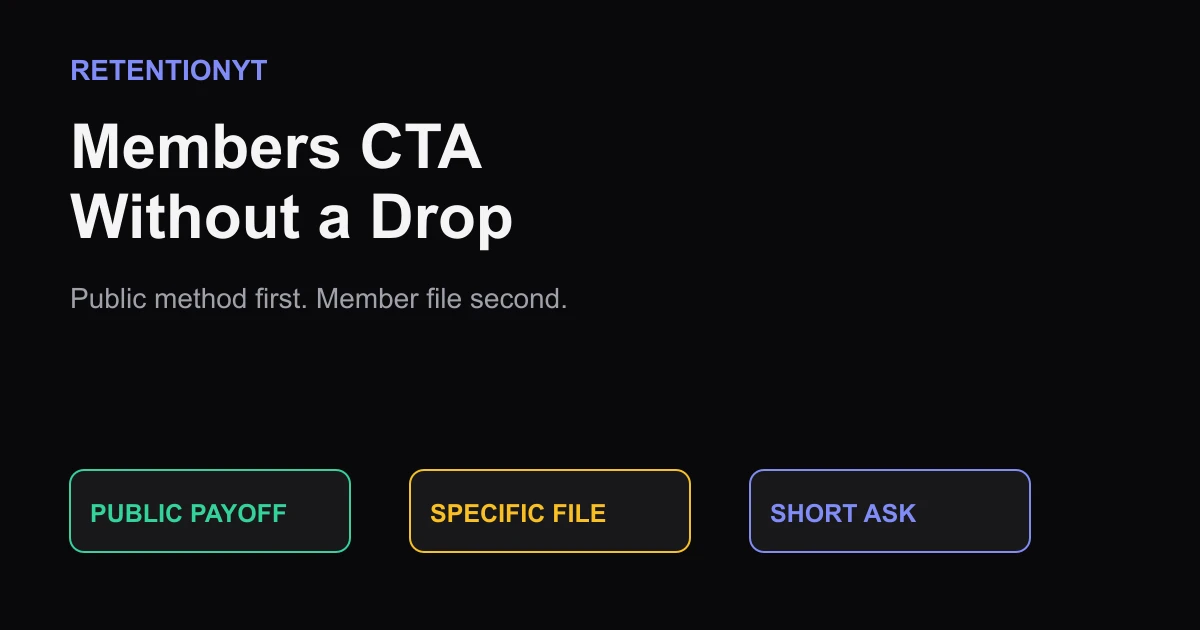
Place your YouTube membership ask after a complete public payoff, then offer a specific member-only file so viewers get the method without feeling held hostage.
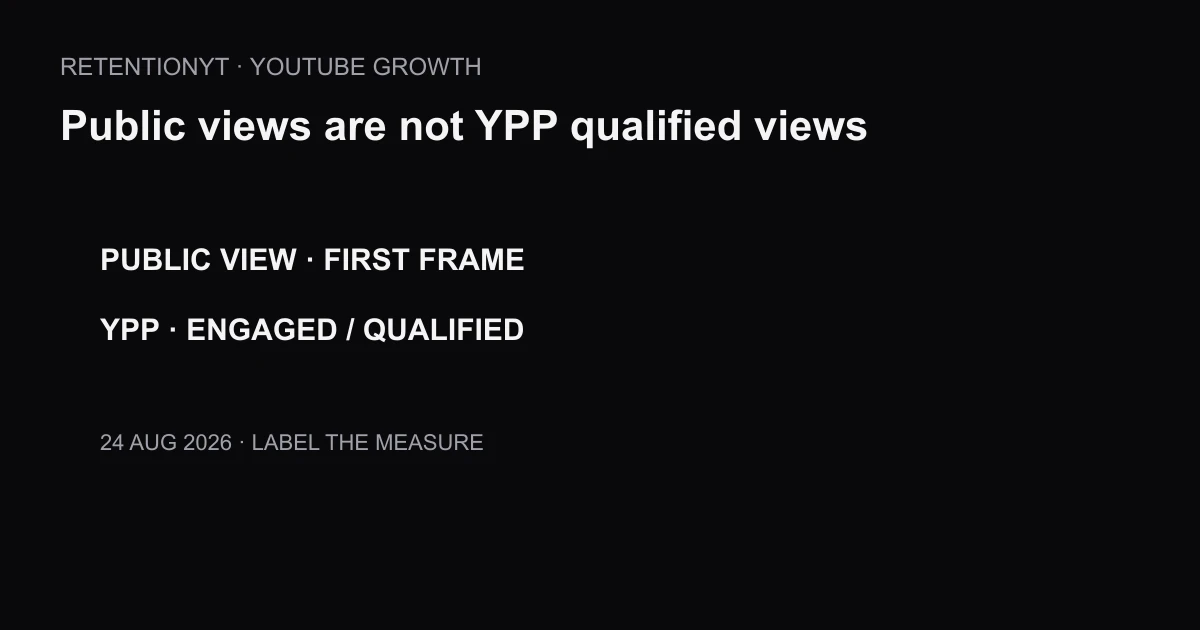
Separate YouTube’s first-frame public counter from qualified views for YPP, so a larger public number does not trigger an avoidable RPM panic.
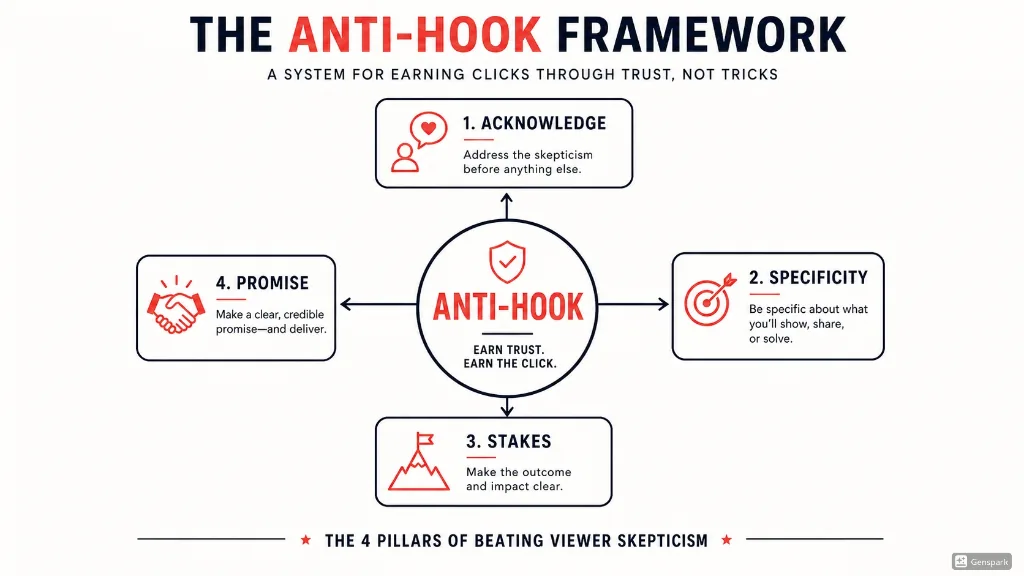
Learn the Anti-Hook framework — a proven system for beating YouTube viewer skepticism in the first 10 seconds. Frameworks, scripts, examples, and templates from RetentionYT.
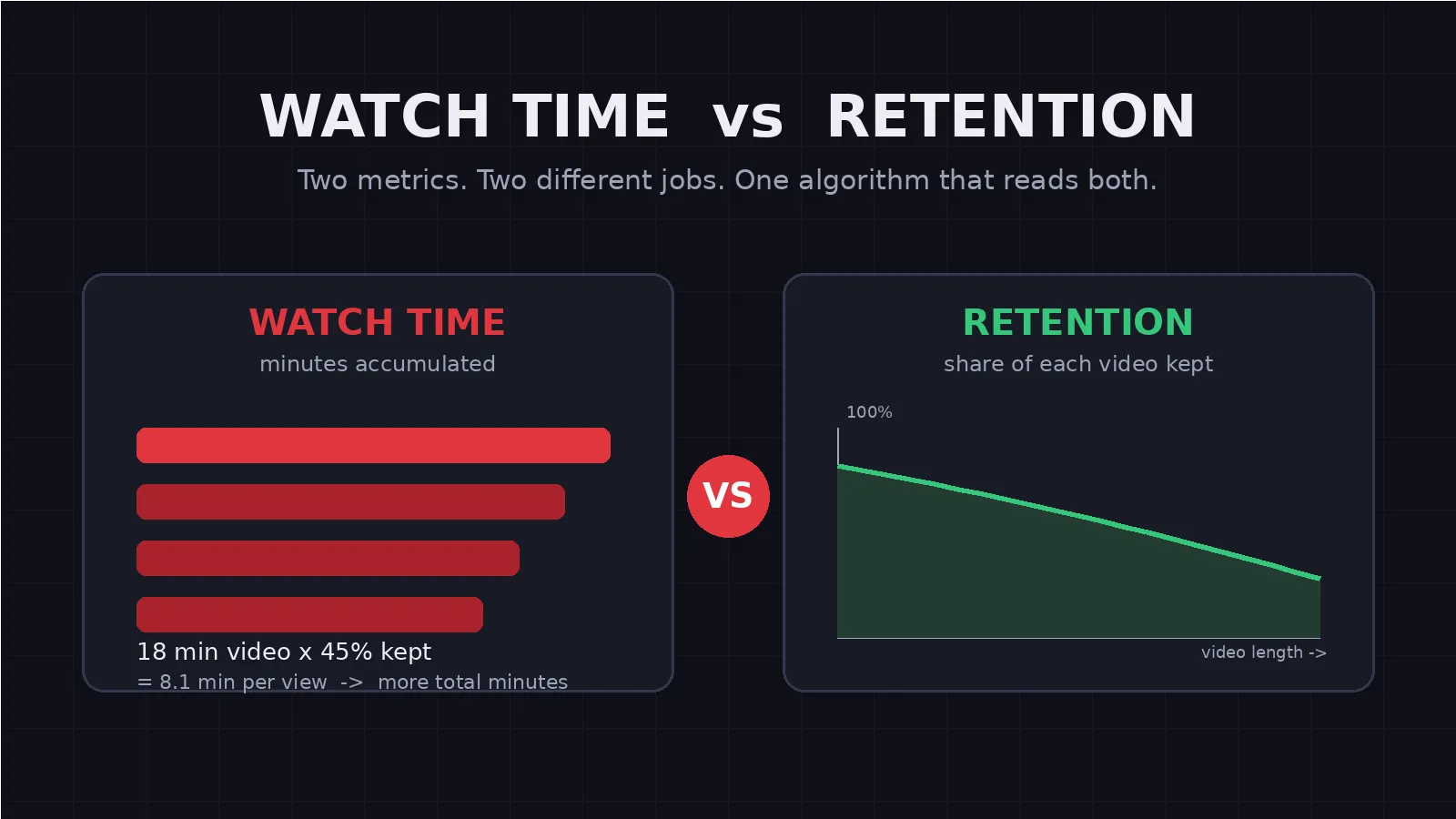
Watch time vs retention sound alike but measure different things. Learn what the YouTube algorithm actually rewards and how to choose the right video length.
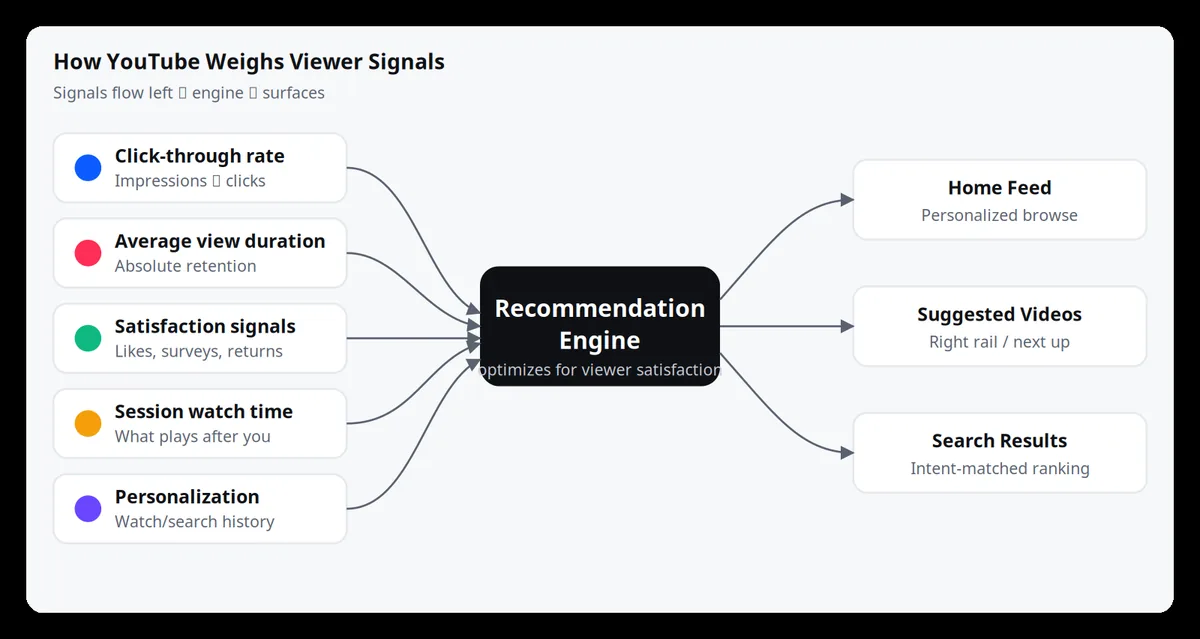
How the YouTube algorithm works in 2026: the signals it actually rewards, why retention beats every other metric, and a practical framework creators can use to get more views, watch time, and subscribers.
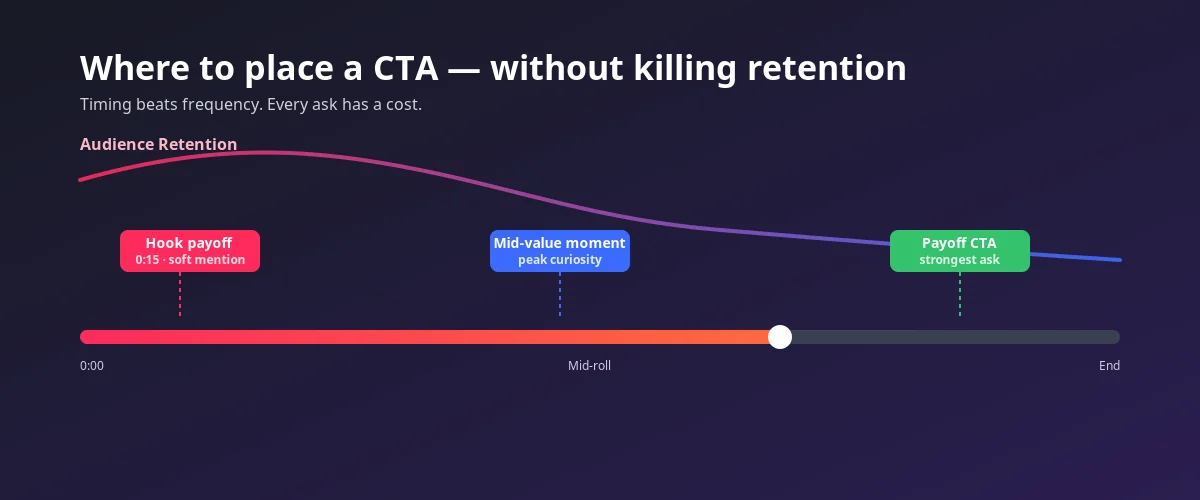
A data-driven guide to YouTube CTA placement. Learn exactly where — and when — to ask for the subscribe without killing audience retention, watch time, or session signals.
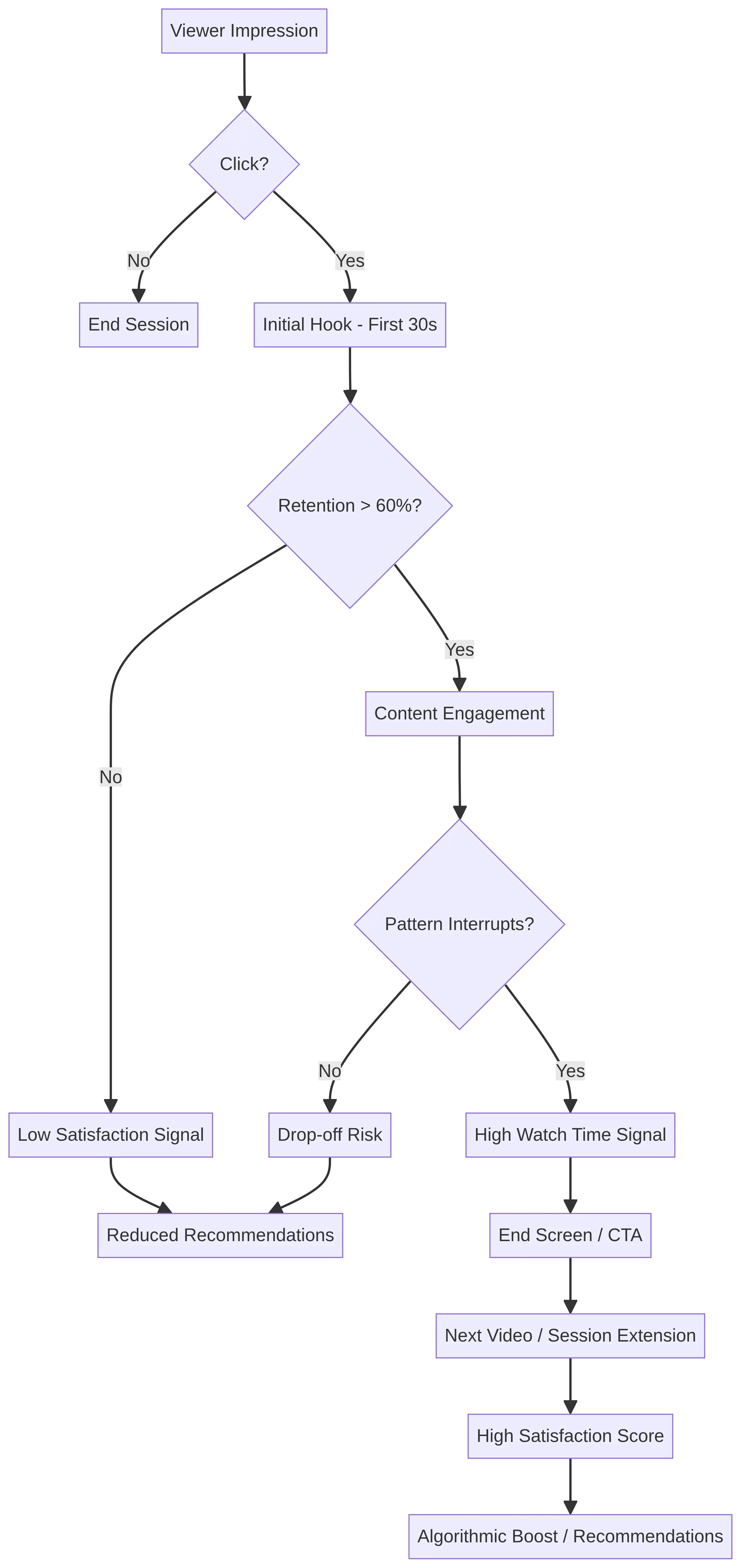
Stop chasing trends. Learn how to get more views on YouTube by focusing on audience retention. Discover the algorithm secrets and practical strategies for growth in 2026.
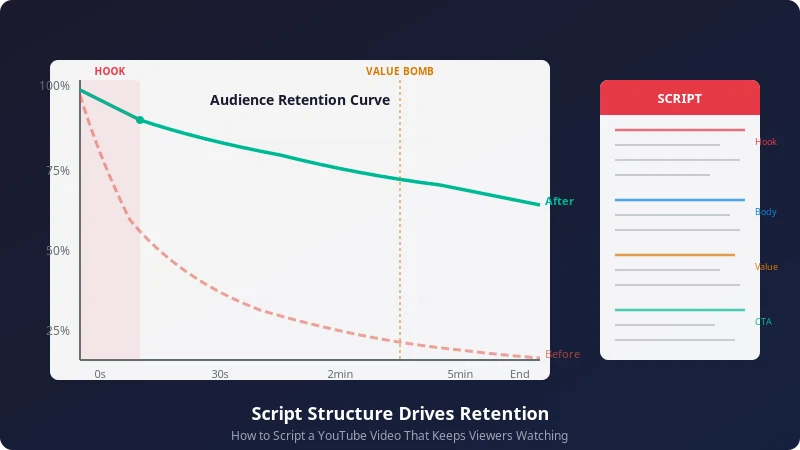
A complete, data-backed system for scripting YouTube videos that hold attention from the first second to the last — hooks, open loops, pattern interrupts, pacing, and full script templates you can use today.
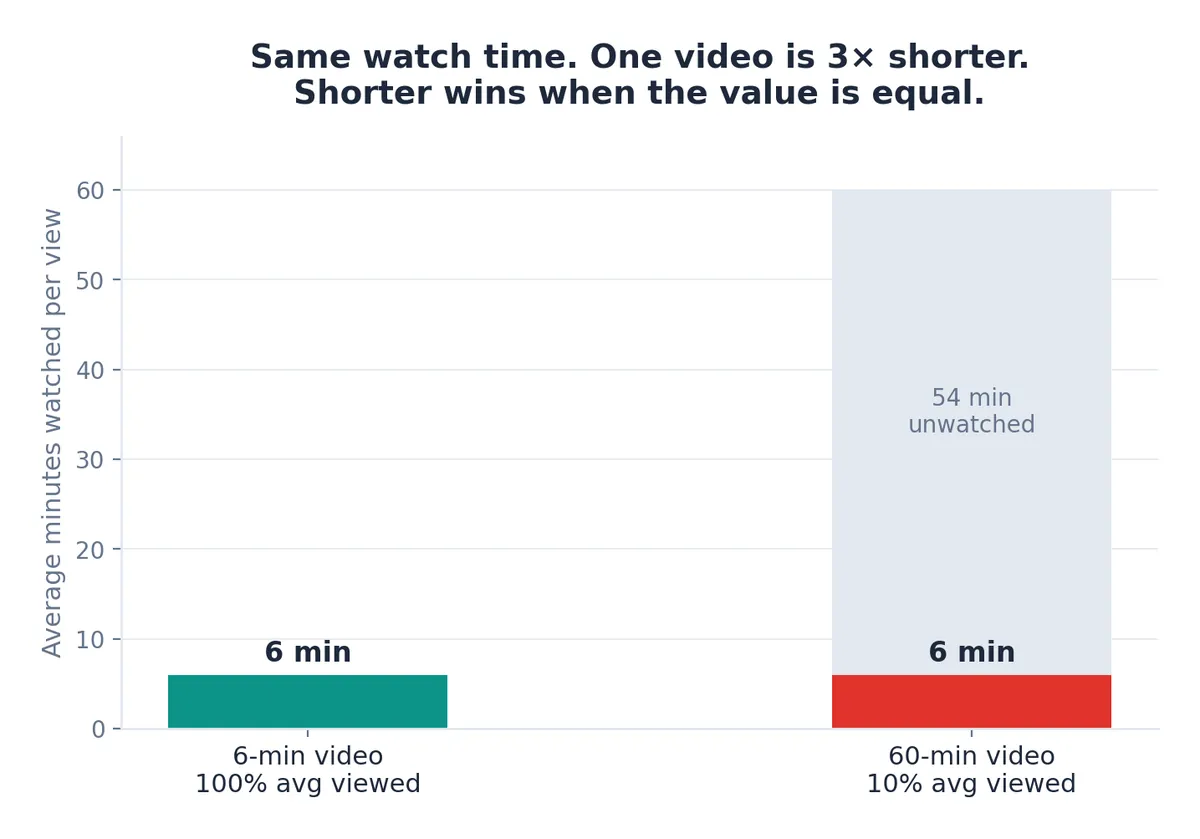
The best YouTube video length isn't a fixed number — it's the shortest length that fully delivers the value viewers clicked for. Data, niche ranges & frameworks.
On Shorts, the first second decides everything. Learn the exact scripting frameworks, retention data, and templates top creators use to beat the swipe and win the Shorts feed.