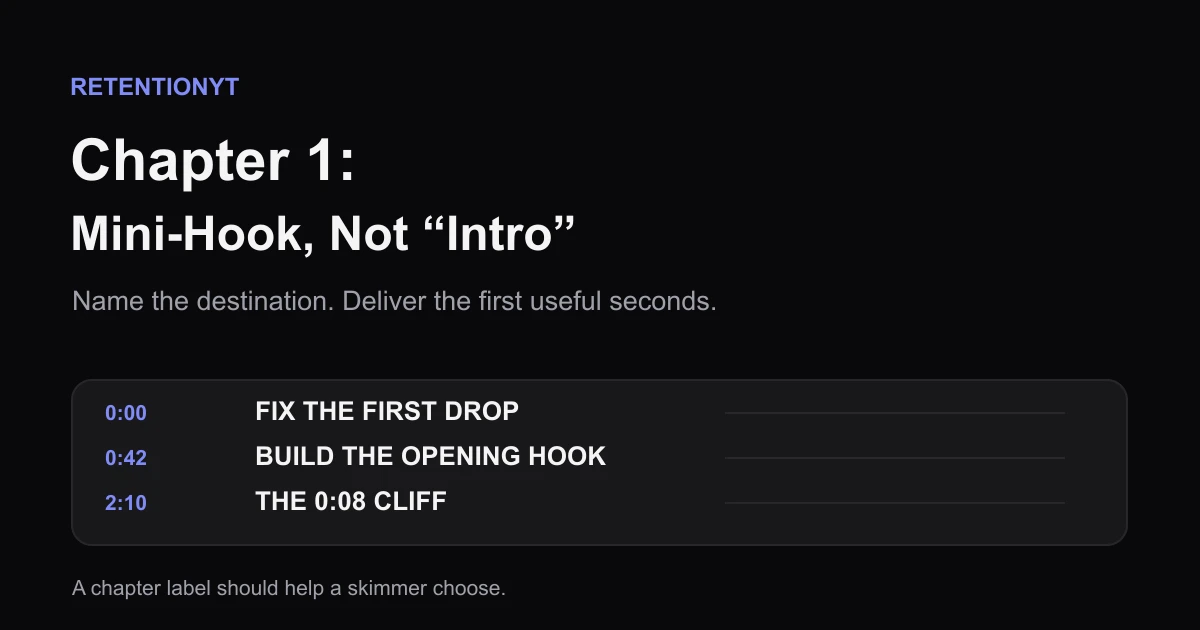
Chapter 1 Title as a Mini-Hook, Not 'Intro'
Replace a skippable YouTube chapter 1 label with a four-to-six-word promise, then use the timestamp and opening seconds to deliver what the viewer expects.
8 min read
Practical guides on YouTube retention, hooks, and scripting — turning audience-retention data into advice you can use on your next video.
Replace a skippable YouTube chapter 1 label with a four-to-six-word promise, then use the timestamp and opening seconds to deliver what the viewer expects.
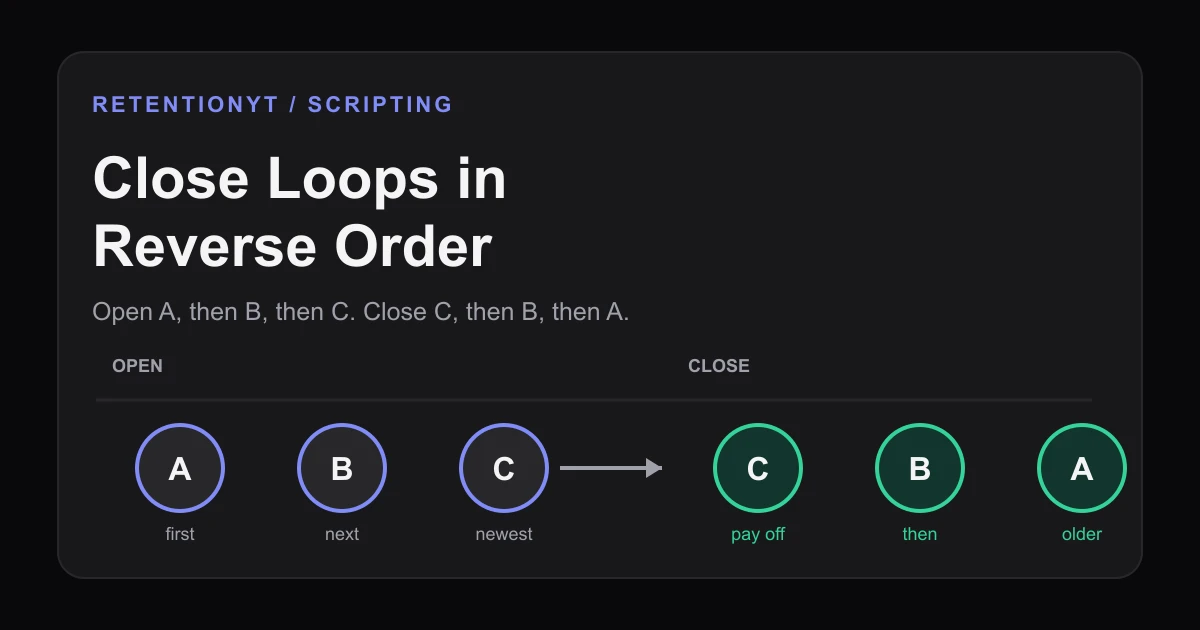
Learn the order to close open loops in a YouTube script: pay off the last tease first, with timestamps, examples, and a Studio check for creators.
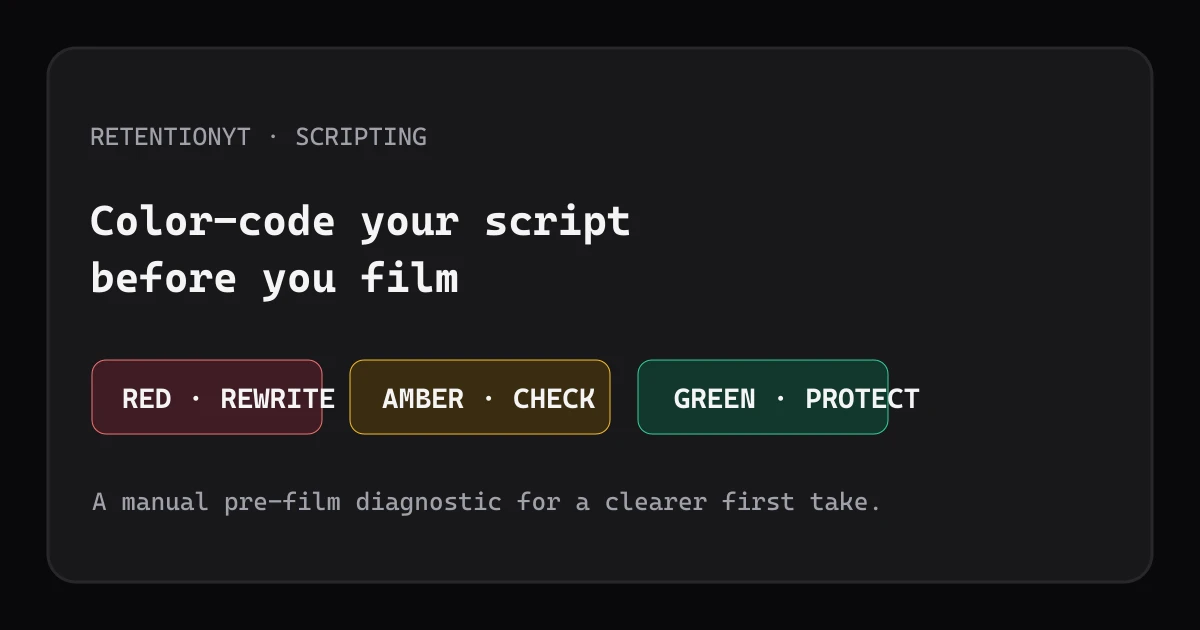
Use a three-color script audit to catch weak opening promises, delayed payoffs, and vague lines before filming your next YouTube video upload.
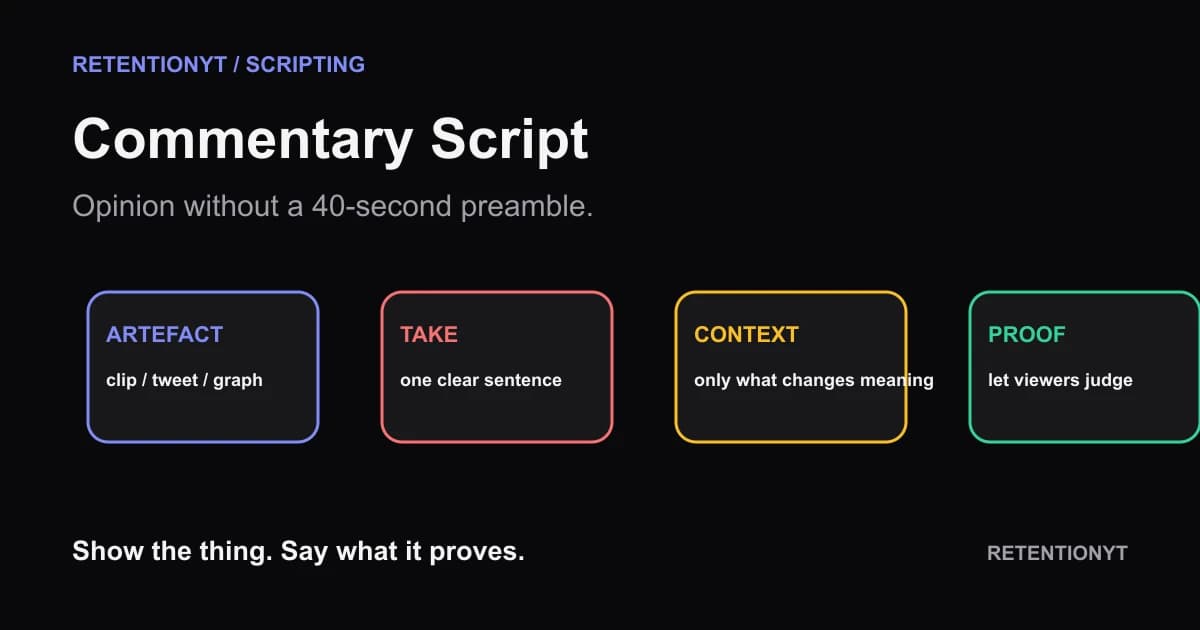
Build a YouTube commentary video script start around the clip, tweet, or graph—not your biography. Put the artefact and one-sentence take on screen, then earn the context.
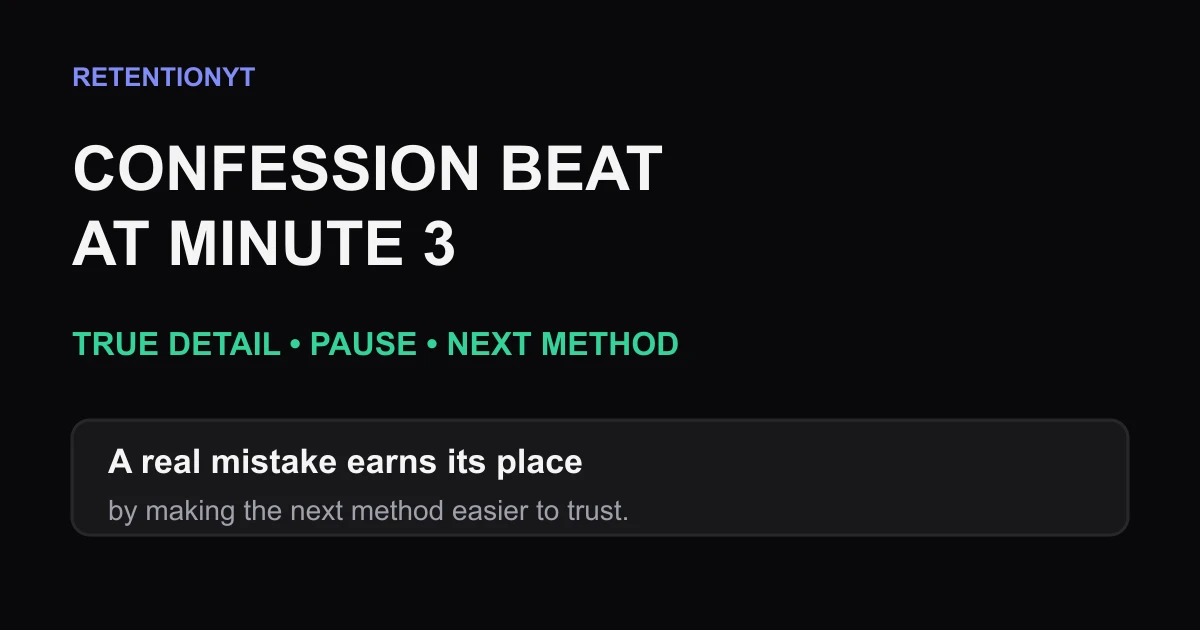
Use a true 15-second confession around minute 3 to reset a lecture, rebuild trust, and lead into the next tutorial method without turning your story into an ad.
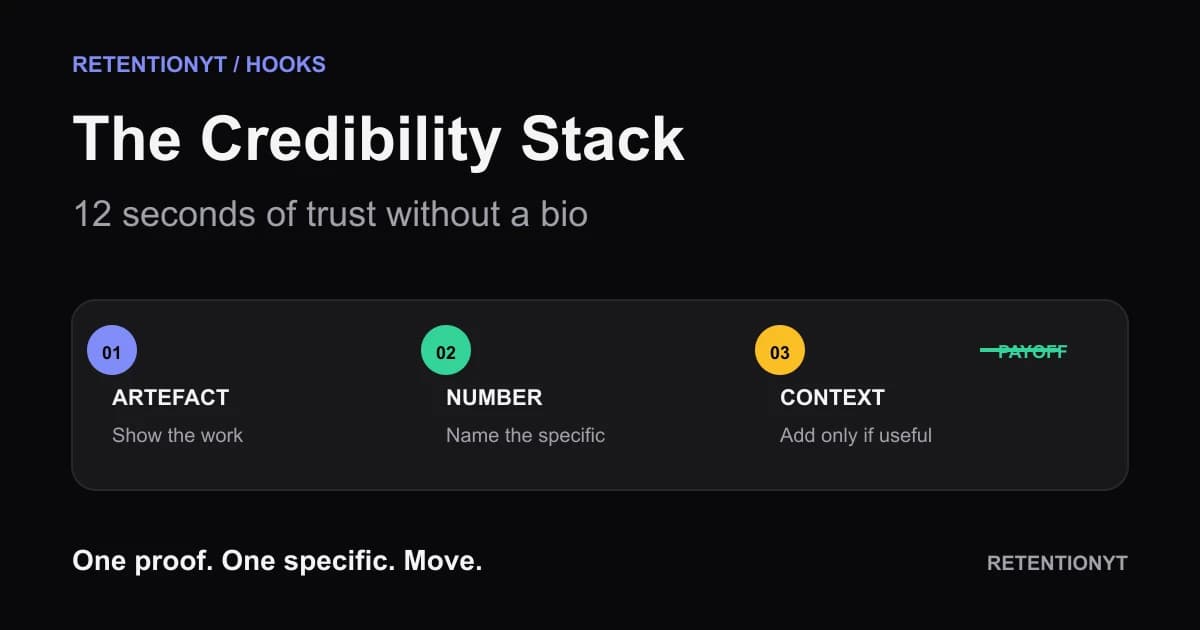
Build credibility in a YouTube intro without a bio: stack one proof artefact, one defensible number, and one short credential inside the first 12 seconds.
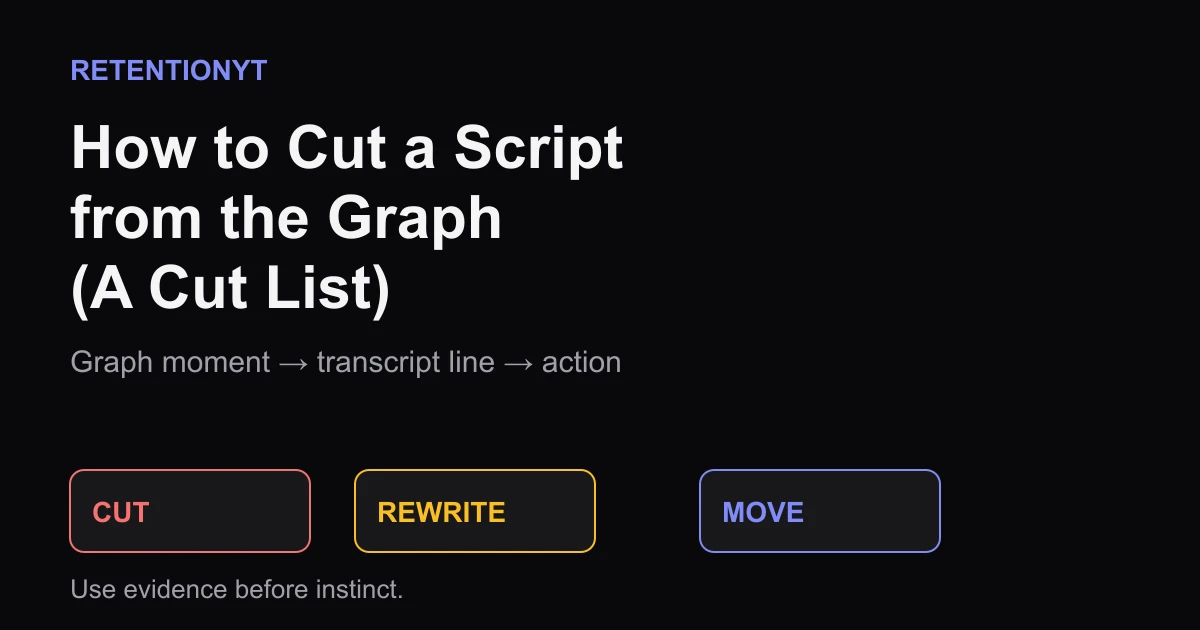
Edit your YouTube script using the retention graph: export the dip, map it to the exact line, then mark CUT, REWRITE, or MOVE without guessing.
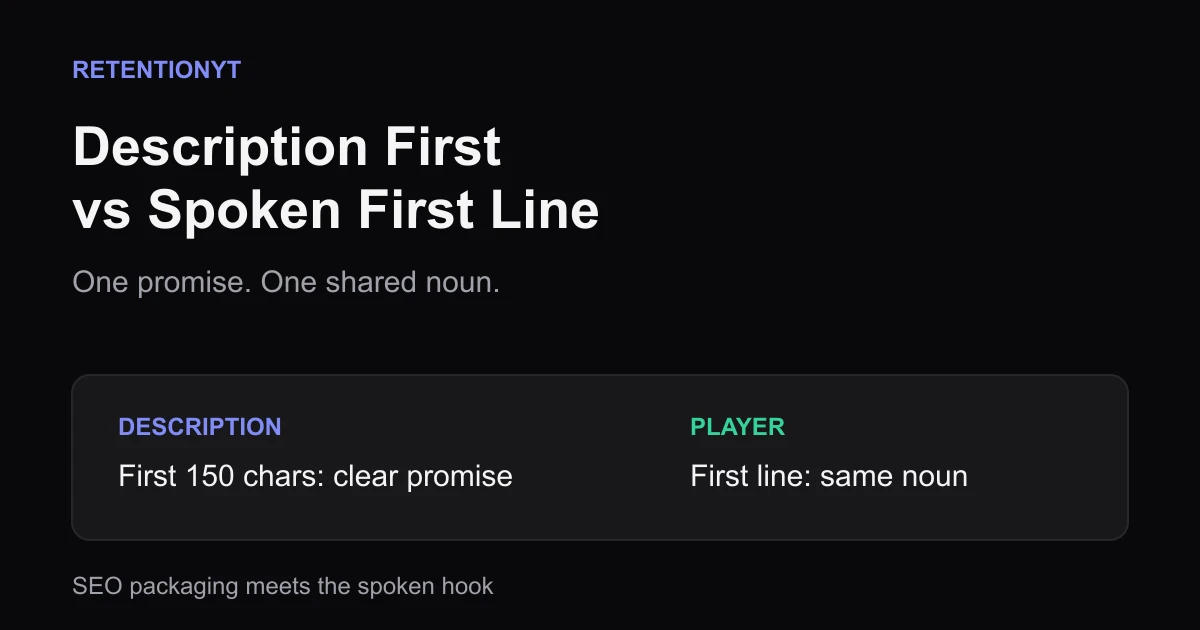
Use the first 150 characters of your YouTube description as a clear search promise, then make your spoken first line deliver the same noun before the vlog detour.
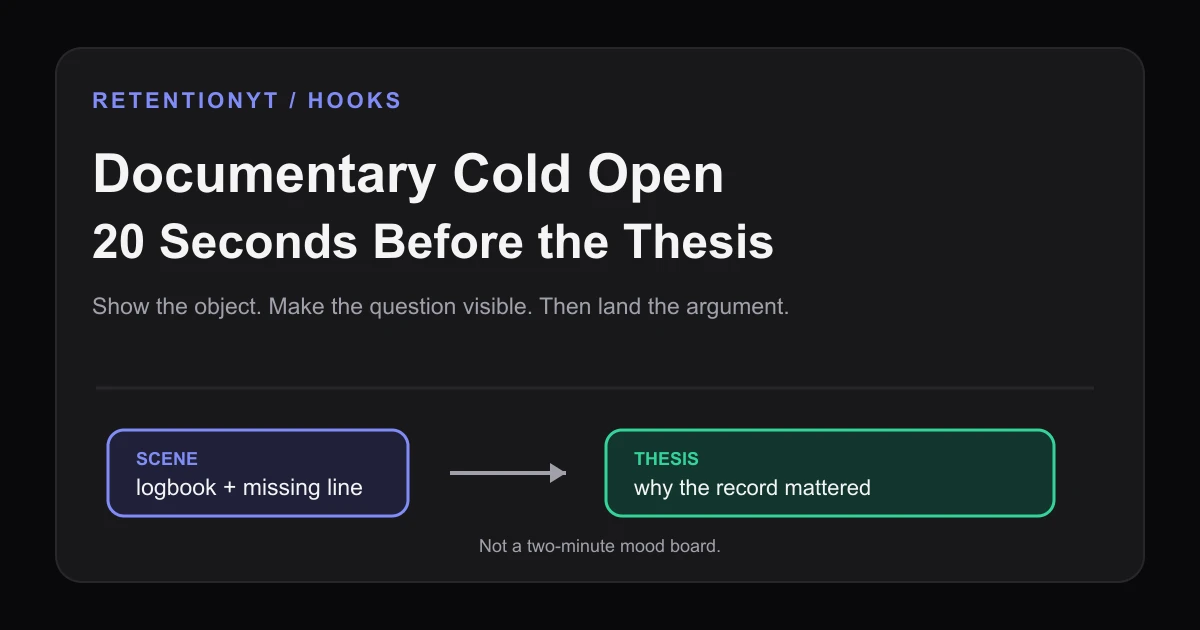
Script a YouTube documentary cold open as a 20-second scene with a concrete object, then land the thesis before the viewer mistakes atmosphere for the story.