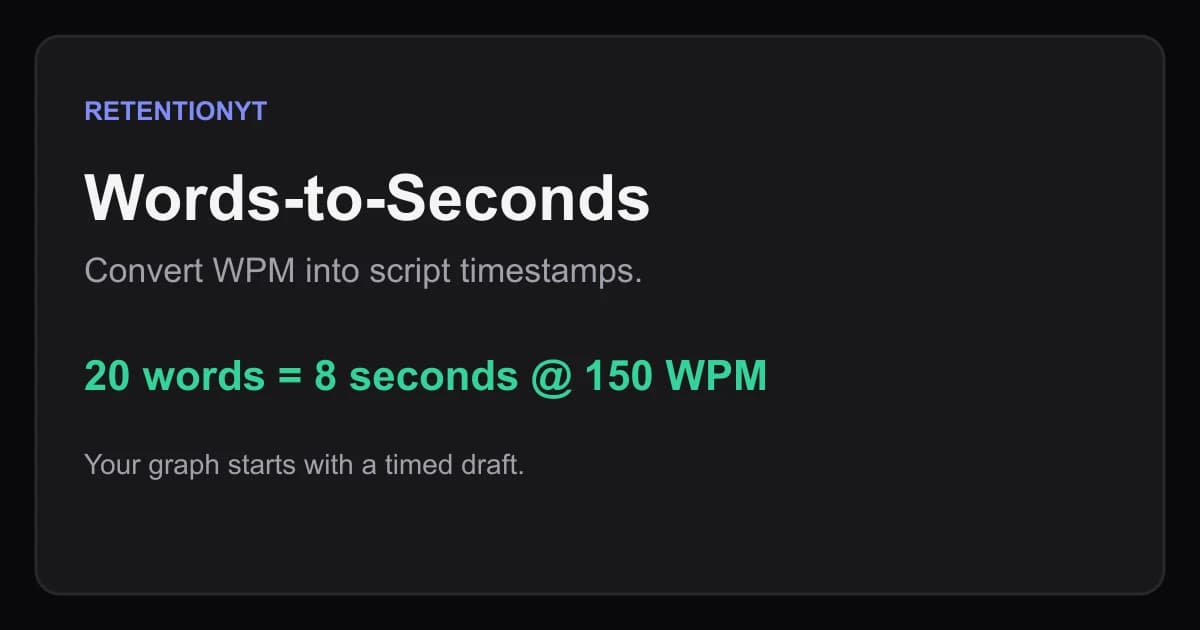
Words-to-Seconds: Convert WPM So Your Graph Matches Your Script
Convert WPM into YouTube script timestamps with a practical words-to-seconds table, worked examples, Studio checks, and pacing moves for talking-head and voiceover videos.
10 min read
Practical guides on YouTube retention, hooks, and scripting — turning audience-retention data into advice you can use on your next video.
Convert WPM into YouTube script timestamps with a practical words-to-seconds table, worked examples, Studio checks, and pacing moves for talking-head and voiceover videos.
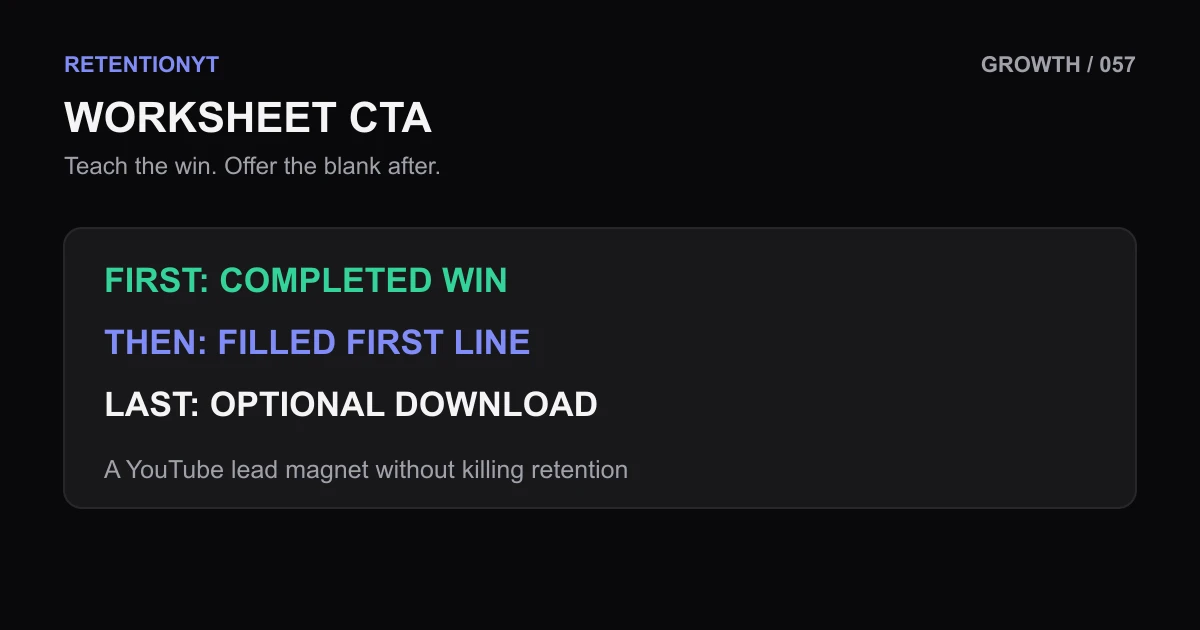
Use a YouTube lead magnet without killing retention: teach one completed win first, then show the filled worksheet line before offering the blank PDF.
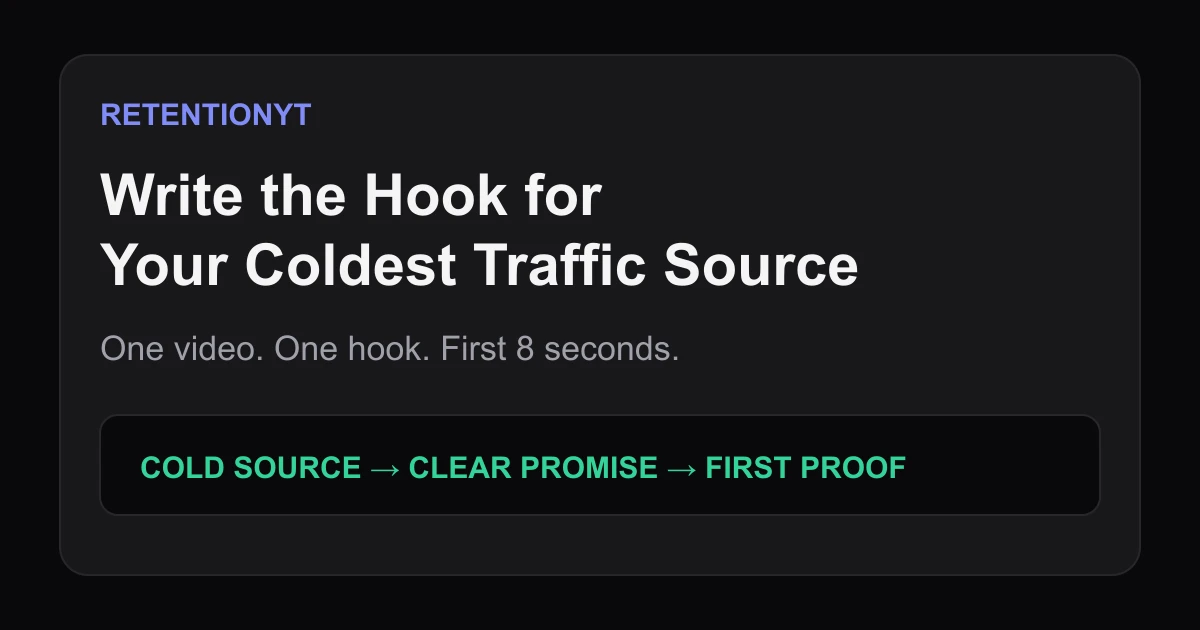
Write one YouTube hook for the coldest traffic source your video earns, then test the first 8 seconds against the promise your thumbnail and title made.
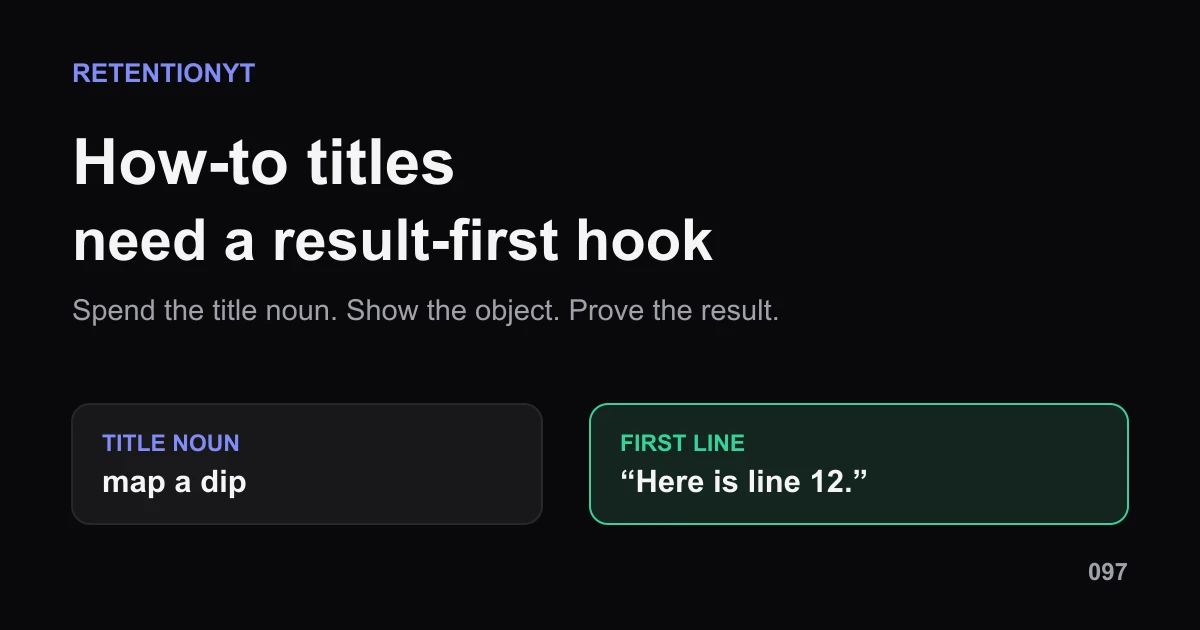
YouTube how-to title hook that is not boring: turn one title noun into a result-first first line, a visible object, and a proof cue your viewer can follow.
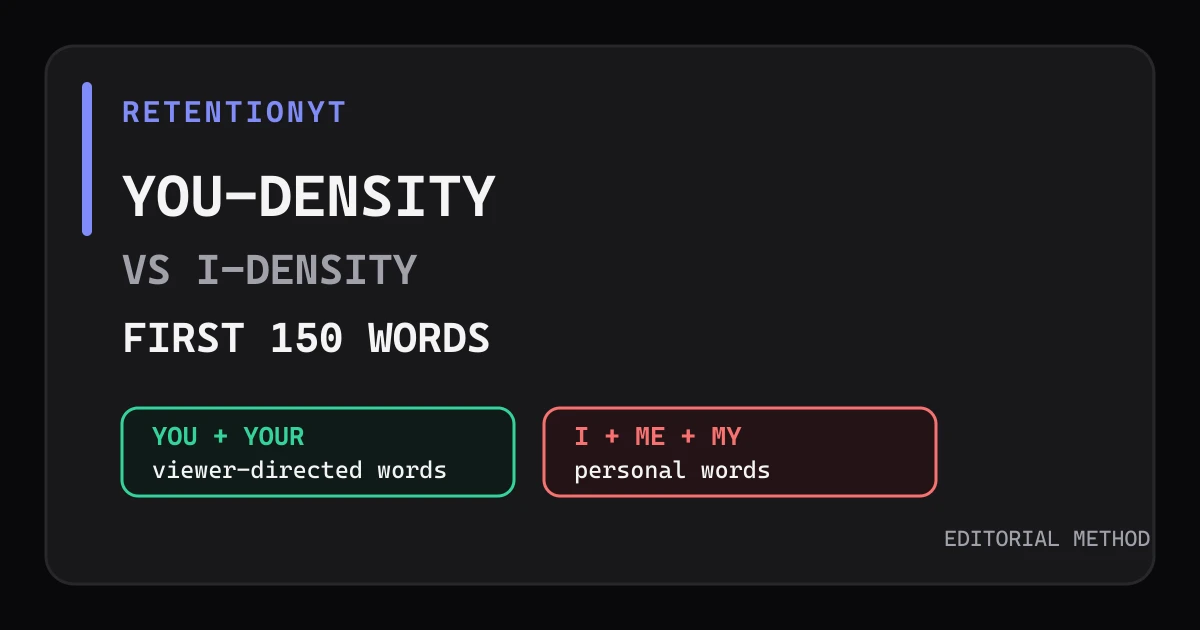
Use you more than I in a YouTube script intro by counting the first 150 words, spotting diary-style openings, and rewriting the hook for the viewer.
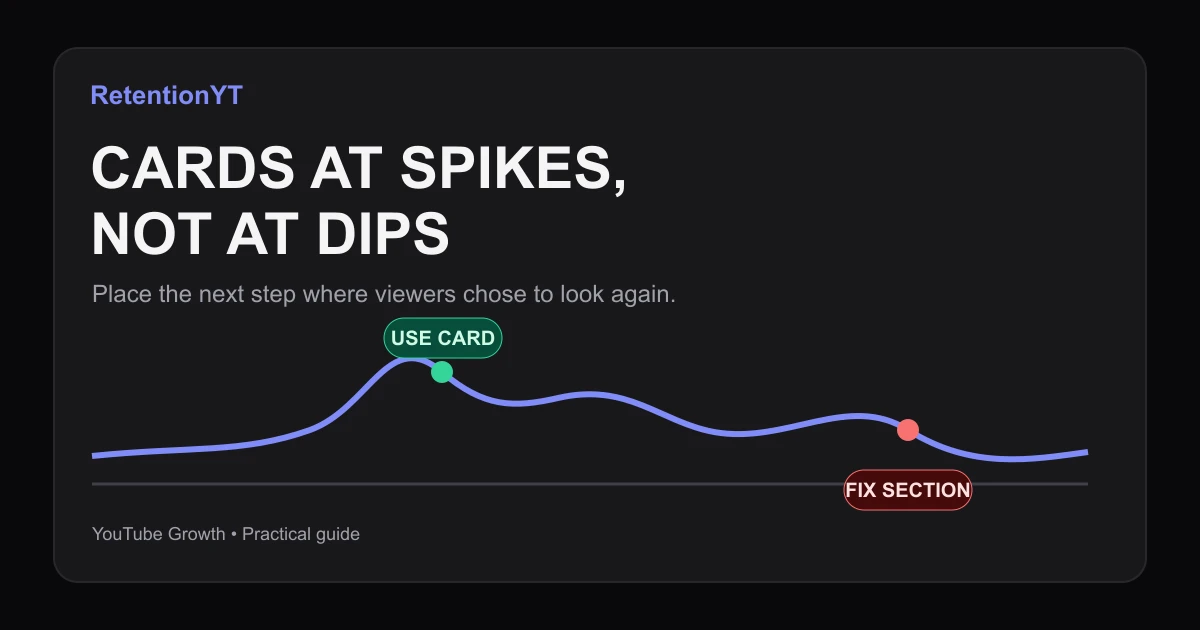
Learn when to place YouTube cards retention: use rewind spikes as demand signals, avoid dips, and follow a practical Studio workflow on your next upload.
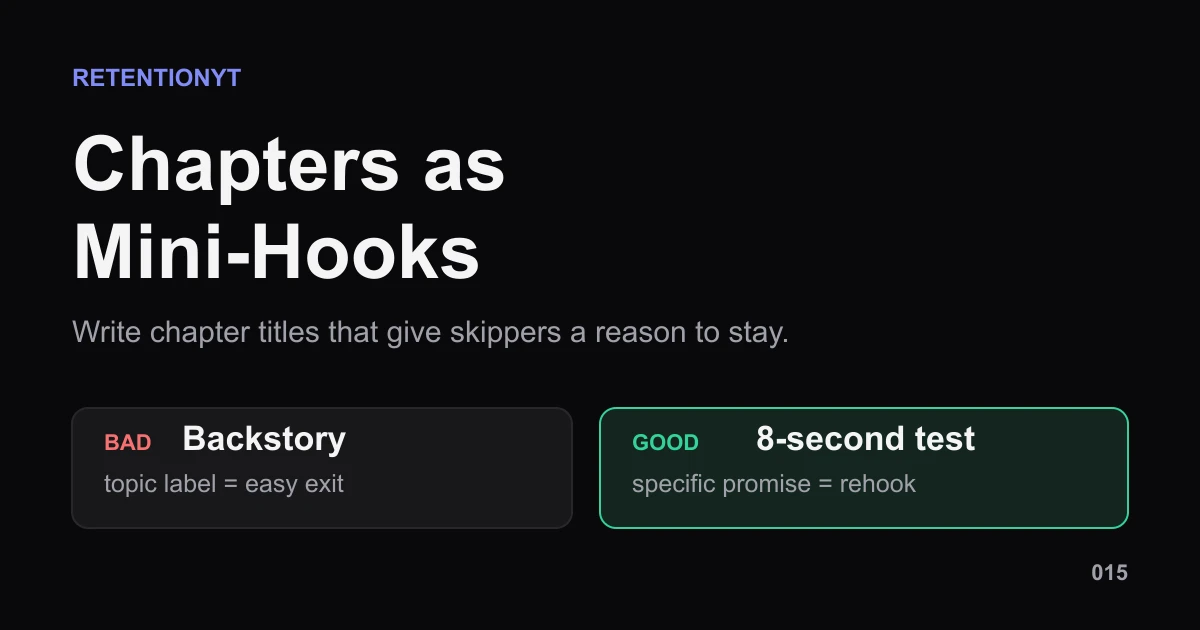
Learn how to write YouTube chapter titles that protect retention: turn spoilers into mini-hooks, add a five-second recap, and check the cut in Studio.
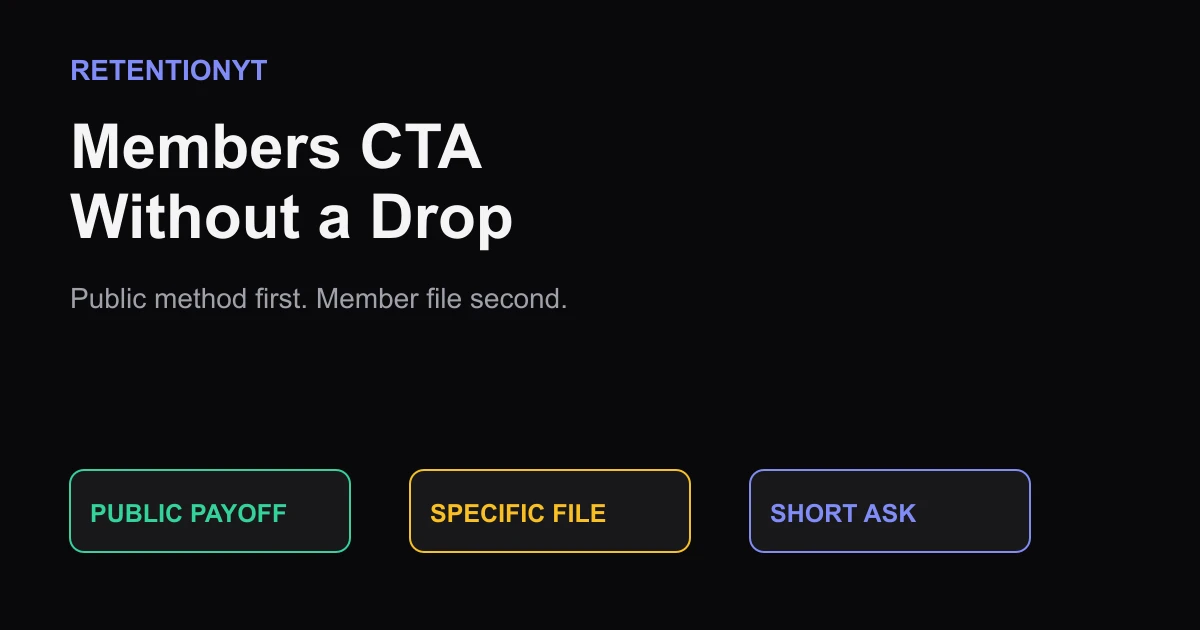
Place your YouTube membership ask after a complete public payoff, then offer a specific member-only file so viewers get the method without feeling held hostage.
Decode YouTube Studio key moments with a practical timestamp method: keep spike lines, rewrite dips, and turn the intro label into a sharper first-30-second promise.