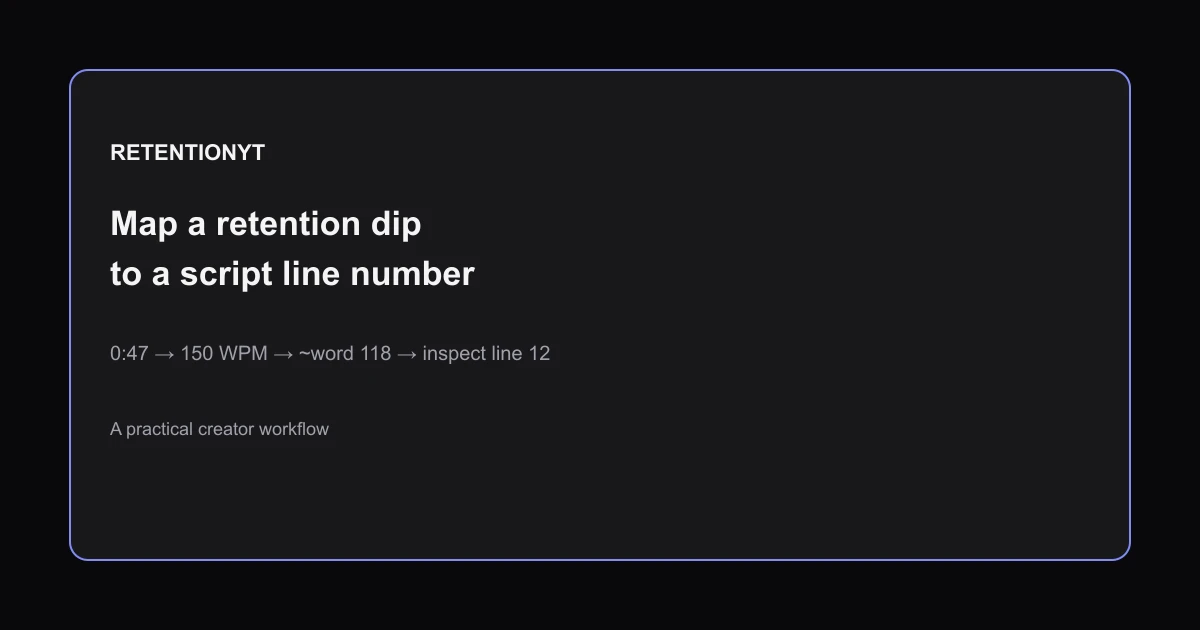
How to Map a Retention Dip to a Line Number in Your Script
Learn how to find which script line caused a retention dip: convert WPM to seconds, number your script, map the timestamp, and rewrite the right line.
10 min read
Practical guides on YouTube retention, hooks, and scripting — turning audience-retention data into advice you can use on your next video.
Learn how to find which script line caused a retention dip: convert WPM to seconds, number your script, map the timestamp, and rewrite the right line.

Place candidate YouTube mid-roll ad slots after a completed thought or example, distinguish creator-suggested slots from automated ad serving, and write a clear re-entry line for the next section.

Replace overbroad takedowns with a four-beat YouTube script structure: narrow the exact claim, explain the mechanism, show an inspectable receipt, and give a practical rewrite.
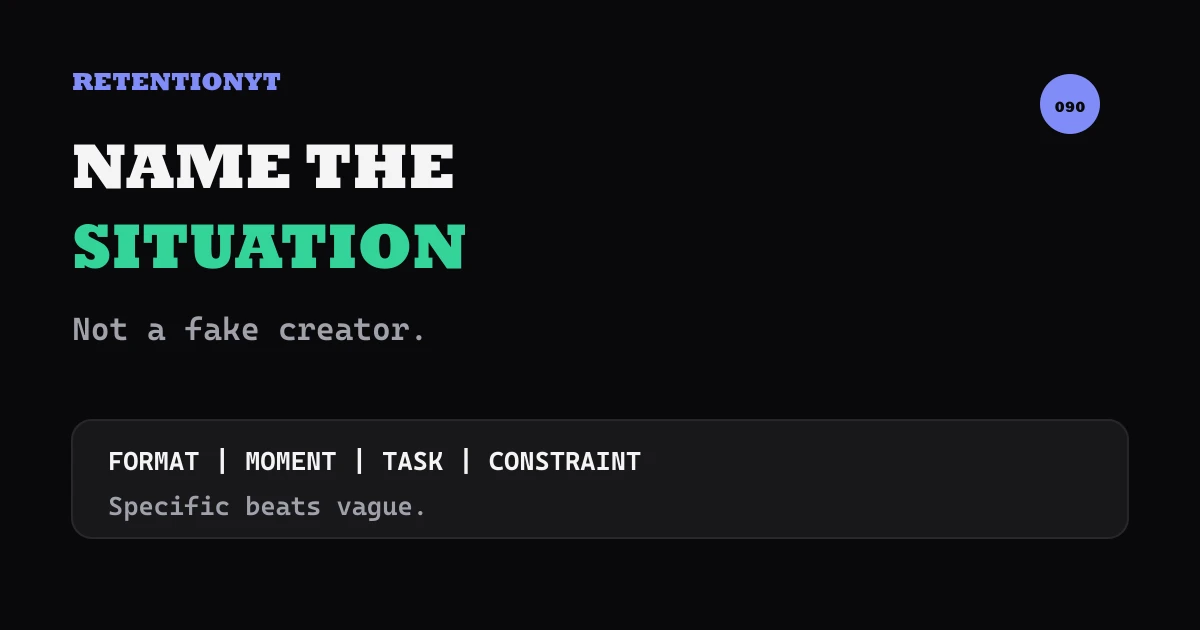
Use named situations, not invented creators, in YouTube tutorials: four honest rewrites that make examples specific, useful, and safe for retention.
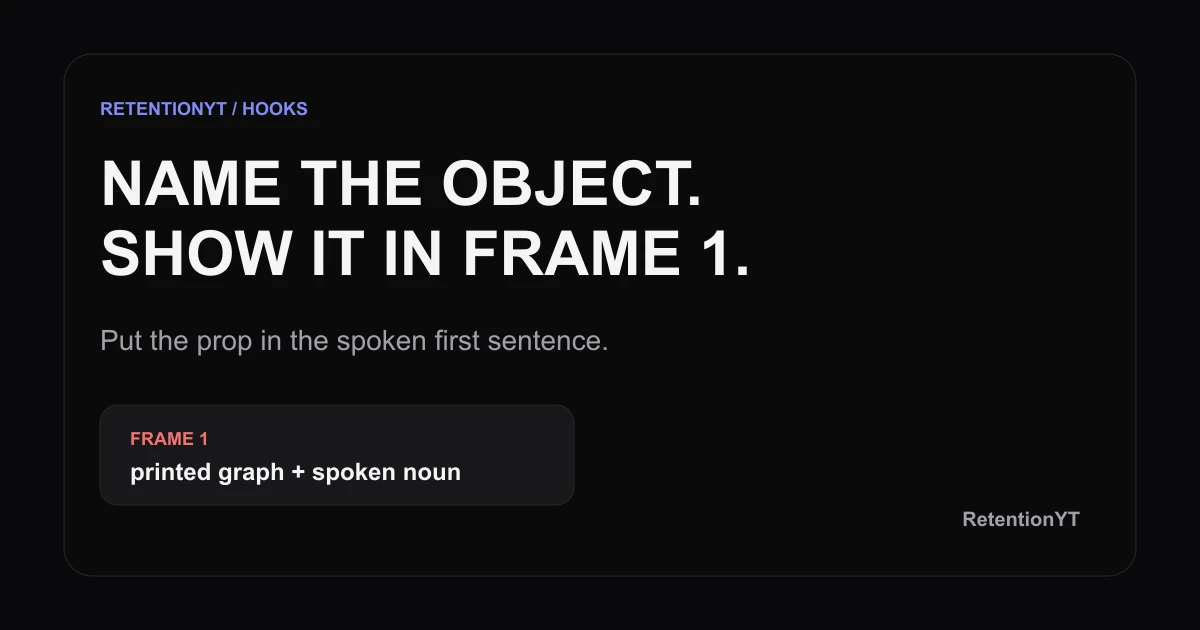
Show a named object in frame 1 and say it in sentence 1. Use a graph, timer, or thumbnail to turn an empty desk into a clear YouTube hook today.

Track dependent promises in your YouTube script with a simple promise ledger so every setup closes cleanly without delaying the main reason viewers clicked.

Open a timely YouTube explainer with the verified change and its relevant dates, separate confirmed scope from unstated assumptions, and choose when a story or fact should lead.

Synchronize mathematical relationships, units, spoken explanation, and mobile-legible cards in YouTube tutorials so viewers can follow calculations without guessing.

Keep closed captions synchronized with speech for accessibility, and use extra on-screen text only when it labels a control, highlights a value, or directs the eye.