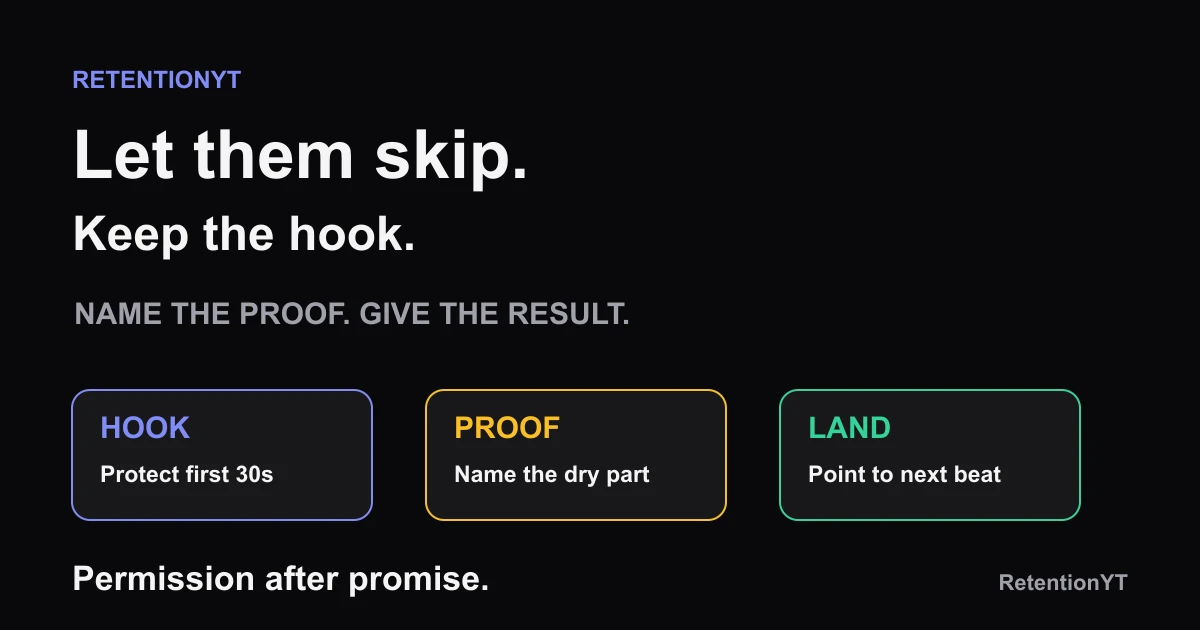
Speed-Up Sections: When to Tell Viewers to Skip
YouTube tell viewers they can skip this part: give mixed audiences a clean chapter, a one-sentence result, and a safe landing point without hiding a slump.
11 min read
Practical guides on YouTube retention, hooks, and scripting — turning audience-retention data into advice you can use on your next video.
YouTube tell viewers they can skip this part: give mixed audiences a clean chapter, a one-sentence result, and a safe landing point without hiding a slump.
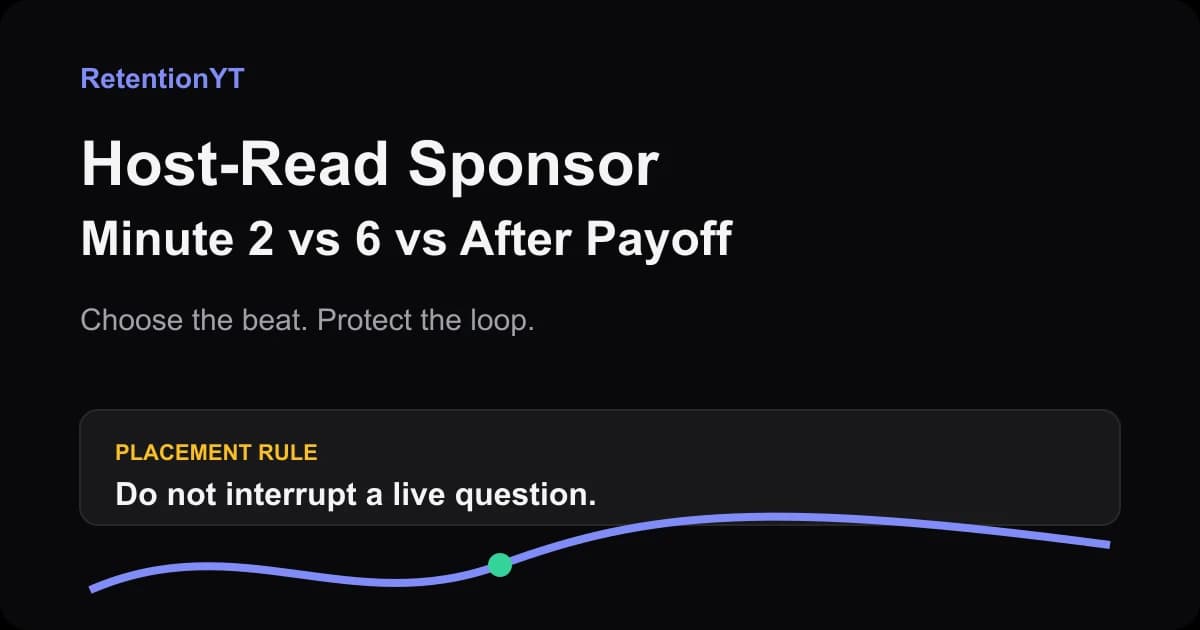
Compare a YouTube sponsor read at minute 2, minute 6, or after a payoff. Use your retention graph to protect the loop instead of trusting a fixed placement rule.
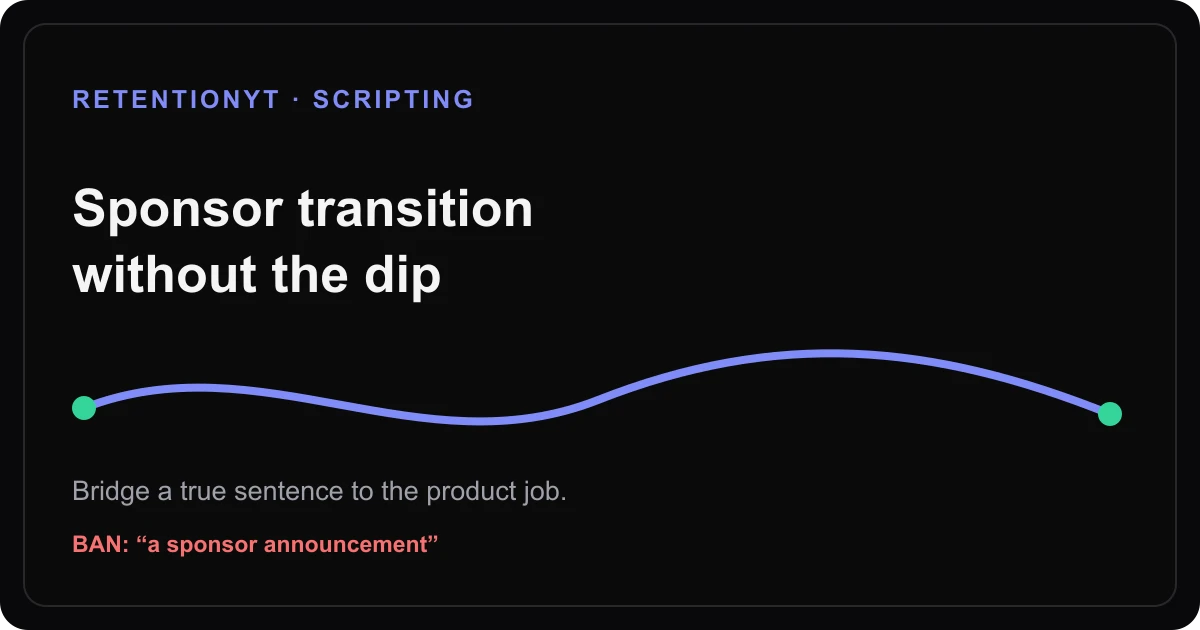
Write a YouTube sponsor transition that keeps momentum: bridge from a true sentence to the product job, disclose clearly, and return to the video without a dip.
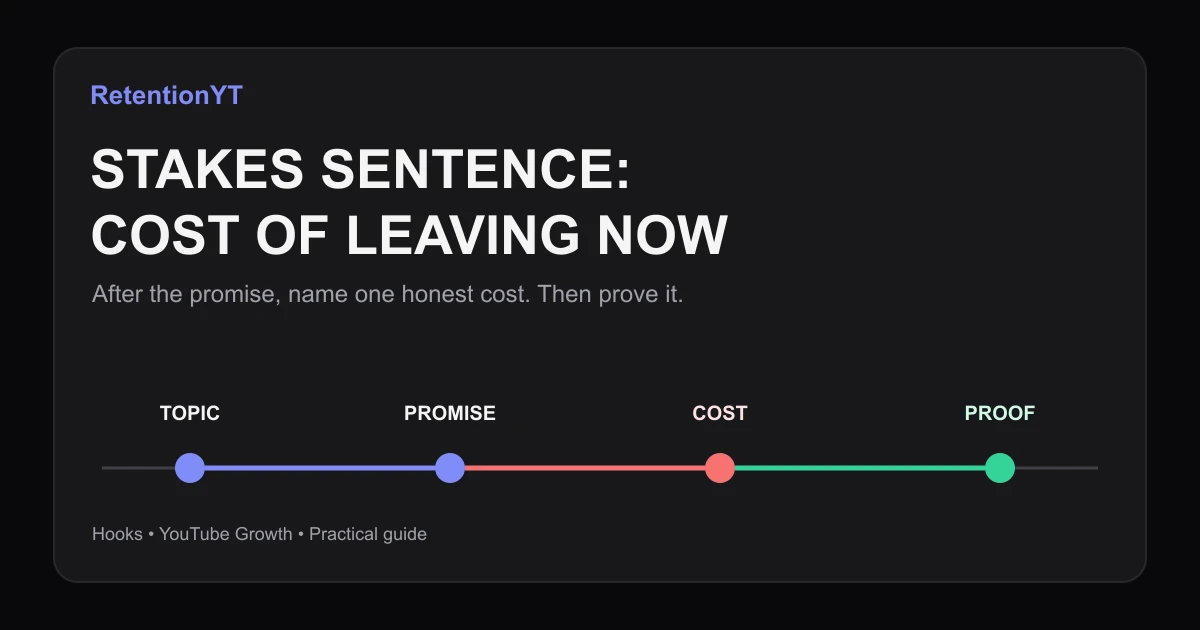
Use the YouTube hook stakes what you lose if you leave framework to turn a topic label into a specific cost, with eight practical examples and a Studio check.
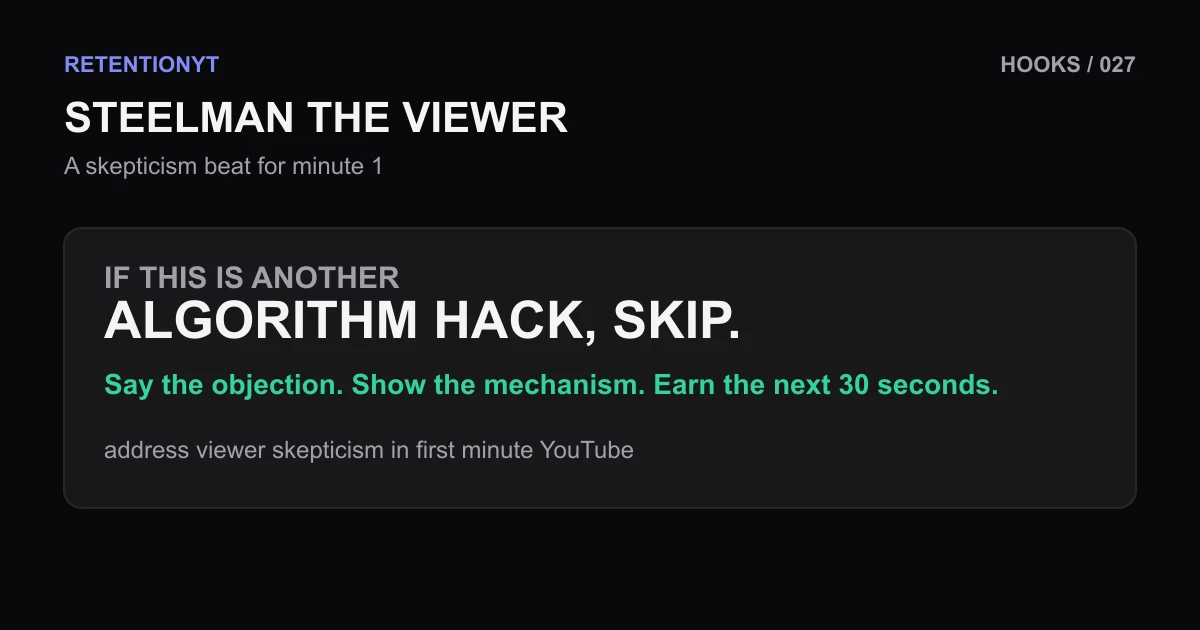
Address viewer skepticism in first minute YouTube with a spoken objection, a concrete Studio check, and a repeatable beat for finance, tech, and AI creators.
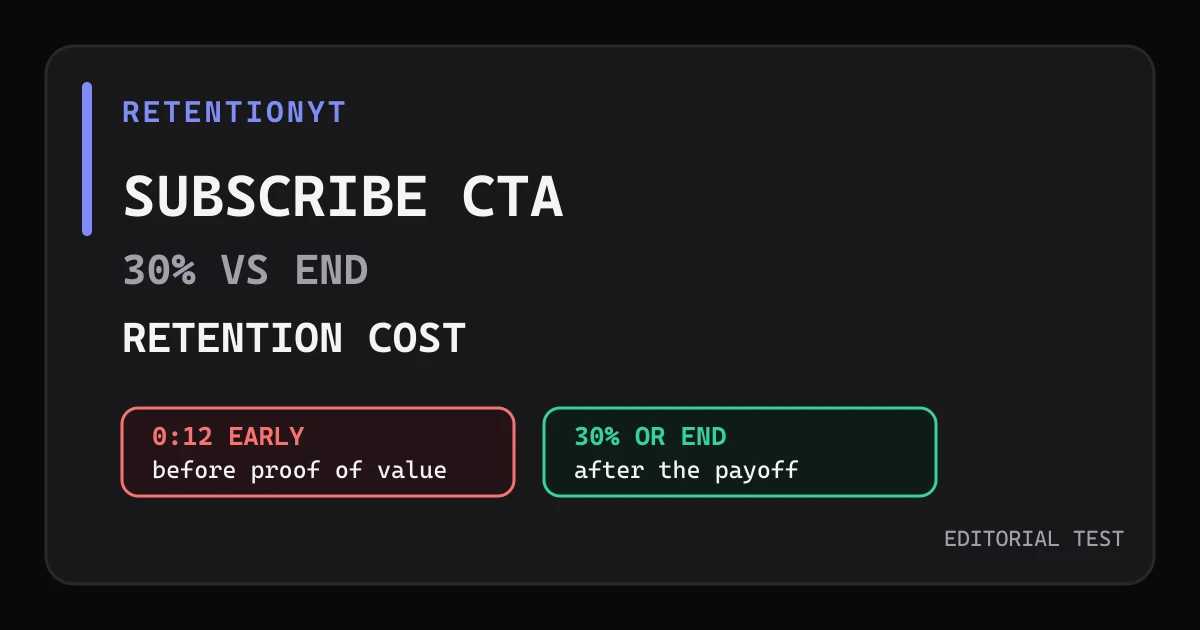
Test your subscribe CTA at 30% versus the end: compare the retention cost of an ask at 0:12, after a mini-payoff, and in the closing seconds.
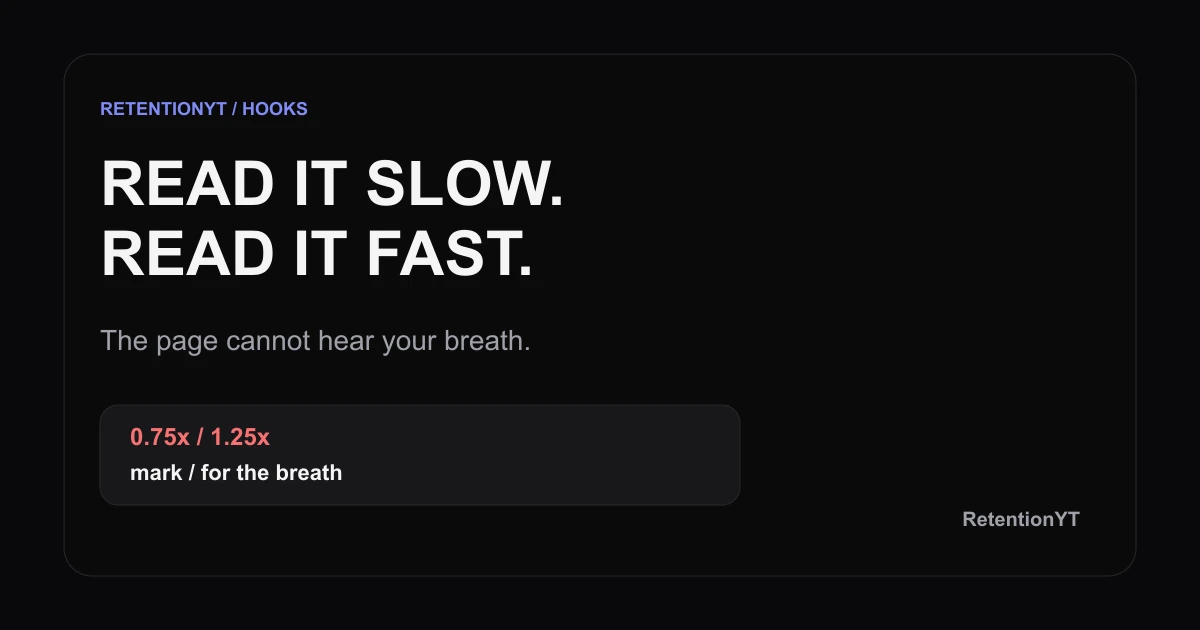
Read your YouTube hook out loud at 0.75x and 1.25x to expose extra clauses, missing breaths, and weak wording before the camera starts rolling.
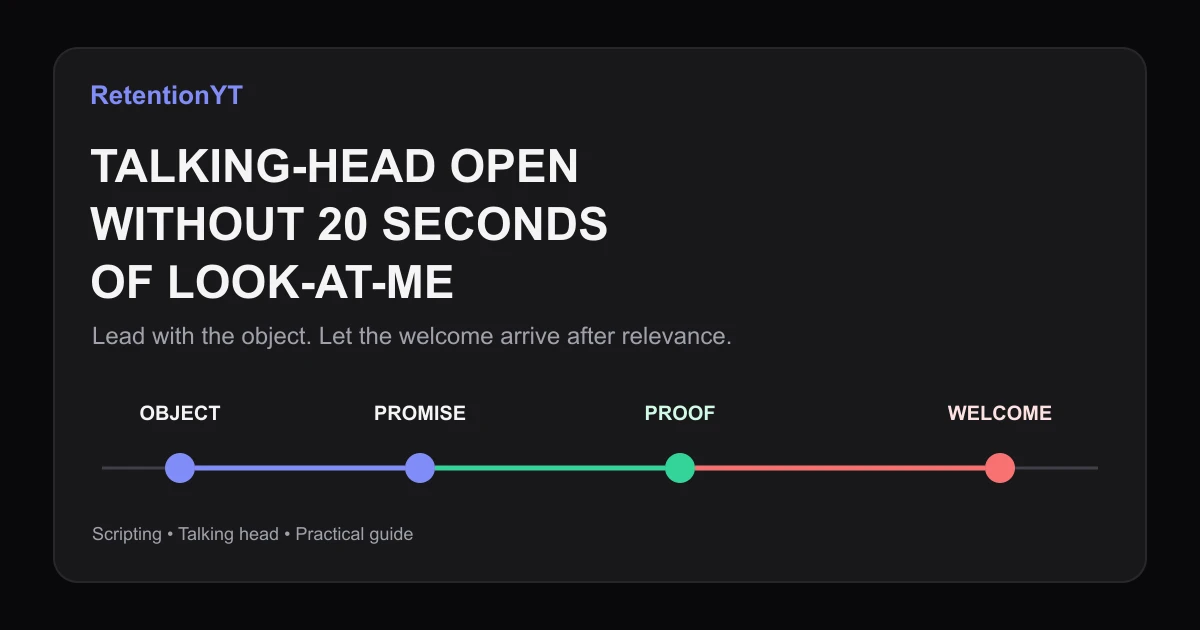
Learn how to make your talking head YouTube start talking immediately: lead with the object, move the greeting later, and use your Studio graph to test the change.
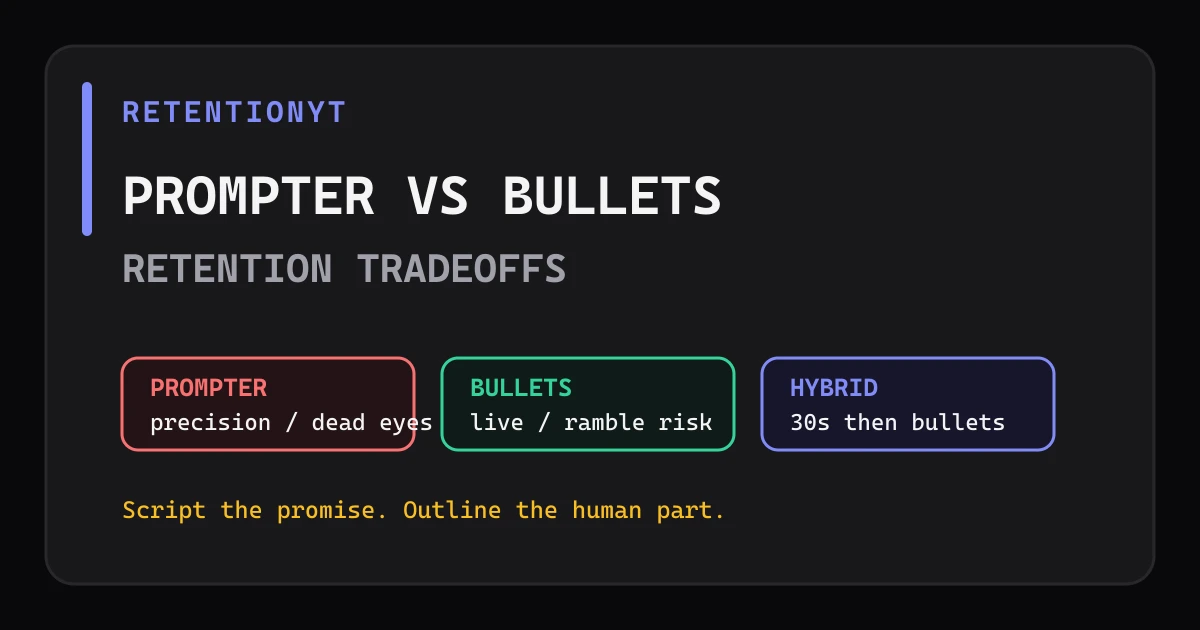
Teleprompter vs outline YouTube retention: script first 30 seconds, loosen the middle with bullets, and choose the method that keeps your delivery precise without sounding read.