Hook Variation Matrix: Result-First x Contrarian x Open Loop x Cold Open
Test four YouTube hook formulas on the same video idea with one variation matrix. Learn the 3-take test, choose a winner, and read your own retention evidence.
10 min read
Practical guides on YouTube retention, hooks, and scripting — turning audience-retention data into advice you can use on your next video.
Test four YouTube hook formulas on the same video idea with one variation matrix. Learn the 3-take test, choose a winner, and read your own retention evidence.
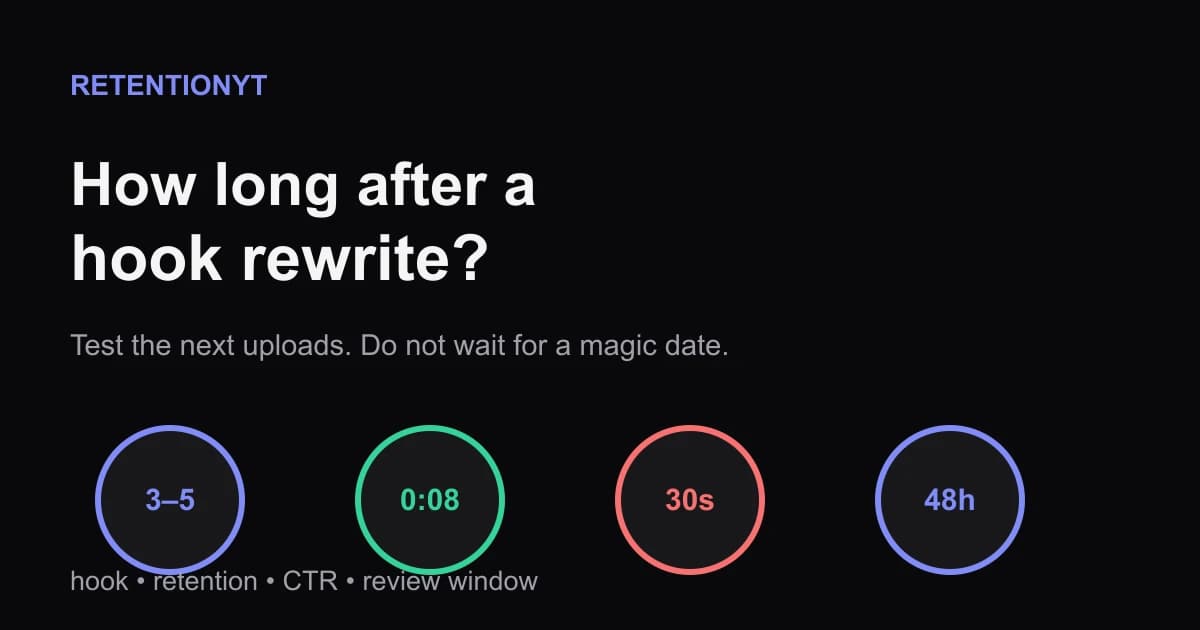
How long until YouTube impressions recover after a better hook? Use the next 3–5 uploads, first-30-second retention, CTR, and 48-hour checks without guessing.
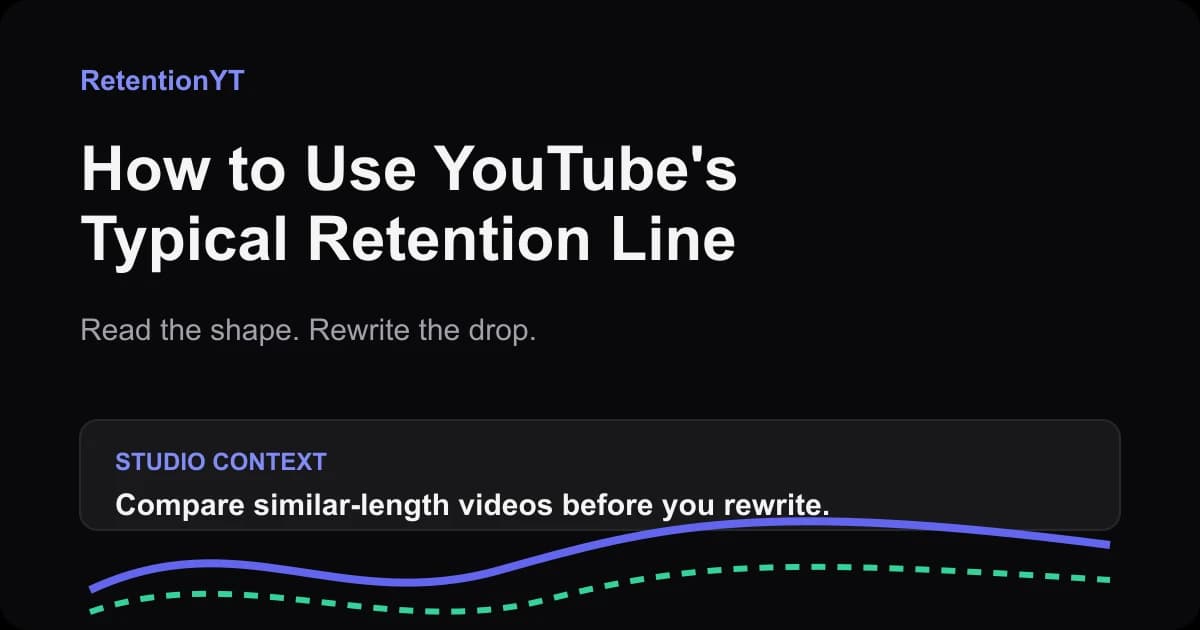
Use YouTube's typical retention comparison line to read your graph, find the moment that trails similar-length videos, and choose the next rewrite without fake benchmarks.
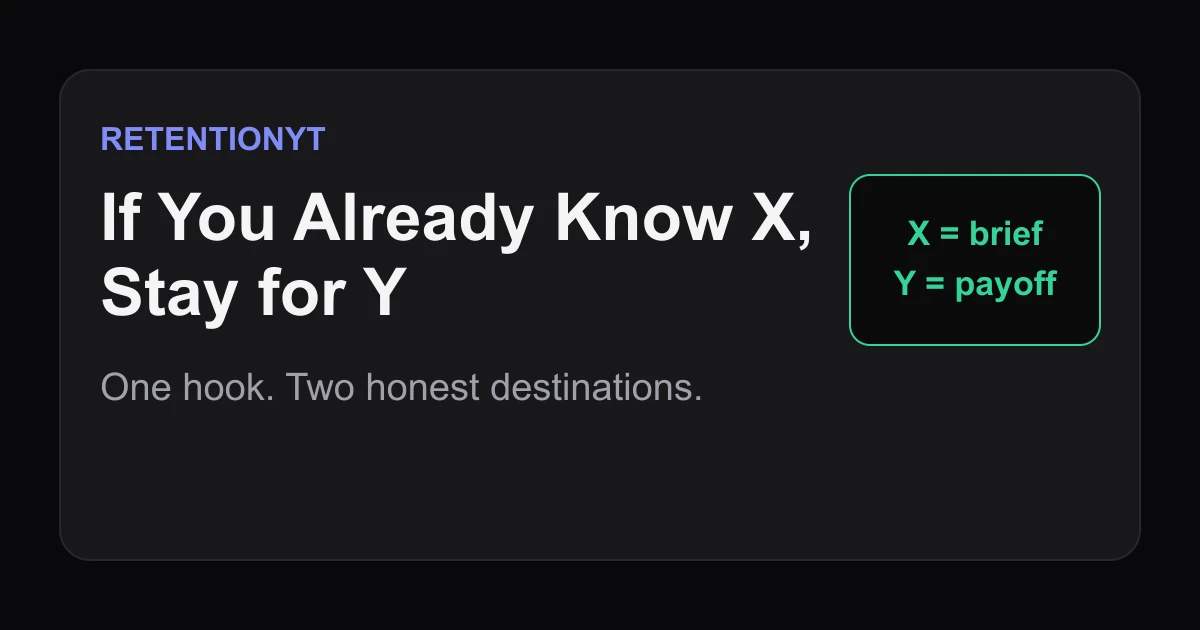
Use “If You Already Know X, Stay for Y” to keep expert and beginner viewers in one YouTube hook, with a ready-to-use template, timing rule, and six examples.
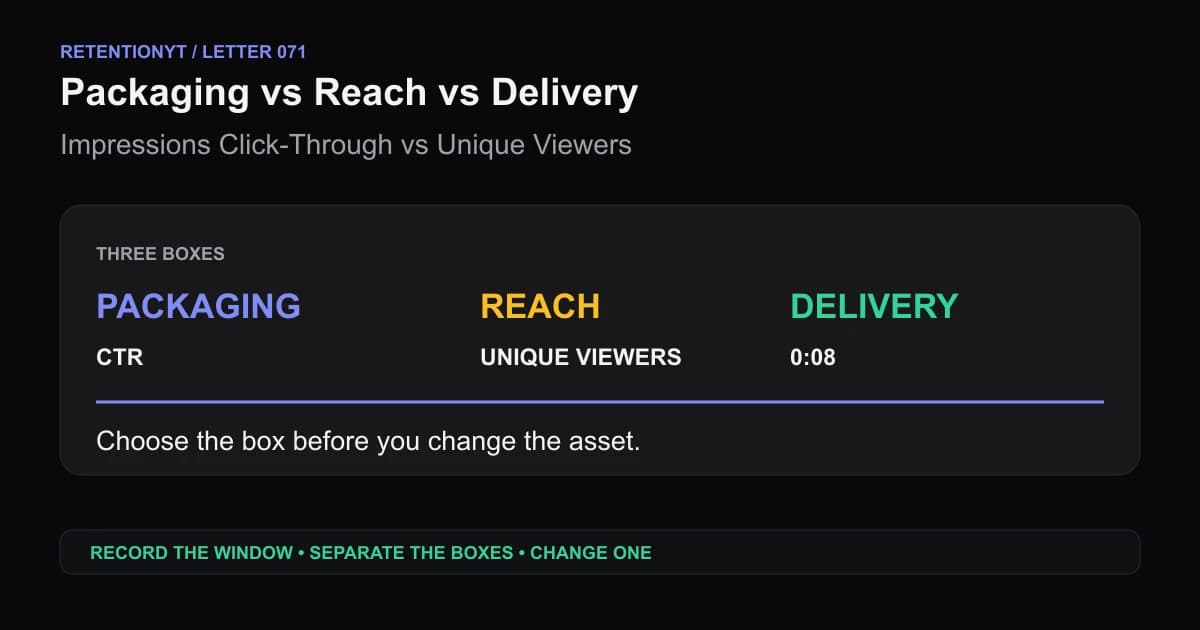
When YouTube CTR is high but unique viewers are low, separate packaging, reach, and delivery before you rewrite the script or replace the thumbnail.
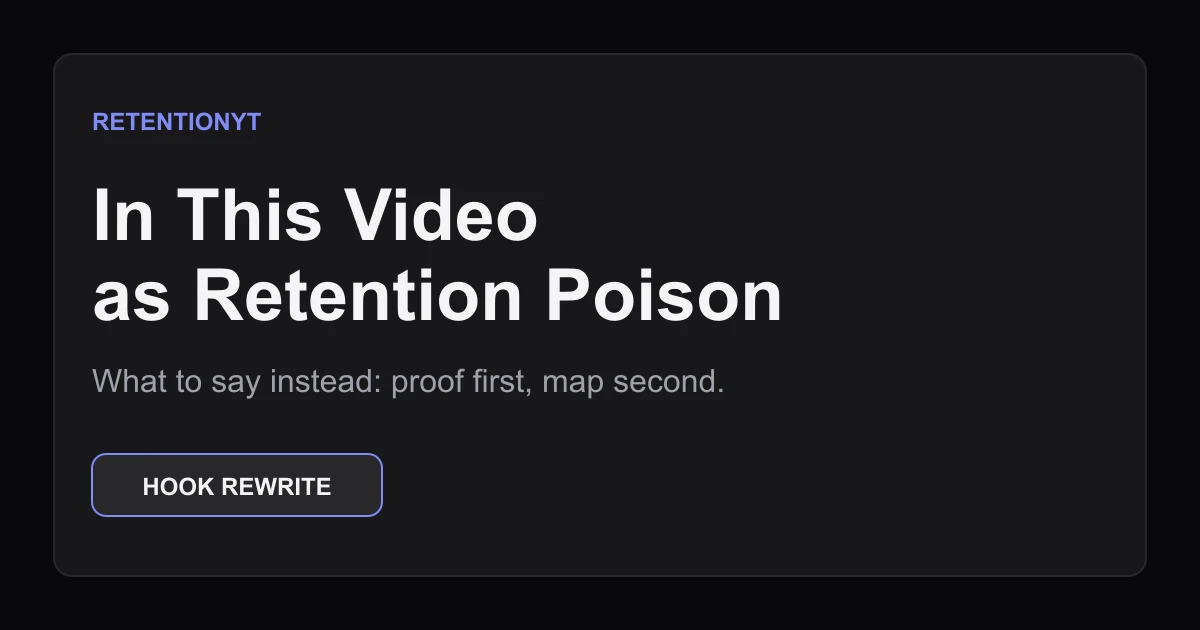
The don't say in this video YouTube hook problem: lead with proof, then orient viewers with eight replacements that keep your first 8 seconds moving.
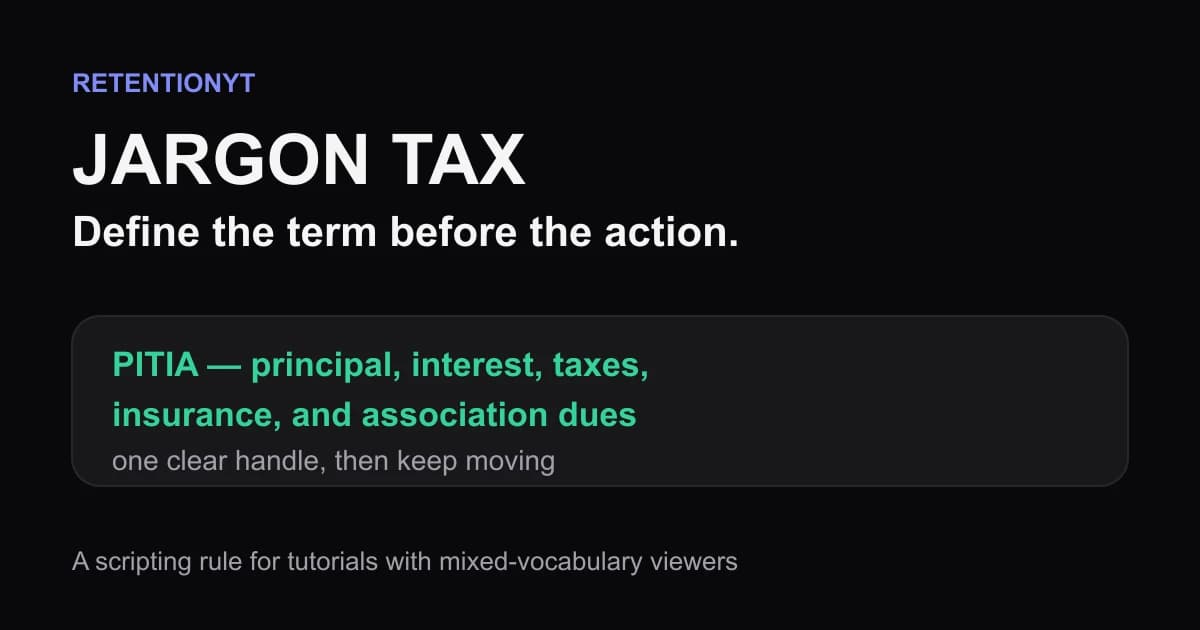
Explain jargon in a YouTube tutorial before viewers have to guess, using a one-clause definition, a visible formula, and a Studio check that protects retention.
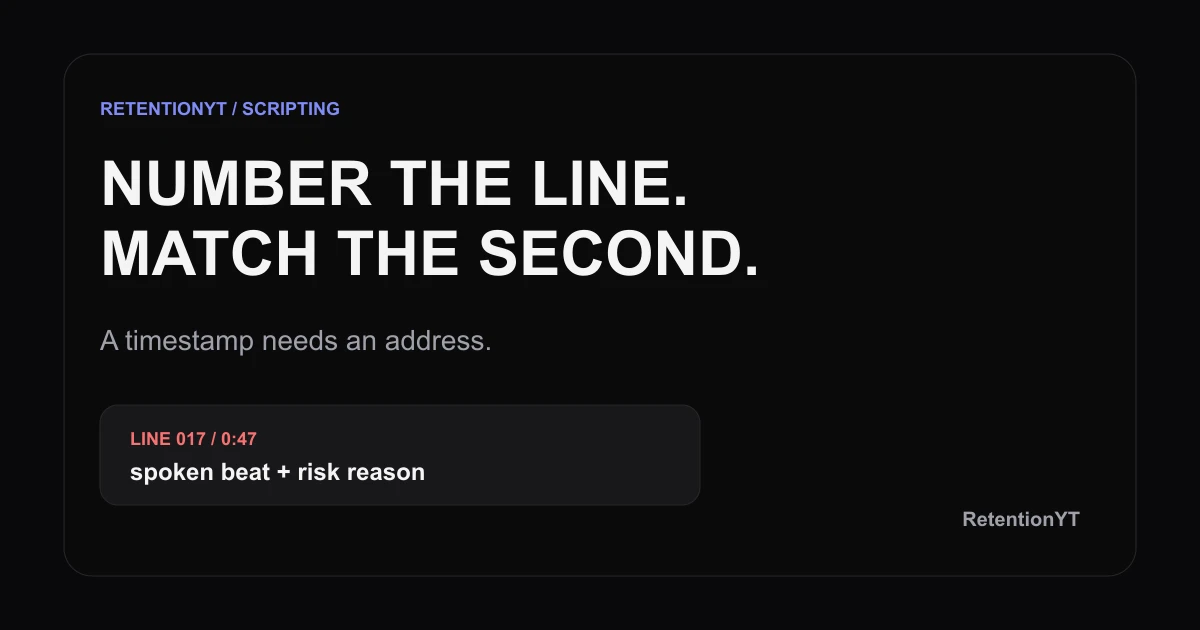
Use a YouTube script template with timestamps and line numbers to match Studio moments to exact sentences, flag risk, and fix pacing before you record.
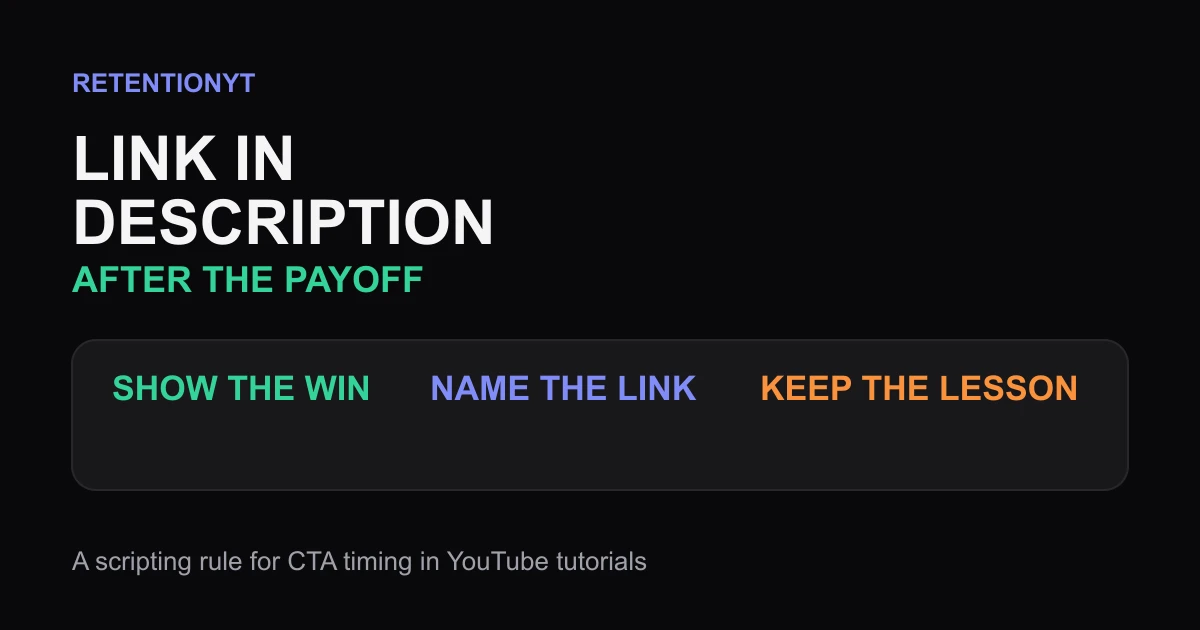
When to say link in description YouTube creators can use without cutting the payoff: deliver the result first, then place the exit ramp where intent is highest.