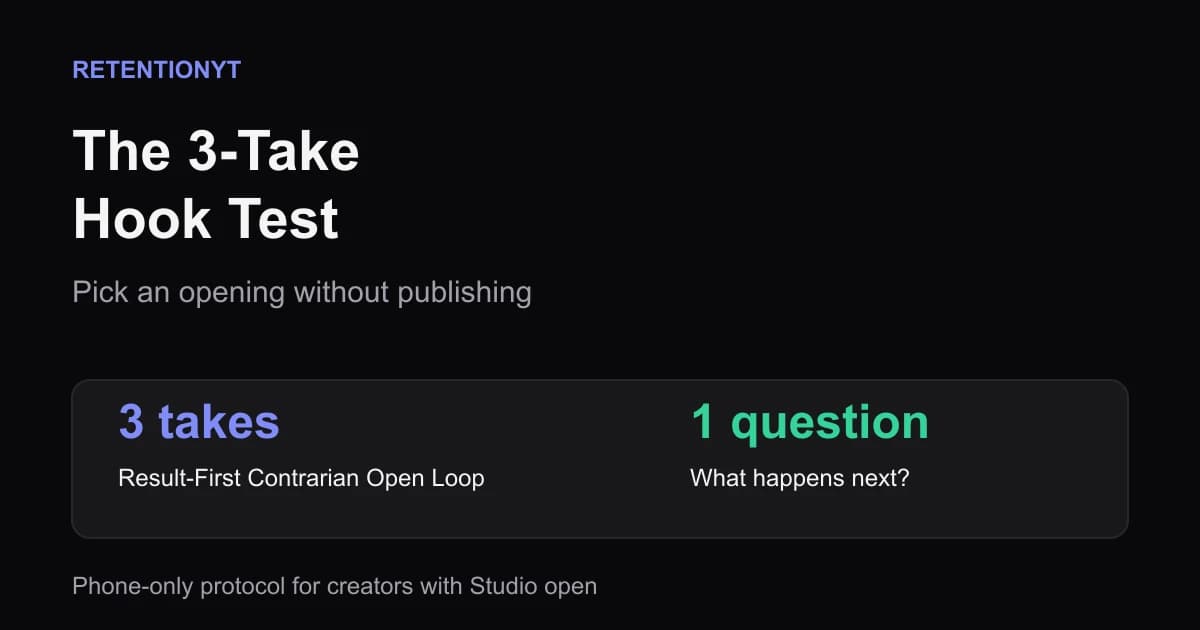
The 3-Take Hook Test: Pick an Opening Without Publishing
Learn how to test YouTube hooks before uploading with three 15-second phone takes, one cold viewer, and a simple question that picks the opening worth filming.
11 min read
Practical guides on YouTube retention, hooks, and scripting — turning audience-retention data into advice you can use on your next video.
Learn how to test YouTube hooks before uploading with three 15-second phone takes, one cold viewer, and a simple question that picks the opening worth filming.
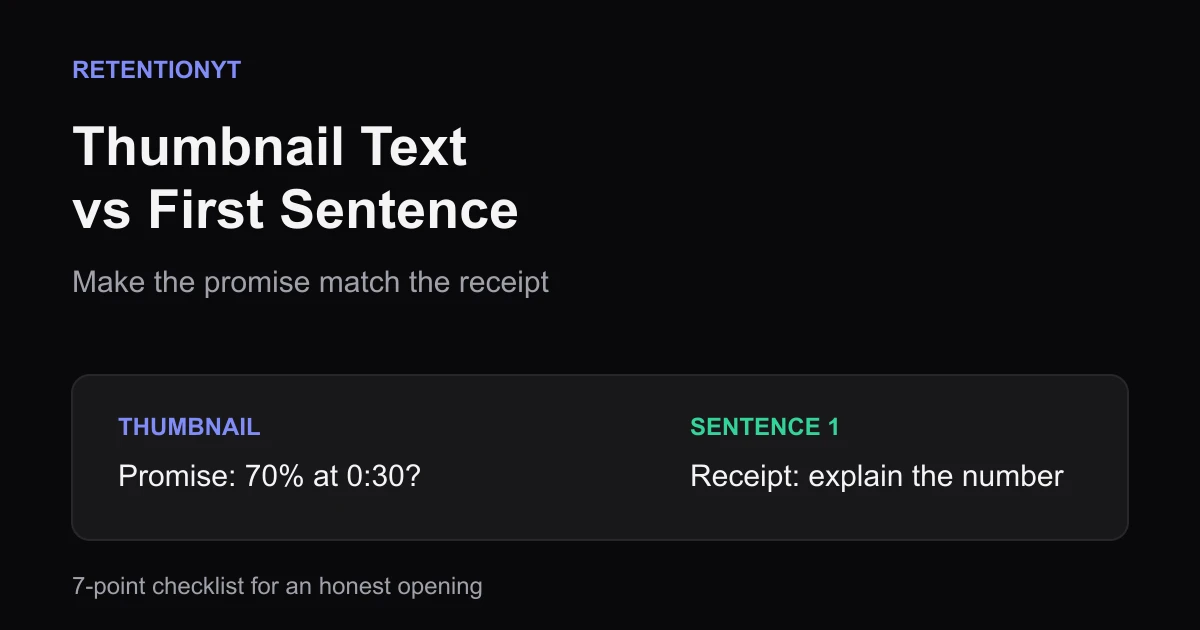
Use this thumbnail text and first sentence alignment checklist before every YouTube upload so the promise on the image matches the receipt in your first 8 seconds.
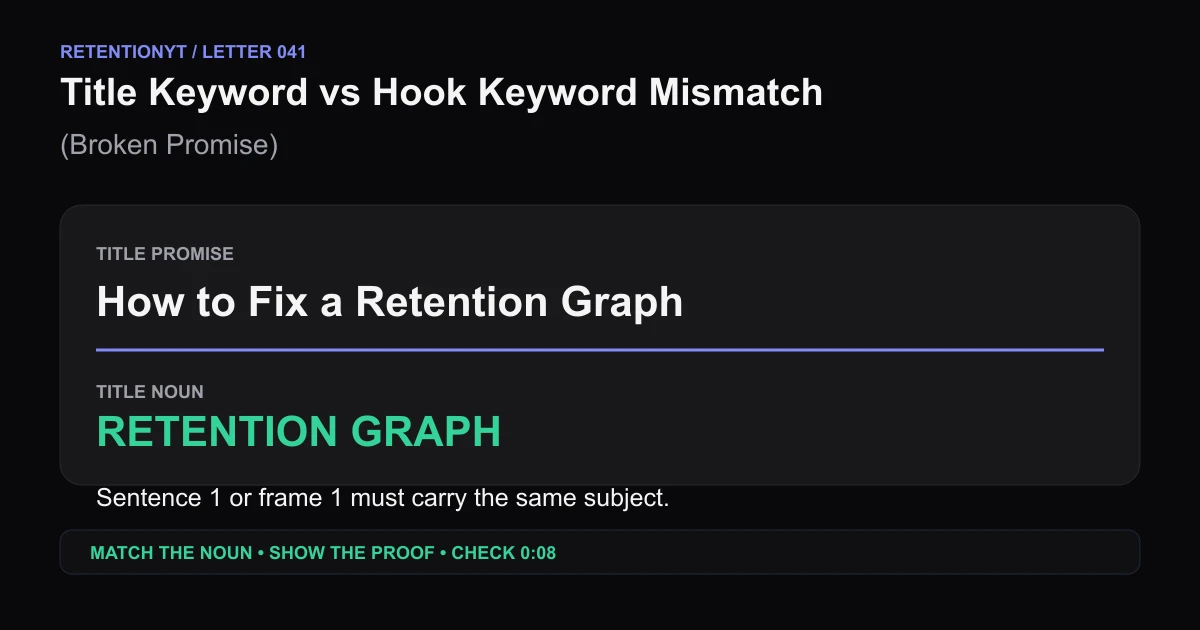
Find the noun your YouTube title promises, put it in sentence 1 or frame 1, then use the 0:08 retention checkpoint to repair a broken promise hook.
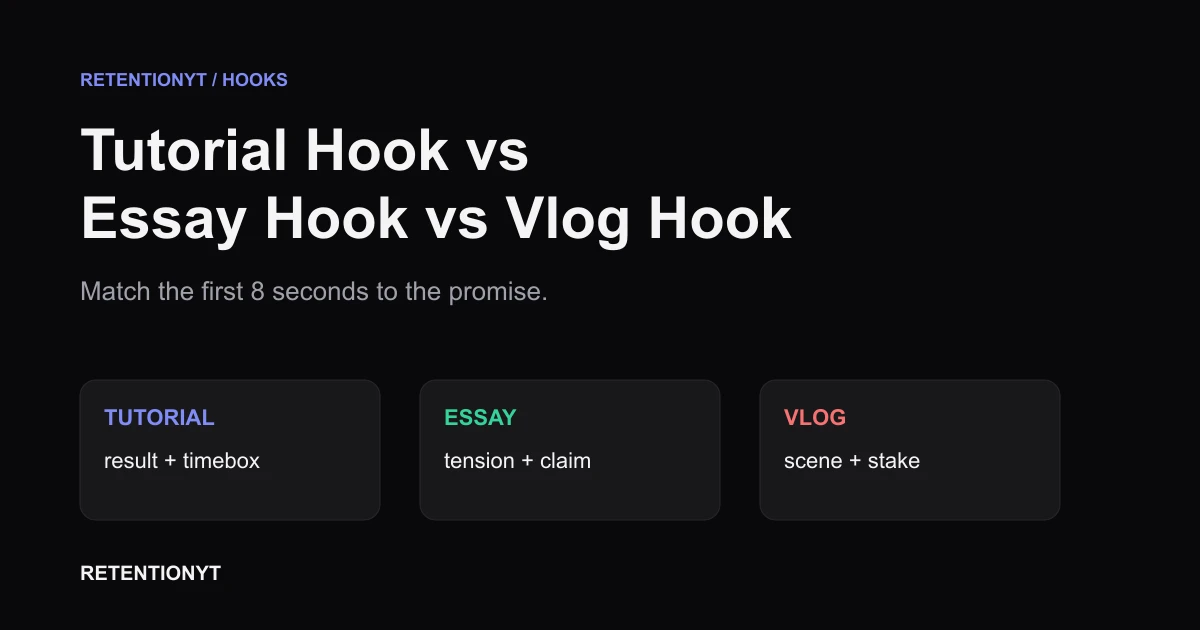
Different YouTube hooks for tutorials vs vlogs: match the first 8 seconds to the promise your title and thumbnail make, then check the graph in Studio.
If your YouTube intro animation hurts retention, protect the first 8 seconds: test a 2-second channel sting after the promise, then read the curve in Studio.
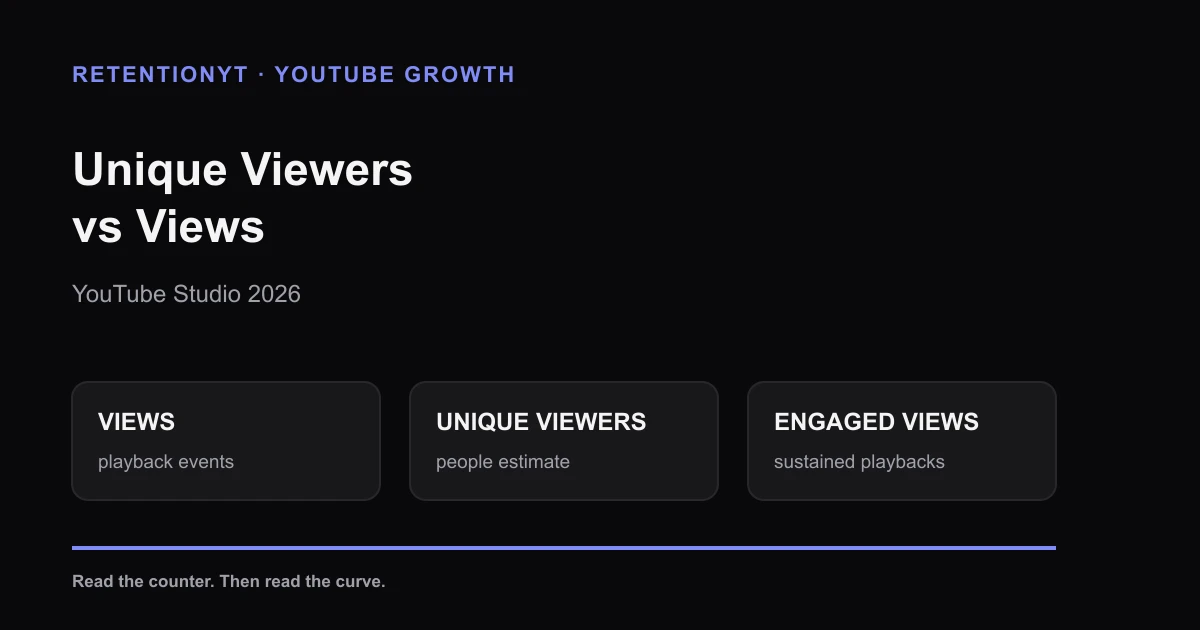
Unique viewers vs views in YouTube Studio 2026: understand the new first-frame count, separate people from playbacks, and use retention to judge your next upload.
Should you update an old YouTube video or make a new one? Compare the promise, metric meaning, and workflow before you rescript, annotate, or publish a fresh lesson.
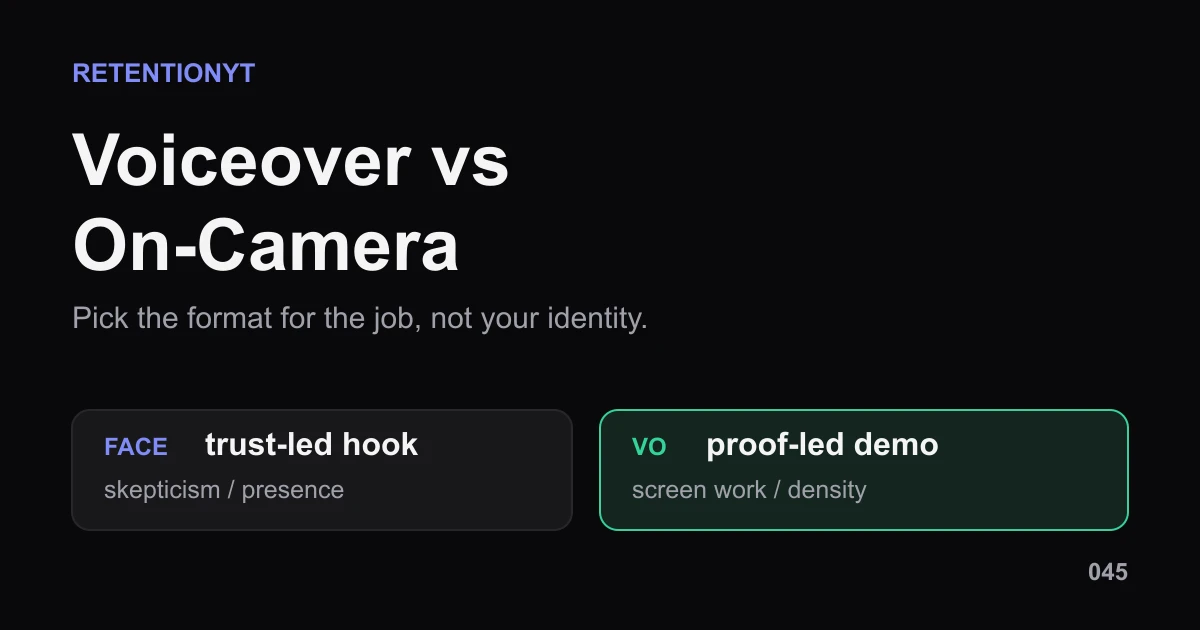
Voiceover vs talking head YouTube retention is not a winner-takes-all choice. Pick face, voiceover, or hybrid by video job, then test the handoff in Studio.
The limitations of YouTube typical retention line: use the grey comparison line, then check traffic mix, viewer type, and your last 8 in-band videos before rewriting.